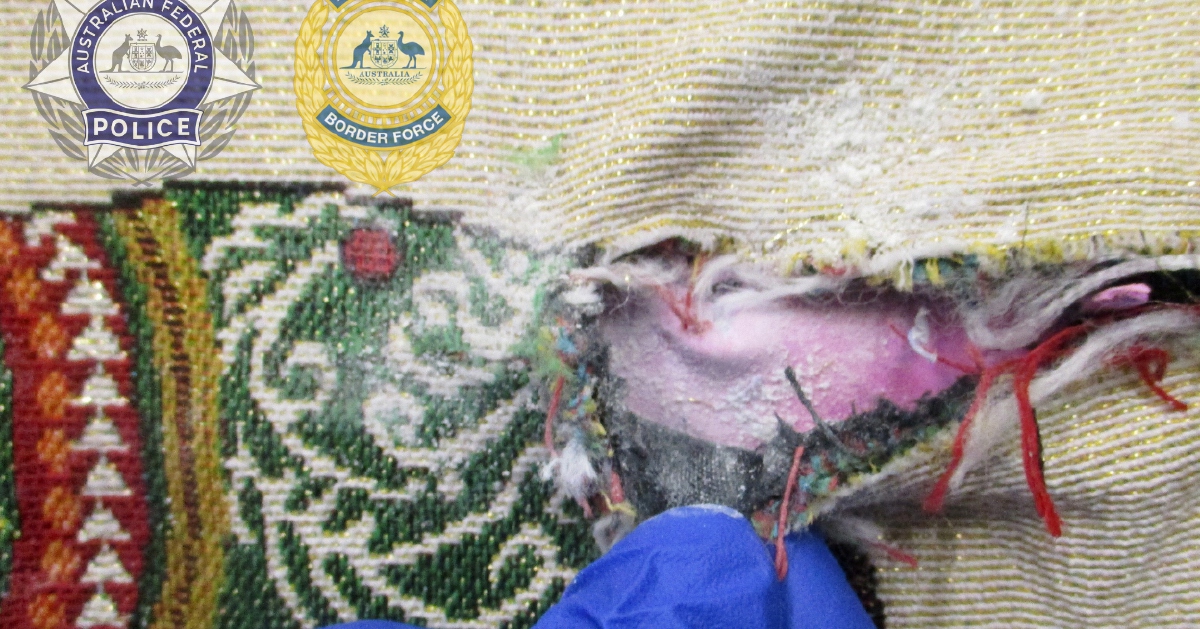
An employee of Thai Airways found themselves in serious legal trouble after Australian Federal Police laid charges related to the importation of over one kilogramme of heroin into the country. The arrest underscores the ongoing challenges authorities across the Asia-Pacific region face in combating narcotics smuggling through air cargo and passenger luggage channels.
Customs officials at Sydney uncovered the contraband hidden within tote bags during a routine screening process, marking another significant interception in a region that has become a major transit hub for illicit drug trafficking. The discovery highlights how smugglers continue to attempt moving substantial quantities through commercial airline systems, exploiting the relative ease of moving baggage through busy international hubs.
The Thai national's arrest reflects broader regional concerns about drug trafficking networks that span multiple countries. Thailand itself has struggled with both amphetamine production and heroin trafficking, sitting at the intersection of major supply routes from the Golden Triangle region and consumer markets across Southeast Asia and beyond. The involvement of airline personnel suggests possible involvement of organised networks that recruit insiders to facilitate shipments through aviation channels.
For Malaysian readers, this case carries particular relevance given Malaysia's own position on critical international drug trafficking routes. The Malaysian authorities have consistently battled attempts to move heroin and other narcotics through Kuala Lumpur International Airport and other entry points. The sophistication of smuggling operations—particularly the use of airline staff—demonstrates that prevention requires ongoing vigilance and cooperation between aviation security, customs agencies, and law enforcement.
The concealment method employed in this instance, using everyday tote bags rather than more elaborate schemes, reflects how smugglers often rely on simplicity and the sheer volume of baggage processed daily. Screening systems across the region must balance security requirements with the operational demands of processing thousands of passengers and items daily, a tension that creates vulnerabilities even with advanced detection technology.
Australian Federal Police and customs authorities have significantly strengthened their detection capabilities in recent years, yet this case demonstrates that determined smuggling operations still manage to move substantial quantities. The fact that over one kilogramme was detected suggests investigative efforts may uncover additional shipments linked to the same network, as such operations typically involve multiple attempts.
Thailand's role in both drug production and trafficking has invited sustained international pressure to strengthen border controls and airport security. Thai Airways, as the national flag carrier, faces reputational concerns when employees become implicated in such activities. Airlines globally have implemented stricter internal protocols and staff vetting procedures, though determined individuals with access credentials remain a persistent security challenge.
The implications extend to regional aviation security standards more broadly. As Southeast Asian nations increasingly connect through hub airports, ensuring consistent security protocols becomes crucial. Information sharing between Thailand's aviation authority, Australia's customs service, and agencies across ASEAN remains essential for preventing similar incidents and identifying broader trafficking networks.
From a Malaysian perspective, this incident underscores why national authorities continue emphasising the dangers of drug trafficking and the severe penalties involved. Malaysia maintains amongst the world's strictest narcotics laws, with trafficking in quantities exceeding 15 grammes of heroin carrying mandatory death sentences. While Australian law differs, regional cooperation on such cases helps disrupt criminal networks that might otherwise target multiple countries.
The arrest also raises questions about recruitment and vetting within airline operations. Criminal networks actively seek employees at airports and on aircraft, offering substantial payments to move contraband. Strengthening internal security culture and surveillance within airlines represents a critical but often overlooked aspect of border security that goes beyond government agencies alone.
Australian authorities have made consistent efforts to interdict heroin trafficking across multiple entry points, with Sydney Harbour remaining one of the world's busiest ports for both legitimate cargo and smuggling attempts. The volume of traffic creates inherent challenges, but each successful seizure provides intelligence that helps map trafficking patterns and identify vulnerability points across the region's aviation and maritime infrastructure.

