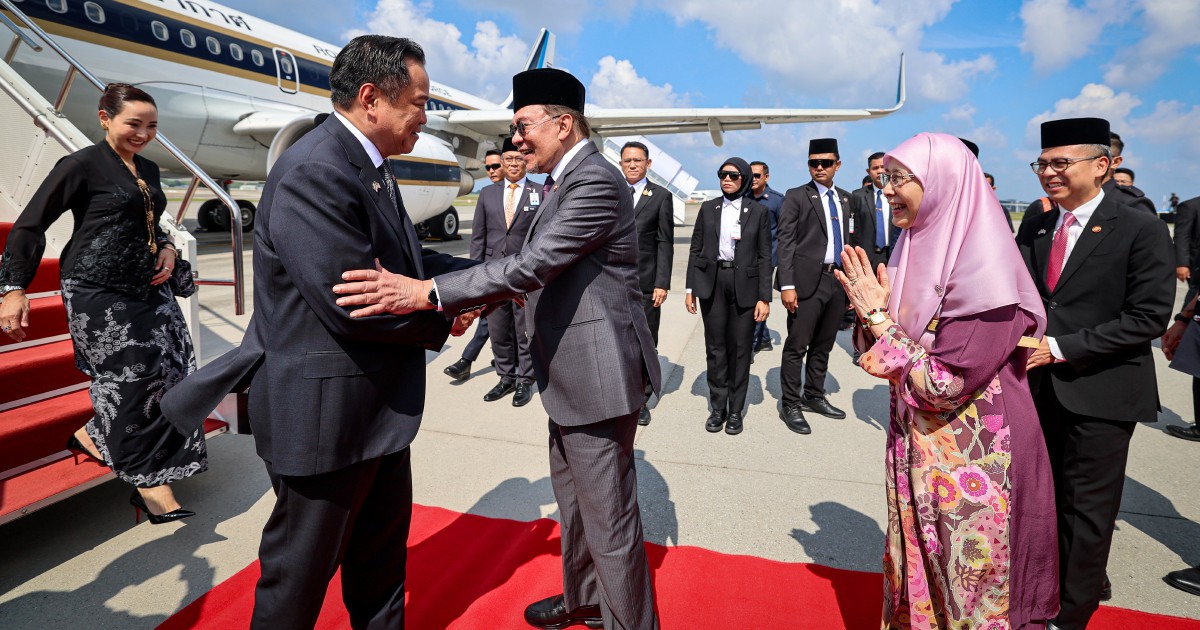
Thailand's Prime Minister Anutin Charnvirakul touched down in Malaysia today, touching off a two-day official state visit that underscores the deepening political and economic engagement between Bangkok and Kuala Lumpur. The Thai leader landed at Sepang following an invitation from Prime Minister Datuk Seri Anwar Ibrahim, marking a significant moment in bilateral relations as both nations navigate regional challenges and explore fresh avenues for cooperation.
High-level visits between Southeast Asian nations carry considerable symbolic weight in an era when regional cohesion remains paramount. Anutin's arrival represents more than routine diplomatic ceremony—it reflects the commitment of both governments to strengthen institutional relationships and facilitate dialogue on matters of mutual concern. Thailand and Malaysia, as fellow ASEAN members sharing deep cultural ties and geographic proximity, have built their modern relationship on pragmatic engagement across trade, security, and people-to-people exchanges.
The visit comes at a particularly interesting juncture for both countries. Thailand has been navigating its own domestic political landscape, while Malaysia continues to stabilise its governance framework under Anwar Ibrahim's leadership. Such bilateral engagement at the highest level provides a platform for premiers to address transnational issues that transcend borders—from regional economic integration to addressing security concerns that affect the wider neighbourhood.
Prime Minister Anwar Ibrahim has consistently positioned Malaysia as a bridge-builder within ASEAN, and welcoming the Thai premier underscores this strategic orientation. These visits typically encompass extensive discussion agendas covering trade facilitation, investment promotion, and coordination on regional platforms. The two nations have vested interests in maintaining the functionality of ASEAN mechanisms and upholding the centrality of the grouping in regional architecture—a position both countries have championed repeatedly.
The two-day format suggests a substantive programme rather than a ceremonial stopover. Such official visits customarily include bilateral meetings between the premiers, broader delegation discussions involving relevant ministers, and often public engagements designed to demonstrate the warmth of official relations. For Malaysian audiences, such visits illustrate the government's active role in regional diplomacy and its ability to maintain productive relationships with neighbouring states despite domestic preoccupations.
Trade between Thailand and Malaysia has historically formed an important component of their bilateral relationship. Both economies are interconnected through regional supply chains, investment flows, and labour mobility. High-level visits create opportunities to review existing trade frameworks and identify impediments to smoother commercial interaction. For Malaysian businesses operating in Thailand and Thai enterprises with Malaysian operations, such diplomatic strengthening can translate into more favourable operating conditions and clearer policy signals.
The security dimension of Thai-Malaysian relations also warrants consideration. Thailand's southern border regions and Malaysia's northern states have experienced periodic security challenges requiring coordinated responses. Bilateral meetings at prime ministerial level enable dialogue on cross-border security matters, intelligence sharing protocols, and humanitarian concerns affecting populations in frontier areas. Effective communication channels between government leadership remain essential for addressing localised security issues before they escalate into broader regional problems.
Anwar Ibrahim's administration has prioritised Southeast Asian engagement as a core pillar of its foreign policy. The reception extended to Anutin demonstrates Malaysia's commitment to maintaining warm and productive relationships across the region, regardless of the domestic political configurations in neighbouring countries. This approach has generally been well-received within ASEAN circles, where stability and predictability in inter-governmental relations are valued commodities.
Cultural and educational exchanges often feature prominently in bilateral discussions between Thailand and Malaysia. Both nations have cultural communities embedded in each other's societies, and governments typically discuss mechanisms for facilitating student exchanges, tourism promotion, and cultural preservation initiatives. These people-to-people connections represent the human foundation upon which diplomatic relations rest, and official visits frequently generate momentum for expanded cultural programming.
The visit carries implications extending beyond the bilateral framework. Thailand's engagement with Malaysia influences the broader configuration of Southeast Asian regionalism. As major economies within ASEAN, both nations shape the consensus-building processes that govern regional decision-making. When premiers meet, they invariably discuss ASEAN-related matters, including coordination on regional forums, responses to international developments, and the ongoing evolution of regional architecture mechanisms like the East Asia Summit and ASEAN Regional Forum.
For Malaysian citizens and businesses watching this visit unfold, the takeaway lies in observing how governments maintain dialogue channels and pursue shared interests through structured diplomatic engagement. Such visits, while often absent from mainstream media coverage, form the sinews of functional regionalism and contribute to the broader stability that underpins economic activity and cross-border development. The optics of welcoming a neighbouring premier signals to international observers that Malaysia remains a stable, diplomatically engaged nation capable of maintaining cordial and productive relationships within its regional neighbourhood.

