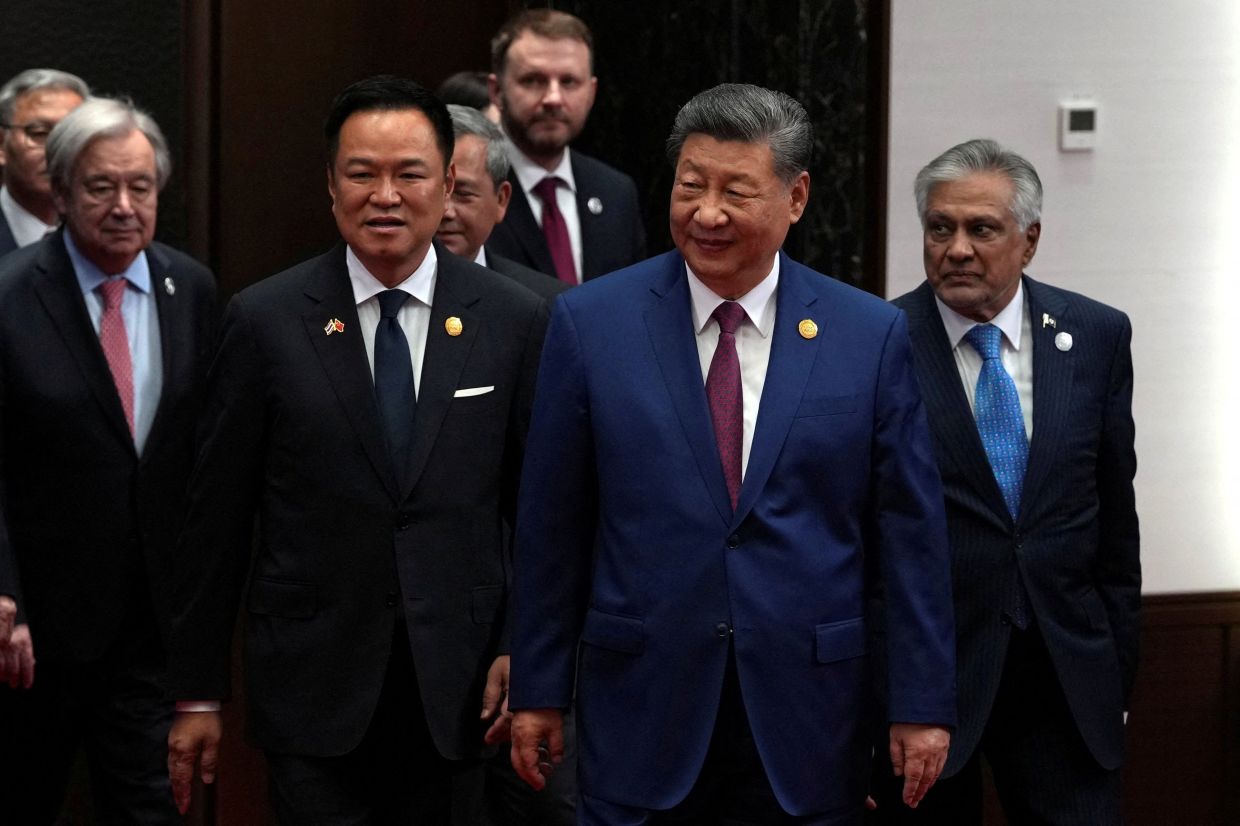
Thai Prime Minister Anutin Charnvirakul has developed an unconventional yet calculated approach to regional diplomacy, transforming musical performances into formal state occasions. During a recent visit to Beijing on Monday, the Thai leader provided an impromptu serenade to Chinese Premier Li Qiang at an official lunch, delivering a rendition of a classic Teresa Teng composition as both leaders sat at a long formal table flanked by Thai and Chinese flags. Footage from the Thai government's own media channels captured the moment as assembled guests and dignitaries applauded the performance, with piano accompaniment providing musical support to what many observers viewed as both a charming and strategically astute gesture.
This Beijing performance represents merely the latest chapter in what has become a signature element of Anutin's tenure as regional statesman. Earlier this month, the Thai premier participated in a musical collaboration with Malaysian Prime Minister Anwar Ibrahim, jointly performing Frank Sinatra's "My Way" before an audience. The performance showcased a deliberate division of labour in showmanship: Anutin contributed instrumental accompaniment via the saxophone while his Malaysian counterpart took the vocal lead. The pairing sent subtle signals about bilateral cooperation and personal chemistry between two neighbouring Southeast Asian leaders at a time when regional partnerships remain crucial for addressing shared economic and security challenges.
For Malaysia in particular, such cultural exchanges carry special significance. The visibility of Anutin's willingness to engage in such informal, people-to-people performances alongside Prime Minister Anwar Ibrahim reinforces the notion of personal rapport between Bangkok and Kuala Lumpur's leadership. This kind of soft diplomacy can help smooth over more contentious bilateral issues, from transboundary river management to trade negotiations. The public nature of these performances also demonstrates both leaders' comfort with appearing unconventional and personable to their respective publics, a departure from the stiff formality that once characterised Southeast Asian statecraft.
Antin's musical diplomacy extends beyond China and Malaysia. During a visit to Hanoi last month, the Thai premier took to playing traditional Vietnamese instruments alongside local musicians while in the presence of Vietnamese Prime Minister Le Minh Hung. This pattern of behaviour—adapting his performances to local cultural contexts—suggests a deliberate strategy rather than mere spontaneity. By embracing the musical traditions of each nation he visits, Anutin signals respect for local cultures whilst simultaneously presenting Thailand as a nation comfortable with cross-cultural engagement.
The background to these performances matters considerably for understanding their diplomatic purpose. Anutin assumed office in September 2025 before consolidating his position through electoral victory in February 2026. His ascendancy came through channels that reflected both traditional and modern Thai political dynamics. Crucially, Anutin presents himself as simultaneously embedded within Thailand's establishment whilst appealing to ordinary citizens—a balancing act that his musical performances help reinforce. His background as a scion of a major construction dynasty might otherwise distance him from ordinary Thai citizens; his willingness to perform publicly at state functions and regional meetings humanises his image and suggests a leader comfortable stepping outside traditional corridors of power.
Beyond politics, Anutin's personal attributes shape his public persona in ways that facilitate this musical diplomacy. He maintains a pilot's license and regularly flies jets, an expensive and elite pursuit that nonetheless projects energy and hands-on engagement. His proficiency with the piano and the Thai flute, combined with his apparent comfort playing the saxophone, demonstrates genuine musical skill rather than mere tokenism. This authenticates his performances and prevents them from appearing as mere gimmickry.
What distinguishes Anutin's approach within the broader context of Thai leadership is his apparent comfort with cultural and diplomatic innovation. Thailand's political system has long placed considerable value on deference to traditional institutions and conservative social ordering—a reality that resonates deeply across much of Thai society. Yet Anutin manages to navigate this conservatism whilst simultaneously projecting an image of modernity and approachability. His musical performances serve this dual purpose: they honour traditional notions of refined cultural accomplishment whilst simultaneously presenting the Thai leader as someone capable of connecting with contemporary, globalised audiences.
The regional dimension cannot be overlooked. Southeast Asian nations increasingly compete for influence and partnership within an evolving geopolitical landscape. China's economic dominance and strategic importance to Thailand make the Beijing performance particularly significant—musical gestures can lower tensions and build personal relationships between leaders in ways that formal diplomacy alone cannot achieve. Similarly, Malaysia's position as a crucial ASEAN voice means that Anutin's deliberate cultivation of ties with Anwar Ibrahim through such intimate performances carries weight beyond mere entertainment.
Antin has also recently performed with a Thai teenager who achieved international recognition through an impressive musical performance on the television show America's Got Talent. This collaboration demonstrates his willingness to associate himself with contemporary cultural figures and emerging talent, further burnishing his image as a leader in tune with younger, globalised Thais. Such associations help explain how someone from an elite construction background can maintain credible appeal across broader Thai society.
For Malaysia and the broader Southeast Asian region, Anutin's musical diplomacy offers both lessons and questions. The approach demonstrates how leaders can use culture as a diplomatic tool when executed with genuine skill and strategic purpose. Yet it also raises questions about whether such performances genuinely advance substantive bilateral agendas or primarily serve symbolic functions. For Malaysian observers, the collaborative performance with Prime Minister Anwar Ibrahim suggests at minimum that Bangkok values its relationship with Kuala Lumpur sufficiently to invest personal effort and public visibility in cultivating ties. Whether this translates into concrete cooperation on regional issues—from security to economic integration—remains to be seen.

