Thai law enforcement has escalated its crackdown on an alleged international drug smuggling network, detaining a husband-and-wife pair in Loei province following the arrest of a Thai Airways flight attendant in Melbourne. The case represents a significant transnational operation that authorities believe involved multiple parties working across borders to transport narcotics into Australia, prompting closer scrutiny of how Southeast Asian criminal networks exploit legitimate airline operations and courier services.
The investigation gained momentum after Australian police apprehended the Thai Airways flight attendant, identified in local reports as Mina, at Melbourne Airport with approximately one kilogram of heroin concealed in her luggage. This discovery triggered Thai authorities to conduct a parallel inquiry to identify the source of the parcel and the individuals involved in orchestrating its transport across international borders. The case underscores a troubling trend in which criminal organisations have increasingly turned to airline staff as unwitting or willing couriers, exploiting their regular international travel and airport access privileges.
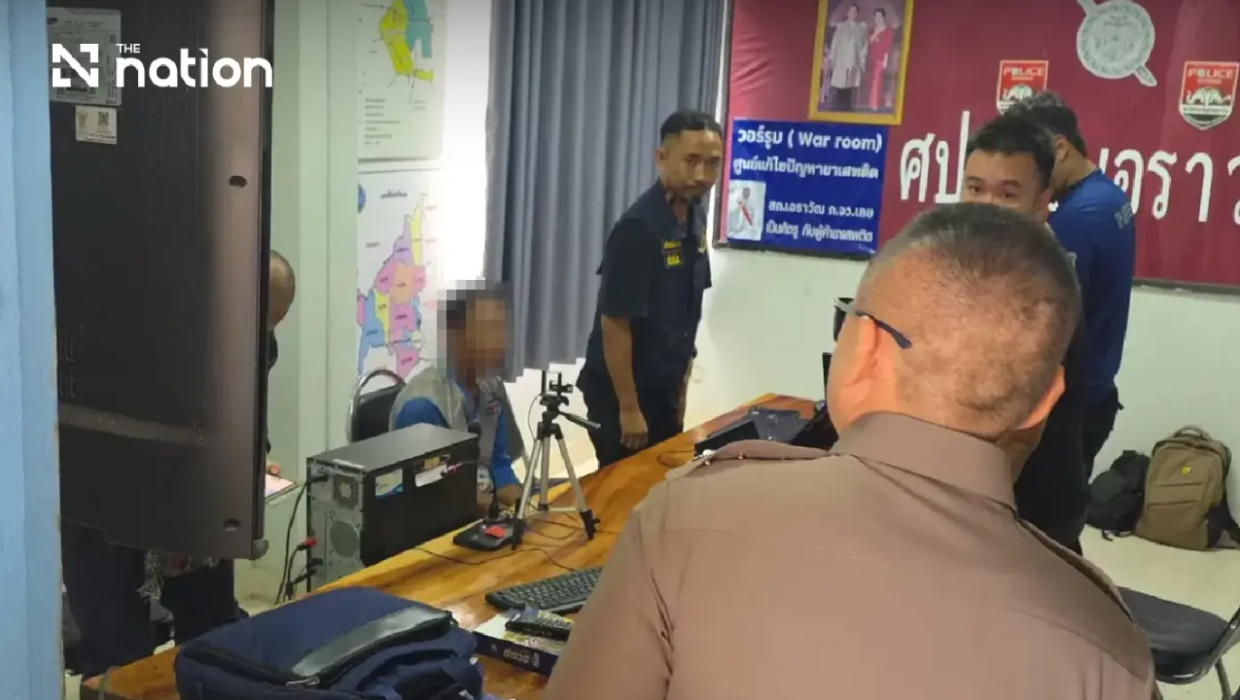
Investigators from multiple Thai agencies, including the Office of the Narcotics Control Board and regional police units, traced the operation to a rural area in Loei province's Chiang Khan district. On July 2, authorities visited a residence after receiving intelligence linking a man named Athit, aged 43, and a woman named Thatsaphon, aged 42, to the distribution network. When officers found the property vacant, they expanded their search and eventually located Athit working on repairs at a temple roof in Wang Saphung district, where he was taken for questioning.
During initial police interviews, Athit reportedly acknowledged his role in transporting parcels on multiple occasions, stating that he had been paid to arrange shipments to Bangkok no fewer than six times. According to law enforcement officials, three of these parcels were processed through a parcel service operating in Chiang Khan, with additional shipments originating from Ban That and Erawan district. For each delivery, Athit allegedly received 8,000 baht—equivalent to approximately US$240—from a Lao national who authorities believe coordinated the operation. The most recent parcel in this sequence was reportedly sent on June 28, 2026.
Thatsaphon, identified as a Lao national and Athit's wife, was subsequently detained after authorities located a black Mitsubishi Triton pickup truck registered in Loei parked in a rubber plantation within Erawan district. The discovery of the vehicle in a remote location provided crucial physical evidence linking her to the network's logistics operations. When brought in for questioning, Thatsaphon initially denied any awareness or participation in the alleged smuggling activity, though investigators continued their examination of her potential involvement in coordinating transport and communication between various members of the criminal network.
The structure of this operation reveals how transnational drug networks deliberately distribute responsibilities across multiple individuals operating at different geographical locations and organisational levels. By employing a series of intermediaries—from those arranging parcels at local services to couriers transporting items across borders—such networks attempt to create layers of separation that complicate law enforcement investigations. This segmentation strategy means that individual participants may genuinely possess limited knowledge of the complete operation, making prosecution more complex and allowing higher-level organisers to maintain distance from direct criminal activity.
Thai authorities have indicated that both detainees will undergo questioning by the Office of the Narcotics Control Board as the investigation broadens to encompass all individuals potentially involved in directing, supporting, or facilitating the alleged operation. The agency's strategy focuses on tracing the supply chain backwards toward the masterminds who orchestrated the smuggling scheme, rather than simply prosecuting the peripheral actors who handled the physical parcels. This methodical approach reflects international best practices in dismantling organised trafficking networks by targeting the decision-makers rather than merely the operational foot soldiers.
The case has prompted the ONCB secretary-general to highlight the increasingly sophisticated methods employed by transnational criminal organisations attempting to exploit legitimate commercial channels and international travel networks. Officials emphasise that close coordination between Thai and foreign law enforcement agencies proved instrumental in identifying possible connections within Thailand following the Melbourne Airport seizure. This international collaboration demonstrated the necessity of real-time information sharing when drug interdictions occur at foreign borders, enabling home country authorities to rapidly mobilise investigations into upstream sources.
Regional implications of this case extend beyond the immediate prosecutions, as it illustrates the critical vulnerability of airline employees as recruitment targets for narcotics trafficking. Many Southeast Asian aviation workers operate under economic pressures that criminal networks exploit through relatively modest financial incentives. The aviation sector's inherent international access and minimal cargo scrutiny compared to other transit methods makes airline staff particularly valuable assets for transnational smuggling operations. Malaysia, Singapore, Indonesia, and other regional aviation hubs face comparable risks from such recruitment patterns.
Thailand's narcotics control authorities have committed to intensifying their investigative efforts against all parties implicated at every level of the alleged network, whilst simultaneously strengthening cooperative arrangements with international law enforcement bodies. The stated policy involves intercepting transnational trafficking operations, disrupting established transport corridors, and targeting the financial mechanisms through which drug organisations fund their activities. This comprehensive approach addresses both supply-side enforcement and the financial infrastructure sustaining such networks across borders.
For Malaysian readers and broader Southeast Asian audiences, this case reinforces the reality that drug trafficking networks operate with sophisticated logistical planning and exploit everyday commercial systems. The involvement of a Thai Airways flight attendant demonstrates that criminal recruitment extends to trusted professionals in legitimate industries, a pattern observed across the region's aviation, maritime, and transportation sectors. Enhanced vigilance among airport security personnel, airline management, and customs authorities remains essential to disrupt these networks before contraband reaches its intended destination.

