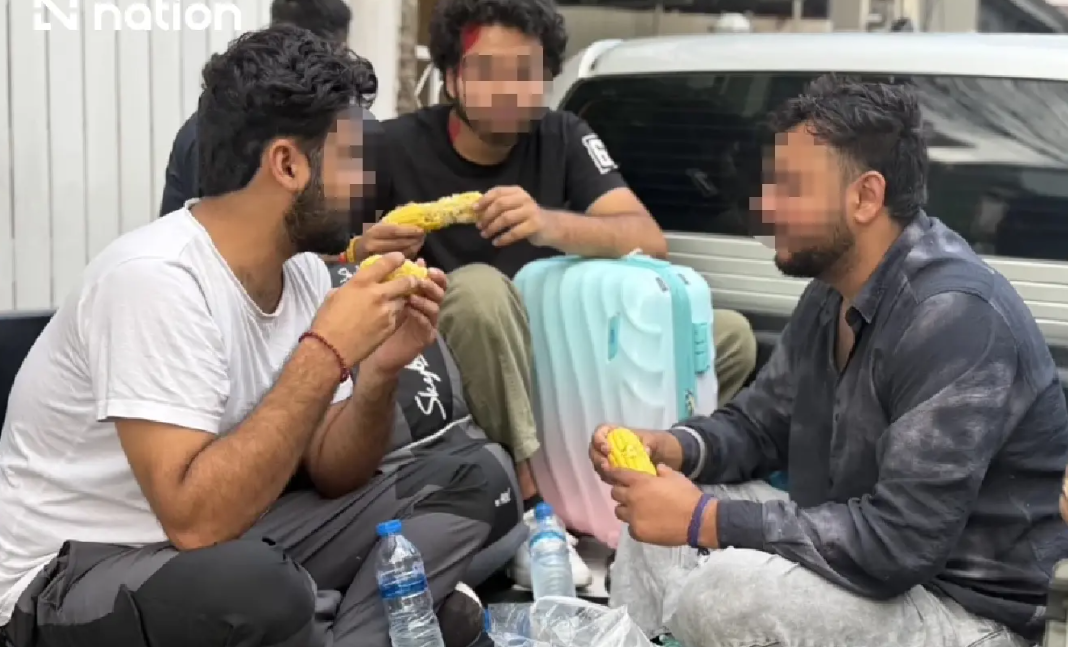
Thai authorities conducted a dramatic rescue operation in Pattaya on Monday, freeing three Indian tourists who had been abducted and held captive by an international organised crime syndicate demanding millions in ransom payments. The Chonburi Immigration Police and Pattaya City Police stormed a two-storey townhouse in a residential estate in Bang Lamung district at 4.09pm, discovering the victims secured on the upper floor with their limbs bound and mouths sealed with adhesive tape.
The three men—identified as Mohit, 23, Ashish, 24, and Himanshu, 20—had become ensnared in what law enforcement characterises as a sophisticated abduction scheme targeting vulnerable tourists. Upon liberation, the victims exhibited physical trauma consistent with violent assault. Investigators recovered red spray paint at the scene, which the gang had allegedly used to fabricate injury imagery in photographs and videos transmitted to the captives' families to pressure them into meeting the financial demands of approximately 1.4 million baht per person.
The investigation gained momentum after the Indian Embassy in Thailand alerted authorities on July 21, prompting Chonburi Immigration Police and Pattaya City Police to mobilise resources. Evidence emerged from video calls showing the restrained victims and detailed accounts from their relatives describing the coercive nature of the gang's communications. Investigators pieced together security footage and intelligence to pinpoint the detention location, culminating in the dawn-of-evening raid that successfully extracted the hostages before harm could escalate further.
The victims' ordeal began deceptively when they purchased what appeared to be a legitimate travel package from an individual presenting himself as a tour operator. Upon landing at Suvarnabhumi Airport in the early morning hours of July 21, the three were directed towards Sukhumvit Road in central Pattaya, where motorcycle riders approached them individually with promises of hotel check-in and meals. Instead, they were transported directly to the townhouse where gang members brandishing blades detained them forcibly.
Once confined, the captives endured systematic intimidation orchestrated by their abductors, who conducted ransom negotiations via phone and video calls directly with family members abroad. The psychological manipulation extended to claims that corrupt police officers were protecting the criminal enterprise, deliberately designed to prevent victims from seeking assistance from law enforcement. Threats of execution were employed to ensure compliance and discourage resistance, creating an atmosphere of terror that paralysed rational response among the frightened hostages.
The gang's operational sophistication suggests this was not an isolated incident. The victims disclosed that an additional Indian national had been previously detained at the same property before their arrival, subsequently released after relatives paid approximately 3 million rupees. This pattern indicates an established criminal network with developed targeting and extraction methodologies, likely preying systematically on inbound tourists through travel booking channels vulnerable to infiltration.
Authorities have identified all five suspected perpetrators as comprising four Pakistani nationals and one Indian national, though one suspect managing the premises managed to escape on a motorcycle during the police incursion. The expanded investigation now focuses on apprehending the remaining fugitives and dismantling the entire operation. Investigators secured adhesive tape and wooden implements used in the assaults as forensic evidence to strengthen prosecution proceedings.
The case carries significant implications for Thailand's regional tourism reputation and public safety perceptions, particularly given the country's heavy reliance on international visitor spending. The sophisticated nature of the abduction—targeting arriving tourists through compromised travel booking channels—represents a vulnerability in the visitor experience pipeline that extends from airport arrival through accommodation arrangements. Officials have signalled their commitment to pursuing the matter aggressively, recognising that high-profile criminal exploitation of tourists could trigger reputational damage affecting travel confidence throughout Southeast Asia.
For Malaysian travellers and regional tourism stakeholders, the incident illuminates broader security considerations regarding informal travel booking arrangements and the importance of booking accommodations and tours through established, verifiable operators. The gang's apparent proficiency in identifying vulnerable tourists at airports and exploiting the initial hours of arrival suggests that heightened vigilance during airport transfers and the first stages of tourism engagement represents prudent safeguarding practice. The willingness of authorities to conduct swift, coordinated intervention demonstrates official capacity to respond to serious criminal incidents, though the case underscores persistent vulnerabilities in cross-border tourism security frameworks that continue to present opportunities for organised crime exploitation.

