A secondary school student in Thailand's Nonthaburi province shot and killed his grandparents at their residence early Friday morning before proceeding to carry out an attack at Debsirin Nonthaburi School that resulted in seven deaths—including the attacker himself—and 15 wounded, according to police investigators handling the case.
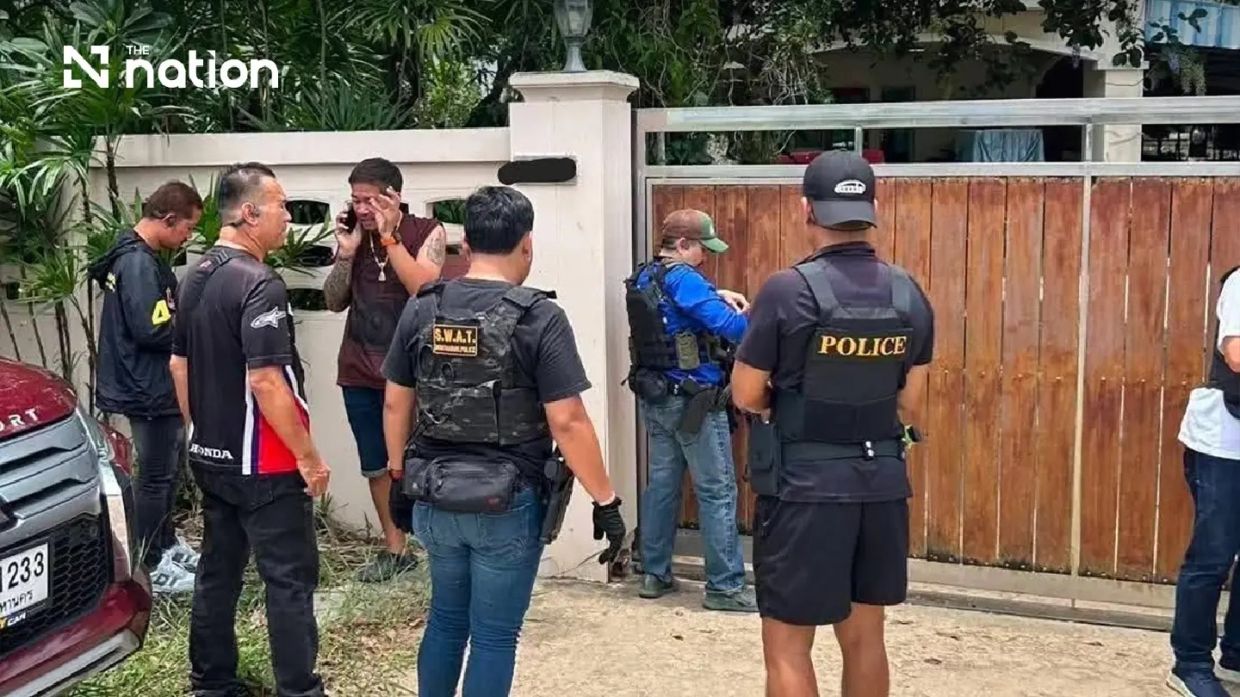
The suspect, identified as a Mathayom 2 student residing with his paternal grandparents in a residential area of Bang Bua Thong district, reportedly used the same firearm at both locations. Officers who examined the family home in Soi Wat Lat Pla Duk, Bang Khu Rat subdistrict discovered the elderly couple had died earlier that morning, with evidence suggesting they were shot with the weapon subsequently employed in the school assault.
The firearm used in both incidents was a CZ 9mm handgun legally registered to the grandfather, establishing immediate investigative focus on how a minor obtained access to a registered family weapon. This critical gap in security protocols has become central to understanding how the tragedy unfolded, as authorities work to determine the sequence of events that enabled the student to remove the loaded handgun from the residence and transport it to the educational institution.
Royal Thai Police spokesman Pol Lt Gen Trairong Phiwphan confirmed that officers had successfully contained the situation at the school and terminated the violence, with emergency responders removing all injured individuals and deceased persons from the campus. National Police Chief Pol Gen Kitrat Phanphet subsequently ordered comprehensive scene examination, evidence collection, and detailed forensic documentation of the school grounds to preserve the investigative record.
Establishing a coherent motive remains elusive at this preliminary stage, as investigators acknowledge that comprehensive analysis of the suspect's behavioural patterns, social environment, and personal circumstances will be necessary before meaningful conclusions can be drawn. Police have made preliminary contact with the student's guardians and confirmed he had been residing exclusively with his elderly relatives, though deeper contextual understanding will emerge only through sustained investigative effort examining the weeks and months preceding the attack.
The question of weapon accessibility has emerged as perhaps the most pressing investigative concern. While authorities have definitively established that the handgun belonged legally to the grandfather and was properly registered, critical unknowns persist regarding storage methods, ammunition sourcing, and the precise mechanics through which a juvenile overcame whatever security measures—if any—may have been in place. Investigators must reconstruct whether the weapon was stored loaded, kept in an accessible location, or if the student had prior knowledge of its whereabouts within the home.
These investigative gaps carry significance extending beyond the immediate case, raising uncomfortable questions about firearm storage practices within Thai households where weapons are registered for legitimate purposes such as self-defence or professional security. The incident exposes potential vulnerabilities in how registered firearm owners manage access and storage when minors are present in the residence, a consideration that may prompt broader policy discussions regarding responsible gun ownership protocols.
For Malaysian readers observing this tragedy, the case presents cautionary lessons about the intersection of family dynamics, youth mental health, and weapon accessibility. While Malaysia maintains significantly stricter gun ownership regulations than Thailand, this incident underscores how even in jurisdictions with ostensibly regulated firearm systems, breaches of storage protocols can result in catastrophic consequences. The case also illustrates how secondary school age students experiencing psychological distress or family conflict may pose risks to themselves and others if they gain access to lethal means.
Responding to the immediate humanitarian dimensions of the tragedy, National Police Chief Kitrat dispatched psychologists and mental health specialists from Police General Hospital to provide sustained support services to traumatised teachers, students, and other individuals affected by the school shooting. Recognition that mass violence inflicts profound psychological injury on surviving witnesses and community members has prompted intervention aimed at mitigating long-term mental health consequences and facilitating recovery processes for those exposed to the violent incident.
The shooting represents a severe shock to Thailand's education sector and the broader society, as school-based violence remains comparatively uncommon within the Southeast Asian nation despite occasional incidents. The involvement of a student as perpetrator rather than victim, combined with the preceding familial homicides, suggests potential underlying mental health crises or interpersonal family conflicts that escalated to fatal violence without apparent intervention or detection by responsible adults or institutional safeguards.
Investigators will likely examine communications, academic records, behavioural reports from teachers, and social interactions documented through school records and peer accounts to construct a comprehensive psychological and social profile explaining how the student progressed from living with grandparents to committing murders. The investigative process will also necessitate examination of whether warning signs were visible to educators, medical professionals, or family members before the violence occurred.
As authorities continue detailed investigation into circumstances surrounding both the homicides at the residence and the subsequent school attack, the case will undoubtedly prompt national conversations regarding school safety protocols, mental health services availability for students, and firearm ownership responsibilities. The convergence of these multiple failure points—whether in family dynamics, mental health screening, or weapon security—demonstrates how tragedy often emerges from the intersection of multiple preventable vulnerabilities rather than isolated singular causes.

