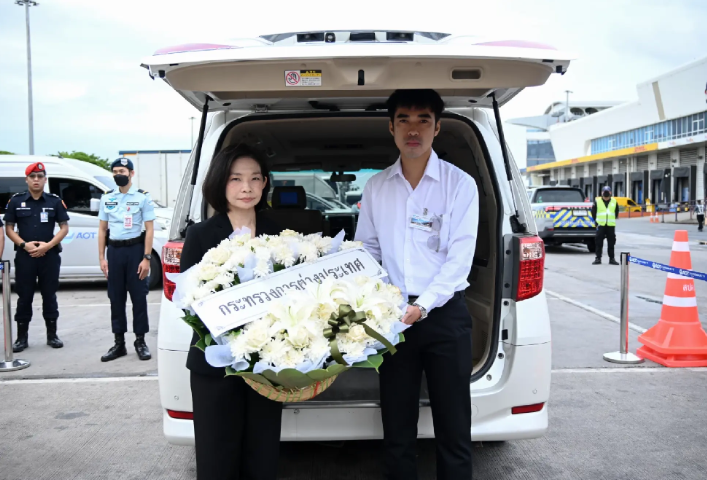
Thailand's Ministry of Foreign Affairs has completed the repatriation of Bavorntat Pengsuk, the 27-year-old travel content creator widely recognised online as 'Hlun Solo', following his death in Georgia's capital city of Tbilisi on 14 July 2026. The successful return of his remains marks the conclusion of a coordinated diplomatic effort involving Thai consular officials, Georgian authorities, and the deceased's family members, who have worked to navigate the complex procedures required for international repatriation.
The coordination of this sensitive process fell under the purview of Deputy Prime Minister and Foreign Minister Sihasak Phuangketkeow, who designated Prathuangtip Sirivithes, acting director-general of the Department of Consular Affairs, to oversee the formal reception arrangements upon the remains' arrival in Thailand. This high-level involvement underscores the prominence of Bavorntat within Thai popular culture and the diplomatic significance attached to ensuring the smooth return of nationals who die abroad, a responsibility that carries considerable weight for Southeast Asian governments managing their citizens' welfare internationally.
According to statements released by Jaithai Upakarnitikaset, the Foreign Ministry's director-general and official spokesperson, on Thursday last week, the Thai diplomatic mission in Ankara maintained continuous liaison with multiple stakeholders throughout the process. These included the deceased's immediate family, the Georgian government, and various relevant officials responsible for death investigations and repatriation logistics. The sustained engagement reflected standard protocol when Thai nationals encounter unexpected deaths in foreign jurisdictions, particularly when complexities or administrative barriers emerge.
The Royal Thai Embassy's proactive response demonstrates how consular services operate during crisis situations involving citizens abroad. Embassy personnel were promptly dispatched to Tbilisi to expedite the investigation into the circumstances surrounding Bavorntat's death, manage the intricate repatriation paperwork, and address administrative delays that had initially complicated the process. Such diplomatic intervention frequently proves essential in jurisdictions where bureaucratic procedures differ substantially from Thai systems, or where language barriers and unfamiliarity with local protocols could otherwise impede progress.
Bavorntat had cultivated a significant following through his travel vlogging content, documenting journeys and cultural experiences across various destinations for his substantial online audience. His content resonated particularly with younger Thai viewers interested in international travel and adventure narratives, positioning him as an influential figure within the digital content creation landscape of Thailand. The nature of his work—requiring extensive travel to foreign locations—inherently carries risks, yet his death in Georgia appears to have captured broader public attention given his media profile and the international circumstances involved.
Upon arrival in Thailand, the family initiated comprehensive forensic examination procedures to determine definitively the cause of death. This step represents standard practice in cases where death occurs under circumstances requiring medical clarification or where official investigations in the foreign jurisdiction may not have resolved all questions. The thorough examination conducted domestically affords the family and Thai authorities the opportunity to establish an independent medical record and ensure all relevant details are documented according to Thai standards.
Following the completion of these examinations and associated administrative requirements, Bavorntat's remains will be transported to his residence in Somdet district, Kalasin province in northeastern Thailand, where his family will conduct traditional Buddhist funeral ceremonies. These rites will allow his community and extended family to pay respects according to established Thai cultural and religious practices, providing closure for those who knew him personally and enabling his grieving family to observe mourning customs significant within Thai society.
The incident highlights ongoing challenges that Thai nationals—particularly young professionals, content creators, and travel enthusiasts—face when pursuing opportunities and experiences abroad. While international travel and work have become increasingly accessible for Thais seeking personal fulfilment or professional advancement, unexpected deaths in foreign countries create complex situations requiring diplomatic coordination, consular support, and often substantial emotional and logistical burden on families attempting to bring their loved ones home.
For Malaysia and the broader Southeast Asian region, the case underscores the importance of robust consular services and diplomatic relationships between nations. As more young Southeast Asians pursue travel, content creation, and international experiences, governments must maintain efficient systems for assisting nationals in distress and managing repatriation when tragedy occurs. The Thai Foreign Ministry's handling of this situation reflects established best practices that other regional governments similarly employ when their citizens encounter difficulties abroad, emphasising the value of maintaining responsive diplomatic infrastructure across the region.

