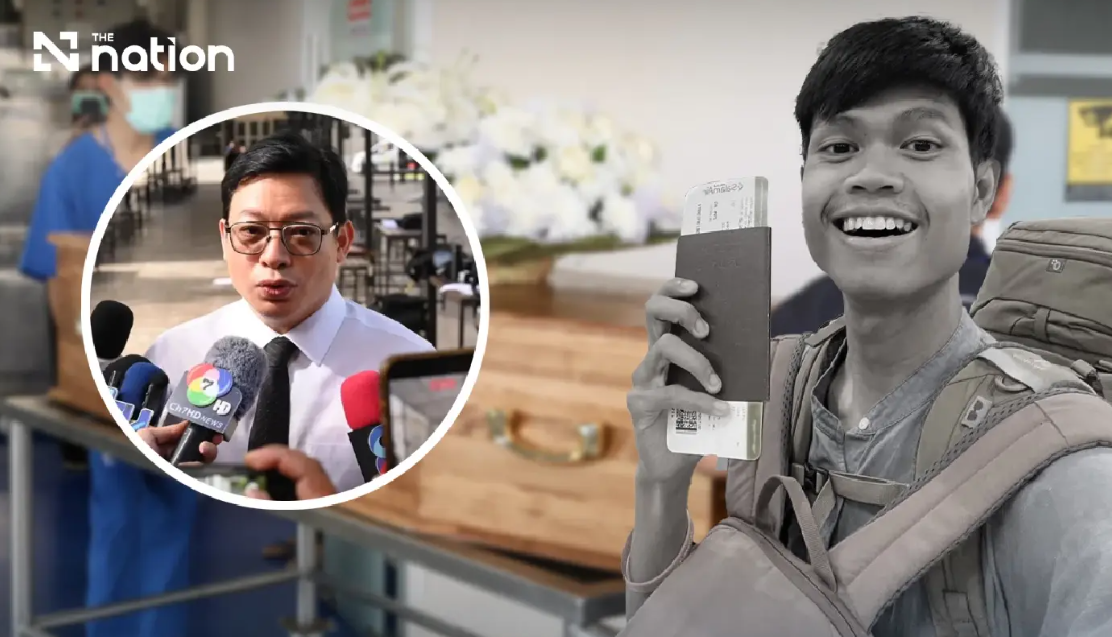
The death of prominent Thai travel vlogger Bawornthat "Hlun Solo" Pengsuk appears to have stemmed from cardiac and circulatory system failure, according to initial post-mortem examination results disclosed by Thailand's Central Institute of Forensic Science. However, investigators have explicitly declined to rule out the possibility that toxic substances or chemical exposure may have played a contributory role in his demise. The vlogger, who had become well-known for documenting his travels across multiple countries on social media platforms, died while in Georgia, prompting authorities to conduct a thorough investigation into the circumstances surrounding his sudden passing.
Associate Professor Dr Worawee Waiyawut, serving as deputy director of the Central Institute of Forensic Science under Thailand's Ministry of Justice, presented the preliminary findings on Thursday, August 6, following the return of the deceased's remains from Georgia. The Thai forensic team had conducted a comprehensive post-mortem examination in collaboration with Georgian medical professionals who had already performed their own detailed autopsy. Dr Worawee explained that the examination findings had been communicated to Hlun's family members, who subsequently granted permission for the preliminary results to be released to the public, indicating a degree of transparency in what would otherwise have been a private medical matter.
The physical examination revealed no external signs of trauma, including bruising, contusions, or evidence of assault. Investigators found no fractures or broken bones, and no abnormalities were detected in any organs other than the heart itself. This absence of external injuries has been significant in ruling out foul play as an immediate cause of death, though it has not entirely alleviated the family's concerns about potential chemical or toxic involvement. The Georgian medical team's examination appeared particularly thorough according to Thai authorities, suggesting that international cooperation in the investigation has been reasonably comprehensive despite potential language and jurisdictional barriers.
Further sophisticated laboratory testing will be required to complete the investigation, with particular focus on cardiac tissue analysis and examination of potential genetic predispositions to sudden cardiac events. Forensic pathologists must also investigate whether the death might constitute a case of sudden unexplained nocturnal death syndrome, colloquially known as sudden unexplained death during sleep. These determinations cannot be made through simple visual examination and require advanced histological and genetic analysis. The Ministry of Justice has committed to coordinating with Georgian authorities to obtain comprehensive records of their post-mortem findings and all chemical testing results, though officials acknowledge that gathering this international documentation will require considerable time and bureaucratic coordination.
The absence of a specified cause of death on the Georgian death certificate has emerged as a particular frustration for both Thai authorities and the deceased's family. Rather than listing heart failure or any other specific condition, Georgian authorities apparently issued a certificate that left the actual cause undetermined, thereby necessitating the supplementary Thai examination. This ambiguity reflects potential differences in medical certification practices between the two countries and underscores the importance of the continued investigation.
Somsak "Mos" Butsri, Hlun's elder brother, has assumed the role of family spokesperson throughout this process and provided crucial context regarding the family's concerns and unanswered questions. Speaking before the preliminary autopsy results were officially released, Somsak explained that the Thai forensic examination represented the first post-mortem procedure formally requested by the family precisely because they retained substantial doubts about the circumstances of his death. The family's decision to commission an independent Thai examination reflected their dissatisfaction with the information provided by Georgian authorities and their determination to pursue a thorough, independent investigation that might shed light on unanswered questions.
The family specifically prioritized testing for toxic and chemical substances, comprehensive cardiac examination, and investigation into alternative potential causes of death. Somsak noted that Georgian authorities had provided minimal detail regarding their own findings, furnishing only a death certificate while retaining organ and tissue samples without explaining what testing those samples would undergo. This lack of transparency from Georgian officials has clearly deepened the family's concerns and motivated their pursuit of parallel investigation in Thailand. The family now intends to compare results from both Thai and Georgian investigations once the Thai findings become available, with particular attention to any evidence of toxic substance involvement, which remains a significant source of concern despite the preliminary cardiac findings.
Regarding speculation that Hlun may have succumbed to sudden unexplained death during sleep, a condition that has received attention in Southeast Asian public health discussions, Somsak emphasized that no such diagnosis has been confirmed by official testing. He expressed uncertainty about whether his younger brother possessed any underlying cardiovascular conditions, noting that Hlun did not habitually discuss health matters with his family members. Despite the preliminary cardiac findings, Somsak made clear that the family would vigorously pursue legal remedies should any evidence emerge suggesting that Hlun had been physically assaulted or subjected to violence. This determination reflects the family's commitment to obtaining complete answers and ensuring justice if criminal conduct was involved in any way.
A particularly striking detail in the investigation is that virtually all of Hlun's personal belongings failed to return to Thailand with his remains, with only his passport accompanying the body. This absence of personal effects has further compounded the family's concerns about the circumstances of his death and the handling of his case by Georgian authorities. Such limited return of personal property raises questions about investigative procedures and whether all relevant evidence was adequately documented and preserved. The family's concerns extend beyond the medical aspects of the investigation to include questions about the overall conduct and transparency of Georgian authorities handling the case.
The post-mortem examination was expected to conclude by Friday, August 7, after which the family planned to transport Hlun's remains to his home province of Kalasin in northeastern Thailand for traditional funeral rites. Final cremation arrangements remain to be determined following family consultation. Somsak noted that Hlun's elderly grandmother, despite the profound grief of losing her grandson, had requested simply that he be brought home. The family expressed uncertainty about her emotional response upon seeing his body, reflecting the human dimension of this investigation that extends beyond forensic and medical considerations.
Somsak's public statements throughout this ordeal have maintained a measured tone while clearly articulating the family's determination to obtain complete answers. He expressed gratitude to people throughout Thailand who assisted in bringing his younger brother's remains home, acknowledging the outpouring of support from the Thai public and potentially government officials involved in repatriating the body. The case has garnered significant public attention in Thailand, reflecting both the prominence of Hlun's social media presence and broader public interest in understanding how such a young, seemingly healthy travel influencer could die suddenly while abroad. The ongoing toxicology and genetic testing will ultimately determine whether the preliminary cardiac findings represent a complete explanation or merely one component of a more complex medical picture.

