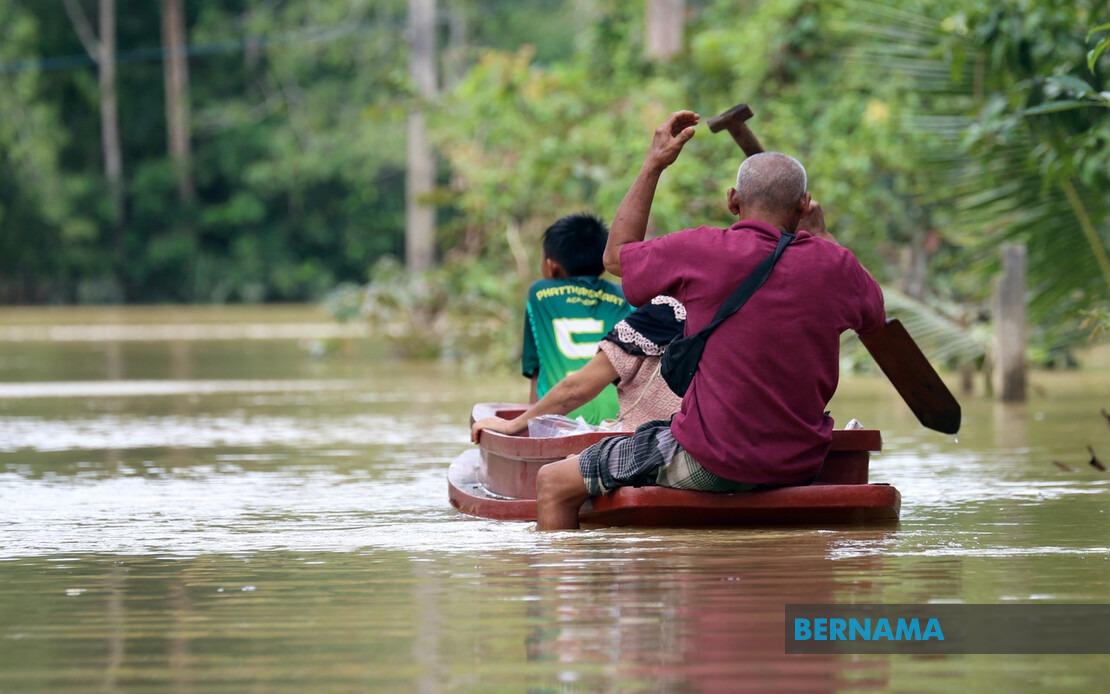
Thailand has strengthened its institutional response to natural disasters by restructuring its emergency management architecture, signalling mounting concerns about climate volatility in Southeast Asia's second-largest economy. The government's upgraded framework reflects growing recognition that traditional ad-hoc approaches are insufficient to address the increasing frequency and intensity of climate-related emergencies threatening the nation's agricultural heartland and urban centres.
The newly implemented system pivots on four geographically distributed regional committees tasked with orchestrating a more agile and cohesive response to both excessive moisture and prolonged dryness. Deputy government spokeswoman Capt Patdarasm Thongsaluaykorn detailed the initiative on Tuesday, emphasising that the restructuring prioritises rapid information flow, unified command structures, and seamless coordination among previously siloed agencies. This architectural shift aims to compress the time between disaster identification and intervention, a critical factor in minimising casualties and economic losses in densely populated regions.
The scale of potential exposure is staggering. Thai authorities are actively tracking 1,363 locations classified as vulnerable to inundation and an additional 444 communities facing acute water scarcity risks. This dual mapping reflects Thailand's inherent geographical predicament: the nation simultaneously battles both the monsoon-driven deluge of the wet season and the arid stress of prolonged dry periods. The identification of these zones enables pre-positioned resource allocation and evacuation planning, transforming passive vulnerability into active preparedness.
The mandate assigned to these regional bodies extends beyond reactive crisis management into comprehensive disaster governance. Committee responsibilities encompass real-time meteorological and hydrological monitoring, tactical coordination of emergency operations across multiple agencies, administration of relief distribution and compensation claims, and orchestration of rehabilitation and reconstruction initiatives. This holistic approach acknowledges that effective disaster response requires seamless integration from warning systems through recovery phases. Critically, the committees possess authority to direct government agencies within their jurisdictions, enabling faster decision-making without the bureaucratic delays that typically hobble emergency responses in developing economies.
Deputy Prime Minister Yodchanan Wongsawat's assumption of leadership over the northern regional committee underscores the political priority assigned to disaster management. That Yodchanan combines responsibility for higher education and scientific research with disaster governance suggests an intention to embed evidence-based approaches and technical expertise into emergency operations. His inaugural committee meeting at the Department of Disaster Prevention and Mitigation on Tuesday symbolised the mechanism's activation, moving beyond structural announcements into operational reality.
Immediate meteorological hazards underscore the urgency of these preparations. Thailand's Meteorological Department has issued alerts for heavy precipitation and flash flooding across the northern, northeastern, and eastern regions during early August, with maritime warnings extending from the upper Andaman Sea through the upper Gulf. Small vessel operators have been advised to remain ashore during this window, a precaution that disrupts fishing and tourism activities but reflects serious flood expectations. These near-term threats provide immediate testing grounds for the restructured response mechanisms.
Beyond the cyclical monsoon challenge lies a more insidious climatic threat that could reshape Thailand's food security and economic stability. Meteorological forecasts anticipate the emergence of a Super El Niño phenomenon beginning in October, persisting through the early phases of the 2027 rainy season. This climatic pattern historically suppresses rainfall across Southeast Asia by substantial margins; Thai authorities project at least a 10 percent reduction in precipitation, though actual deficits often exceed projections. Such moisture deficits carry cascading implications for Thailand's rice cultivation, particularly in the northeastern agricultural provinces that constitute the national granary.
The prospective drought's economic ramifications extend far beyond farm-gate impacts. Thailand's rice export sector, which generates substantial foreign exchange and constitutes a cornerstone of rural livelihoods, faces potential disruption. Reduced surface water availability threatens both irrigation-dependent cultivation and aquaculture operations. Municipal water supply systems serving Bangkok and provincial cities may experience stress during the dry months, necessitating demand management interventions. Agricultural deterioration typically precipitates rural-to-urban migration as farm incomes collapse, intensifying pressure on urban labour markets and informal settlement expansion.
For neighbouring Malaysia and the broader Southeast Asian region, Thailand's climate vulnerability carries reverberating consequences. Thai rice scarcity could trigger regional price inflation, affecting food security and consumer purchasing power across Brunei, Malaysia, and Singapore. Transboundary water challenges already characterise the Mekong Basin, and prolonged Thai drought conditions complicate water allocation negotiations with Cambodia, Laos, and Vietnam. Thailand's experience with climate governance innovation offers instructive lessons for Malaysian policymakers contemplating their own institutional frameworks for managing increasingly volatile precipitation patterns.
The government's framing emphasises protection of lives, property, and livelihoods through coordinated, rapid assistance delivery to affected populations. This rhetoric reflects international disaster management best practices that prioritise community-centred responses over centralised, slow-moving bureaucratic distribution systems. Whether the four regional committees can translate structural reorganisation into tangible improvements in disaster outcomes depends substantially on resource adequacy, personnel training, inter-agency trust, and sustained political commitment extending beyond immediate crisis cycles.
Thailand's institutional innovation arrives at a moment when climate scientists increasingly view the Thai Peninsula as a bellwether region for Southeast Asian climate impacts. The nation's dual exposure to flooding and drought, its concentration of agricultural production, and its position within the Mekong hydrology make it acutely sensitive to global climate oscillations. By establishing governance mechanisms explicitly designed to accommodate rapid decision-making and cross-agency synchronisation, Thailand attempts to position itself ahead of intensifying climatic disruptions rather than perpetually reacting to disasters already unfolding.

