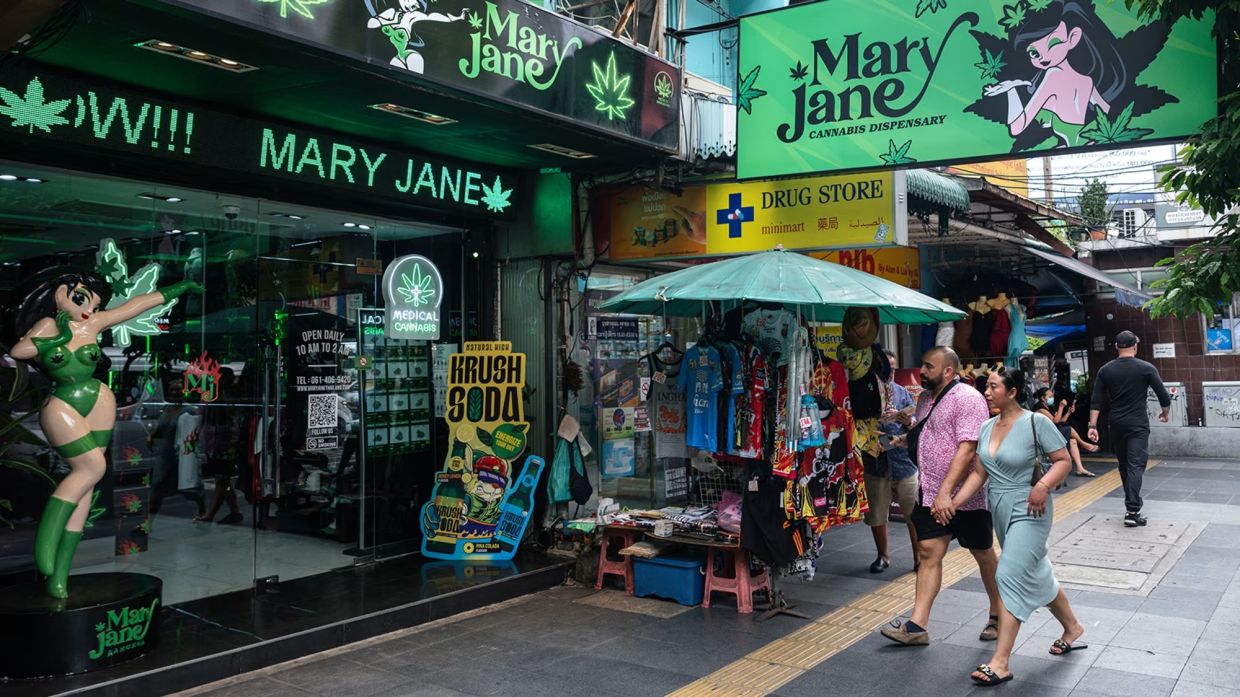
Thailand's approach to cannabis regulation has become increasingly fraught, with the House Public Health Committee convening in mid-June to consider whether the country should reverse its 2022 liberalisation and return the plant to narcotics control. The meeting, chaired by Sakoltee Phattiyakul, exposed fundamental disagreements over how Bangkok should manage a substance that has spawned a fledgling industry while simultaneously creating public health and law enforcement headaches. The tensions revealed at the hearing underscore a broader Southeast Asian regulatory challenge: how nations can harness potential economic and medicinal benefits from cannabis whilst preventing misuse and protecting vulnerable populations.
Thailand's relationship with cannabis has been notably turbulent. In June 2022, the country became the first in Asia to decriminalise the plant, positioning itself as a regional pioneer in drug policy reform. Just three years later, the momentum has stalled. The Department of Thai Traditional and Alternative Medicine, through Dr Tewan Thaneerat, acknowledged persistent concerns since the initial liberalisation. By June 2025, the Public Health Ministry attempted to impose structure by issuing three regulations governing research, sales, processing and exports. Yet these measures appear insufficient to contain the proliferation that has followed.
The regulatory vacuum has created space for both legitimate and illegitimate operators to flourish. Medical professionals and public health advocates, represented by Assoc Prof Dr Smith Srisont and his network, argue that the current framework is fundamentally flawed. While cannabis extracts containing more than 0.2% THC remain classified as narcotics under existing law, the flower itself occupies an ambiguous middle ground as a controlled herb under the Protection and Promotion of Thai Traditional Medicine Wisdom Act 1999. This distinction has proved unworkable in practice. Parts of the cannabis plant exist entirely outside criminal controls, creating pathways for unregulated cultivation and distribution that authorities struggle to monitor or restrict.
Ekkapop Sittiwantana, deputy chairman of the committee from the People's Party, articulated what many in the medical establishment believe: cannabis should be temporarily returned to the narcotics list until comprehensive legislation arrives. His concern centres on unregistered farms and informal sales channels that have become widespread. Without proper registration requirements, enforcement agencies cannot distinguish between licensed operators working within legal parameters and grey-market actors exploiting regulatory ambiguities. The suggestion to implement mandatory plant registration reflects frustration that the current system lacks even basic oversight mechanisms.
The Public Health Ministry has drafted a dedicated cannabis and hemp bill designed to create more coherent regulation. The legislation was submitted to the Cabinet under the previous government but stalled before Parliament dissolved. Under the current administration, the bill has re-entered the pipeline, undergoing public hearings expected to conclude by late July before Cabinet resubmission. This legislative approach represents the government's preferred path forward—replacing ad-hoc controls with purpose-built regulation. However, the timeline remains uncertain, and medical authorities increasingly question whether Thailand can afford to wait.
The Food and Drug Administration outlined its existing oversight mechanisms to the committee, emphasising that herbal medicines remain subject to strict standards. Its licensing system covers production sites, processing plants, imports and retail operations through certified shops. Initial inspections found most tested products meeting label standards and material specifications. Yet the FDA's own admission reveals the core problem: officially sanctioned sales channels capture only a fraction of the market. The proliferation of unregistered outlets selling unverified products has outpaced regulatory capacity. This gap between legal supply and actual market demand creates precisely the conditions that perpetuate informal and illicit sales.
Cannabis operators and industry advocates, particularly the Thai Cannabis Future Network, presented a starkly different perspective that carries weight in commercial and agricultural circles. They contend that legal operators face impossible competition from smuggled goods, the black market and persistent legal uncertainty. The network raised serious allegations regarding officials demanding benefits linked to cannabis licences—a claim suggesting corruption has infiltrated the nascent regulatory system. Additionally, they highlighted problems with medical prescriptions, which they describe as prohibitively expensive for farmers and sometimes traded through non-healthcare channels, further corrupting the system's integrity.
The industry's counter-argument appeals to broader economic considerations. Proponents argue that cannabis possesses not only medicinal value but cultural and agricultural significance worthy of mainstream acceptance. They oppose framing cannabis solely as a medical product restricted to pharmaceutical applications, contending instead that a fair regulatory framework should accommodate diverse legitimate uses and provide viable livelihoods for farmers and legitimate businesses. This position resonates with Thailand's agricultural sector, where cannabis cultivation has offered income opportunities to rural communities facing economic pressure.
Sakoltee's conclusions from the June 18 meeting signal that the committee intends to approach regulation more comprehensively. He directed officials to compile definitive lists of legally licensed cannabis shops and FDA-certified products—a first step toward establishing what actually exists in the market. He also stressed that future legislation must establish protective distance requirements between cannabis retail outlets and educational institutions, directly addressing concerns about youth access. The committee indicated it would conduct broader surveys of cannabis-related harms and affected populations, suggesting the debate will become more evidence-based.
The path forward remains genuinely uncertain. The committee has signalled readiness to consider alternative legislative approaches from multiple sources, indicating that the Public Health Ministry's bill will not necessarily prevail unchanged. This openness could accelerate regulation or extend the limbo period, depending on whether competing drafts sharpen or muddle the policy discussion. What seems clear is that the current status quo—a substance nominally liberalised but inadequately regulated, surrounded by legal loopholes and informal markets—satisfies no one: not medical professionals concerned about public health, not businesses seeking stable operating environments, and not enforcement agencies lacking clear authorities.
For Malaysia and other Southeast Asian nations observing Thailand's experience, the unfolding situation offers cautionary lessons about cannabis regulation. The Thai case demonstrates that decriminalisation without comprehensive regulatory frameworks can create governance vacuums that prove difficult to fill retroactively. The spread of uncontrolled sales, emergence of grey-market operators and potential corruption of oversight mechanisms all reflect inadequate planning before liberalisation. As regional neighbours consider their own approaches to cannabis policy—whether driven by medical interest, agricultural economics or drug policy reform—the Thai experience suggests that regulatory architecture must precede market liberalisation rather than follow it.

