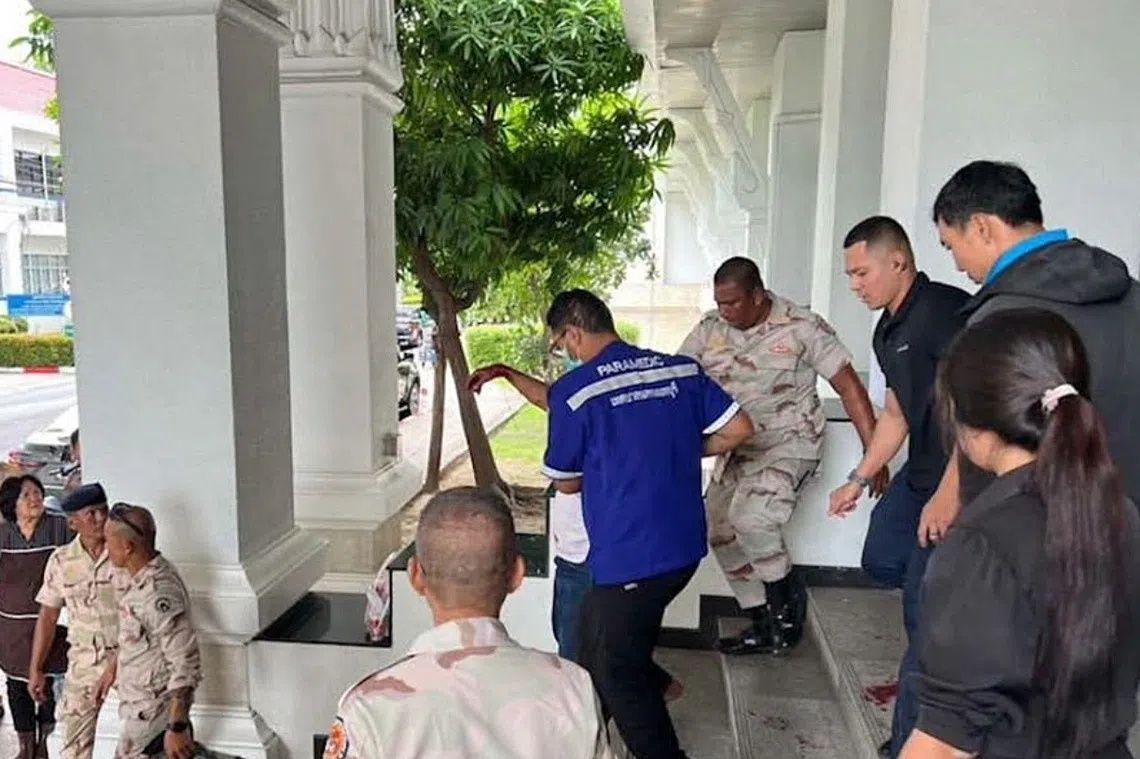
Thailand confronted yet another firearms incident on Monday when an armed man attacked a local government office on the periphery of Bangkok, wounding two people including a senior provincial administrator and his driver. The shooting occurred just 72 hours after a devastating school massacre in the same province that claimed nine lives and reignited urgent discussions about firearms regulation across Southeast Asia's second-largest economy. The arrested suspect is identified as a former member of parliament, according to Major General Dejrapee Kongdee, the provincial police commander who confirmed both casualties had been transported for medical care.
The Monday attack represents a troubling escalation in Thailand's recent security challenges and underscores how comprehensively the nation's gun violence epidemic has pervaded both institutional and educational spaces. The victim wounded at the government office held a senior administrative position, signalling that no sector of Thai society remains insulated from these incidents. Authorities swiftly apprehended the alleged perpetrator, preventing what could have developed into a more catastrophic situation. Yet the proximity of this incident to the school shooting—occurring within the same Nonthaburi Province—has amplified public anxiety and forced policymakers to confront uncomfortable questions about firearms access and regulation.
The underlying catalyst for the current security crisis stems from Friday's attack at Debsirin Nonthaburi School, which has become Thailand's deadliest mass shooting in nearly four years. A 14-year-old student opened fire after killing his grandparents at home, then proceeded through the school premises where he inflicted fatal wounds on eight others before taking his own life. The incident resulted in nine deaths and injured more than 20 additional people, many of them children and educators. The psychological impact of such a tragedy extending across multiple locations—from a residential setting to an educational institution—has exposed the vulnerability of Thai communities to armed violence.
In response to the unfolding security crisis, Prime Minister Anutin Charnvirakul has signalled his administration's determination to strengthen gun control legislation and enforcement mechanisms. His commitment follows a pattern among Thai leaders who acknowledge the need for stricter regulations following mass casualty events, though implementation and enforcement historically prove challenging. The government has indicated that new measures will target both civilian access to firearms and the conditions under which weapons can be legally obtained and retained.
The immediate aftermath of the school shooting demonstrated Thai authorities' attempt to restore normalcy while simultaneously implementing enhanced security protocols. On Monday, students across the affected region returned to classrooms, though many institutions instituted metal detectors and additional screening procedures. These security installations serve dual purposes: they provide tangible reassurance to parents and educators whilst simultaneously normalising weapons surveillance in educational settings. Such measures reflect a reactive rather than preventive approach to gun violence, addressing symptoms rather than addressing the root causes of firearm availability and misuse.
Thailand's gun violence landscape presents particular complexities within the Southeast Asian context. Unlike some neighbouring nations with stringent firearms prohibition policies, Thailand permits civilian gun ownership through a licensing system ostensibly designed to ensure responsible stewardship. However, enforcement inconsistencies, the prevalence of illegal weapons, and insufficient background check mechanisms have created conditions enabling individuals with questionable intentions to access firearms. The fact that a teenager managed to obtain a weapon capable of inflicting mass casualties raises fundamental questions about supervision protocols and the effectiveness of existing gatekeeping mechanisms.
The shooting incidents occurring within days of each other have catalysed broader societal introspection regarding Thailand's relationship with firearms. Media discussions, parliamentary debates, and civil society commentary have increasingly focused on whether civilian gun ownership serves legitimate protective purposes or whether the societal costs—measured in lives lost and communities traumatised—outweigh any perceived benefits. Gun owners themselves have emerged as divided actors in this conversation, with some defending legitimate sporting and protective uses whilst others acknowledge that reform has become necessary.
For Malaysia and other Southeast Asian nations observing Thailand's security challenges, these incidents serve as cautionary reminders regarding the consequences of permissive firearms licensing regimes. Malaysia has maintained comparatively stricter controls on civilian gun ownership, with licensing requirements, security vetting, and usage restrictions more comprehensively enforced. Singapore's near-prohibition approach has similarly resulted in minimal civilian gun violence. Thailand's trajectory suggests that without sustained political will and comprehensive legislative action, the frequency and severity of such incidents may intensify rather than abate.
The international dimension of this crisis cannot be overlooked. Southeast Asia has historically maintained lower rates of mass casualty shootings compared to regions with higher civilian firearms prevalence. Thailand's recent trajectory challenges this regional distinction and may influence policy discussions across the Association of Southeast Asian Nations (ASEAN). Other member states might leverage Thailand's experiences when evaluating their own firearms regulations and security frameworks, particularly as global weapons trafficking networks and domestic stockpiles remain persistent concerns.
Looking forward, the critical variable determining whether Thailand experiences genuine policy change centres on political durability and enforcement commitment. Previous governments have announced firearms restrictions following mass shootings, only to encounter implementation obstacles stemming from law enforcement capacity constraints, political resistance from sporting and rural constituencies, and competing security priorities. Prime Minister Anutin Charnvirakul's administration will face pressure to translate rhetorical commitment into sustained legislative and executive action. This will require not merely new restrictions but also investment in enforcement infrastructure, training programmes, and public compliance mechanisms.
The psychological toll on Thai society extends beyond the immediate casualties and injuries. Schools, government offices, and public spaces now require security enhancements and threat assessments, fundamentally altering the character of civic participation. Parents contemplate their children's safety during ordinary educational activities, educators balance pedagogical responsibilities with security vigilance, and administrators allocate resources to protective infrastructure rather than programme development. These secondary consequences, though less visually dramatic than casualty counts, represent significant costs to social cohesion and institutional functioning.
Thailand stands at a pivotal juncture regarding its relationship with firearms and public safety. The convergence of two major shooting incidents within a compressed timeframe has created rare political and social consensus that change has become unavoidable. Whether this moment generates transformative policy action or dissipates into partial measures and renewed complacency will substantially determine whether Thailand's gun violence epidemic becomes endemic or reversible.

