Thailand's government has moved swiftly to tighten firearms regulations in the aftermath of a tragic school shooting that claimed nine lives, signalling a dramatic policy shift aimed at curbing gun violence in the kingdom. Prime Minister Anutin Charnvirakul announced a nationwide one-year moratorium on issuing new firearm carry permits on Tuesday, framing the decision as essential to maintaining public order and restoring citizen confidence in state security.
The shooting occurred on Friday when a student opened fire at a school, killing nine people including the grandparents of the young gunman, who subsequently took his own life. The incident has catalysed a broader governmental response that extends well beyond the simple suspension of permits. The Department of Provincial Administration, operating under the Ministry of Interior's direction, has instructed local authorities across the country to implement substantially more rigorous vetting procedures for any outstanding firearm purchase applications. These enhanced protocols require comprehensive background investigations conducted under provisions of the Firearms Act, representing a notable elevation of screening standards compared to previous practice.
Parallel to these permitting restrictions, authorities are significantly increasing their monitoring of individuals who already hold valid firearm ownership and carry licenses. The government intends to strengthen compliance verification mechanisms to ensure that licensed gun owners continue meeting all legal obligations and safety standards. Thailand's existing firearms law stipulates that weapons must remain secured within residential premises and cannot be carried into public spaces except under specific lawful justifications. Breaching these restrictions incurs severe criminal penalties, including potential imprisonment of up to five years, monetary fines reaching 10,000 baht (approximately $301), or combinations thereof.
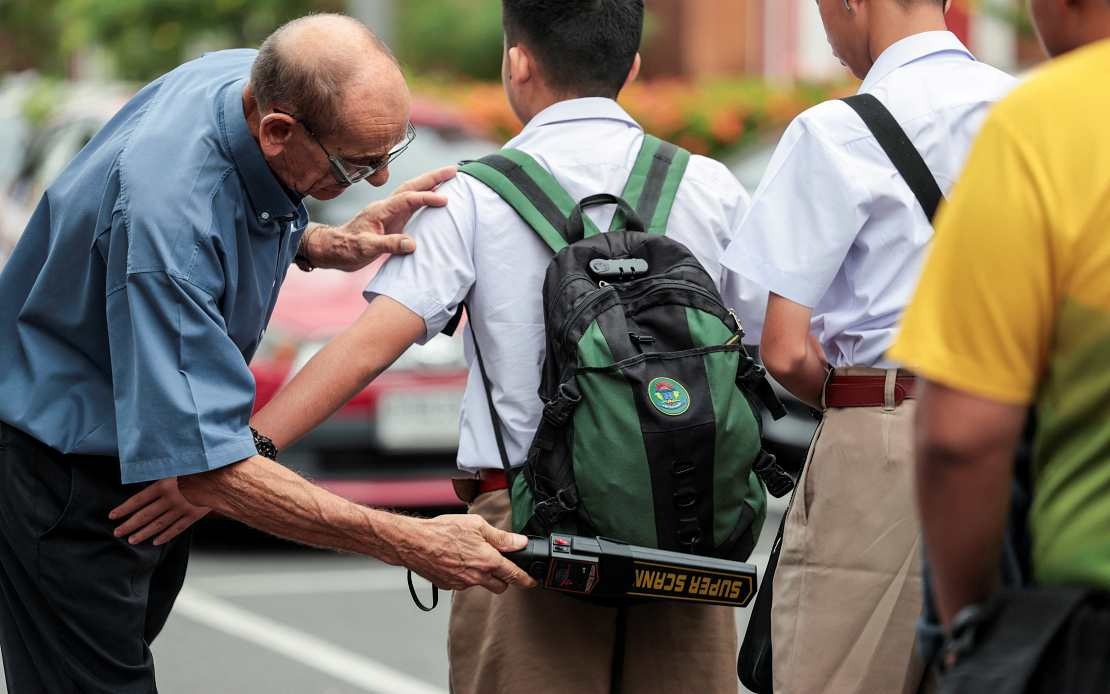
Education Minister Prasert Jantararuangthong has developed a complementary multi-point safety framework designed to prevent recurrence of such catastrophic incidents. This comprehensive package, submitted to the Cabinet for consideration, encompasses mandatory psychological evaluations for students, institutionalised emergency response drills across educational facilities, and uncompromising disciplinary protocols targeting bullying conduct and unauthorised weapons possession. The holistic approach acknowledges that firearm regulation alone cannot address the underlying factors contributing to school violence, necessitating intervention across mental health, institutional preparedness, and school culture dimensions.
The timing of these policy initiatives is particularly significant for Southeast Asia, where relatively stricter gun ownership frameworks in most countries contrast sharply with Thailand's historically more permissive approach. Malaysia and Singapore maintain considerably tighter restrictions on civilian firearm access, and this Thai incident may provoke regional policy discussions about optimal balancing of public safety against individual rights. The school shooting represents a rare but alarming deviation from Thailand's generally lower gun violence profile compared to countries with more liberalised weapons policies.
The suspension period affords Thai administrators critical opportunity to evaluate the efficacy of enhanced screening protocols and supervisory measures before resuming normal permit issuance. Evidence gathered during this one-year interval regarding compliance trends, incident frequencies, and community perceptions will inform whether current restrictions warrant extension or whether modified frameworks might achieve equivalent safety outcomes with less restrictive implementation.
Separately, the arrest of a former Thai parliamentarian in connection with the death of a Nonthaburi Provincial Administrative Organisation president underscores persistent challenges with political violence and weaponry misuse within Thailand's institutional structures. This incident, occurring only days after the school tragedy, reinforces public perception that firearm availability facilitates violence across multiple social contexts and institutional environments.
For Malaysian observers, Thailand's rapid regulatory response offers instructive precedent regarding crisis-driven policy formulation. Malaysia's own firearms licensing framework, administered through the Ministry of Home Affairs, already incorporates numerous elements that Thai authorities are now implementing—stringent background verification, secure residential storage requirements, and restrictions on public carrying except under restricted professional circumstances. Thailand's evolving policy trajectory suggests recognition that initial regulatory frameworks occasionally require substantial reinforcement when tragic incidents expose systemic vulnerabilities.
The effectiveness of Thailand's one-year suspension will depend substantially on implementation consistency across provincial administrations and whether the government sustains political will for maintaining stricter standards even as immediate public pressure diminishes over subsequent months. International experience indicates that emergency measures frequently undergo erosion through bureaucratic drift or political compromise unless accompanied by sustained public engagement and transparent progress reporting. Thailand's commitment to this enhanced supervisory regime will test institutional capacity to maintain security improvements beyond the immediate crisis response phase, particularly given competing budgetary priorities and administrative resource constraints typical across Southeast Asian governance structures.

