Thailand's government has shelved planned peace negotiations with southern insurgent groups, originally set for September in Malaysia, in the aftermath of a devastating militant assault in Narathiwat that left five rangers dead and six civilians injured. The postponement marks a significant setback to diplomatic efforts aimed at resolving decades of conflict in the nation's southernmost provinces, signalling that Bangkok views the resumption of violence as incompatible with meaningful dialogue at this juncture.
Thanat Suwannanont, who directs both the National Intelligence Agency and chairs Thailand's Southern Border Provinces Peace Dialogue Panel, explained the government's decision to reporters on Tuesday. He characterised the violence as too severe to overlook while negotiations were still in their early stages, noting that prior to the attack, discussions had been progressing constructively. The timing of the incident—occurring precisely when the peace process was gathering momentum—has forced authorities to fundamentally reassess whether conditions remain suitable for meaningful engagement with the armed groups.
The attack itself unfolded on Wednesday evening in Ban Bukit Sami village, located in Rangae district of Narathiwat province. Six gunmen, their faces covered and dressed entirely in dark attire, unleashed automatic weapons fire and detonated multiple pipe bombs against a security checkpoint at approximately 6:45 pm local time. The violence resulted in the immediate deaths of five rangers, whilst a separate incident left six civilians wounded, among them a three-year-old girl caught in the crossfire. The brutality and scale of the assault marked a dramatic escalation in militant activity during what many hoped would be a window of opportunity for diplomatic progress.
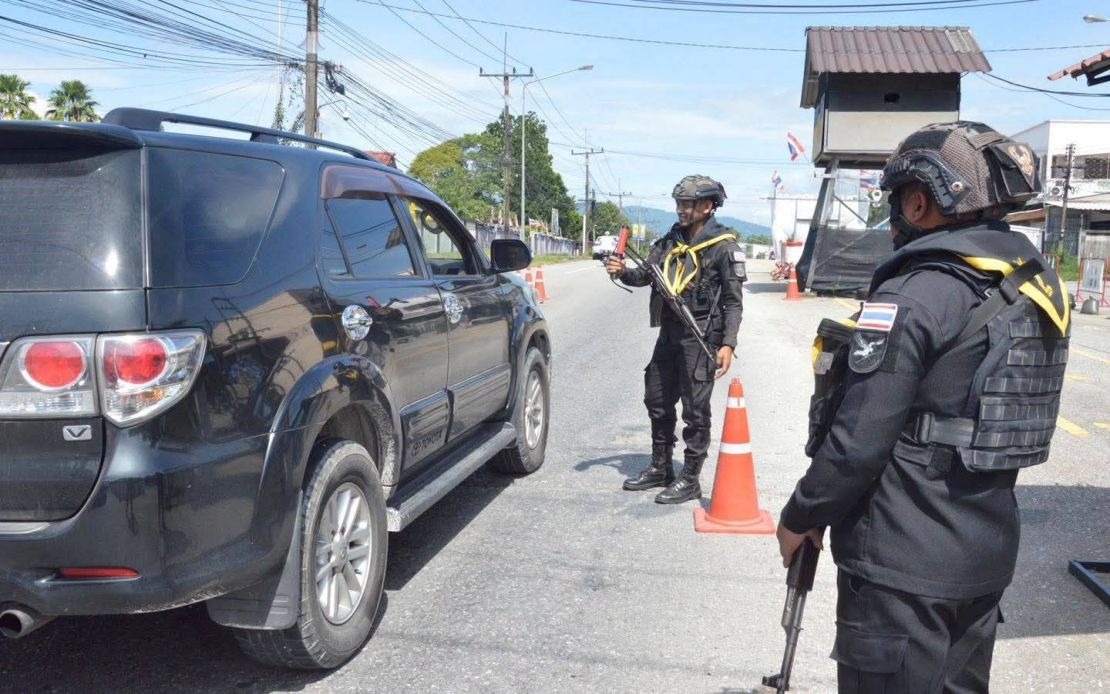
In response to the violence, Thai military authorities activated Martial Law across thirteen districts within Narathiwat province, broadening security operations beyond the immediate attack site. This move reflects the government's determination to both pursue those responsible and establish stronger preventive measures throughout the restive region. The military has authorised roadblocks at strategic locations across the province, with personnel empowered to establish additional checkpoints whenever intelligence suggests suspects may be present in given areas.
Thanat characterised the government's approach with deliberate patience, arguing that whilst individual acts of violence might provoke instinctive reactions, the longer-term strategy centred on sustained dialogue cannot operate in cycles of incident and response. He acknowledged that although combatants may have acted impulsively or according to tactical imperatives, the insurgent groups' leadership—with whom formal negotiations had begun—bear responsibility for the broader context within which such operations occur. Prime Minister Anutin Charnvirakul has consistently positioned dialogue as the fundamental mechanism for eventual conflict resolution rather than treating it as a reactive tool deployed only during periods of relative calm.
Authorities subsequently dispatched formal correspondence to the insurgent groups demanding clarification regarding the attack and the circumstances that prompted such a dramatic resumption of hostilities. This communication serves multiple purposes: it allows the government to formally register its position that such actions undermine the negotiation framework, whilst simultaneously creating a diplomatic record that may prove useful in future discussions. The letter also signals that any return to meaningful talks will depend partly upon how the groups respond to these inquiries and whether they can demonstrate capacity to control affiliated armed units.
The Narathiwat Provincial Court has since issued arrest warrants for two individuals, aged 45 and 43 respectively, whom investigators have connected to the assault. Security authorities have charged them with multiple serious offences including acts of terrorism, premeditated murder of government officials, armed robbery resulting in death, and weapons and explosives violations. The Internal Security Operations Command Region 4 indicated that the manhunt remains active, with investigators utilising intelligence to track suspect movements and coordinate enforcement efforts across provincial boundaries.
For Malaysia and the broader Southeast Asian region, Thailand's decision to suspend negotiations carries significant implications. The suspension reflects the delicate balance that governments across the region must maintain between pursuing militant groups and keeping diplomatic channels open. Malaysia has historically hosted peace talks between Thai authorities and insurgent representatives, positioning itself as a neutral venue for dialogue. Any prolonged freezing of negotiations may necessitate renewed Malaysian diplomatic engagement to help restart discussions once the security situation stabilises.
Thailand's southern conflict, rooted in historical and cultural tensions alongside territorial disputes dating back generations, has claimed thousands of lives since the early 2000s. The resumption of major militant operations during a peace process demonstrates that armed groups remain capable of coordinating sophisticated attacks despite ongoing international mediation efforts. The five-ranger fatality represents a symbolic and strategic loss that demands security force response, yet simultaneously threatens to derail progress on the diplomatic front.
Thainat's statement that "negotiations must proceed according to an established process and require time" suggests the government envisions a pathway back to talks, albeit one requiring significant reconditioning. The temporary suspension should not be interpreted as permanent abandonment of dialogue, but rather as a necessary pause to reassess insurgent commitment, reorganise security operations, and allow political and military tensions to subside sufficiently for constructive engagement to resume. Whether the insurgent groups can convince the Thai government of their continued interest in peaceful resolution remains a critical question as both sides navigate this latest crisis.

