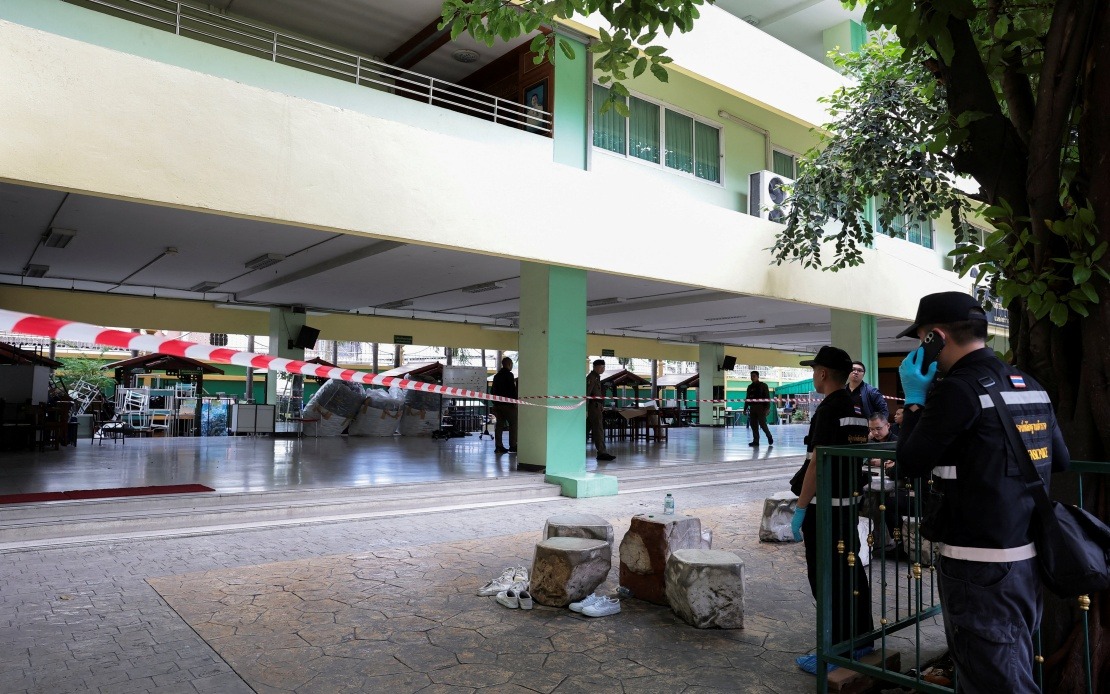
A devastating shooting at a school in Nonthaburi province has claimed seven lives and left at least 15 others injured, marking another tragic episode of gun violence in Thailand's educational institutions. The incident unfolded on Friday morning at Debsirin Nonthaburi School in Bang Kruai district around 10 am, when a student opened fire on the campus, killing three of his peers, three teachers, and ultimately himself. The rapid escalation from gunfire to mass casualties has prompted immediate intervention from Thailand's highest levels of government and raised fresh scrutiny on the country's approach to firearm licensing and school security protocols.
According to Lieutenant General Trairong Piwpan, the Royal Thai Police's deputy inspector-general and spokesperson, all seven fatalities died at the scene. The injured victims were quickly evacuated to nearby medical facilities, with two among them classified as suffering serious wounds. Police investigations conducted at the location discovered a 9mm handgun alongside 34 rounds of ammunition, providing initial forensic evidence about the weapon's specifications. Further enquiries revealed that the firearm had belonged to the suspect's grandfather, suggesting a failure in household firearm security measures and raising questions about how a student gained access to a registered weapon.
School administrators acted swiftly to minimise further casualties by evacuating the entire student body and teaching staff to Chanrat Wittaya School, a neighbouring educational institution. Parents and guardians were subsequently notified and asked to collect their children from the temporary location. This coordinated response prevented the situation from deteriorating further, though the psychological trauma of the incident will likely remain with the school community for years to come. The evacuation process itself underscores how Thailand's schools now operate within a framework of active shooter protocols, a sobering reflection of broader security concerns.
In response to the tragedy, Thailand's national police leadership mobilised psychological support services. Police General Hospital was instructed to dispatch trained psychologists to assist survivors and affected families, acknowledging the severe emotional and mental health consequences of mass shooting incidents. This intervention reflects growing international recognition that post-trauma counselling is as vital as medical treatment in the aftermath of such catastrophic events.
Prime Minister Anutin Charnvirakul, who concurrently serves as interior minister, issued an immediate public statement expressing profound sorrow over the incident. He conveyed formal condolences to the families of the deceased and directed relevant government agencies to provide urgent assistance to the injured. More significantly, Anutin used the tragedy to reinforce his administration's contentious stance on firearm regulation, explicitly linking the shooting to the government's decision to suspend the renewal of permits for civilians seeking to carry and possess firearms. His statement positioned this particular incident as vindication of that policy position, arguing that restrictive gun ownership regulations represent a necessary safeguard against such occurrences.
The timing of this crisis places Thailand within a troubling pattern of school-based gun violence. The August shooting represents the second major incident within six months to strike Thailand's educational sector. In February of the same year, an 18-year-old gunman opened fire at a school in Hat Yai, located in Songkhla province in the country's south. That attack resulted in the death of the school director and injuries to multiple others before law enforcement apprehended the suspect. The recurrence of such incidents within a half-year timeframe signals systemic vulnerabilities in either firearm access controls or the psychological health support infrastructure available to at-risk individuals.
For Malaysian observers monitoring developments in neighbouring Thailand, the incidents carry particular relevance. Malaysia shares similar cultural and regional characteristics with Thailand, including comparable levels of urbanisation, comparable youth populations, and increasingly interconnected security challenges. The frequency and ferocity of Thailand's school shootings might prompt Malaysian policymakers to evaluate whether current domestic firearm regulations and school safety protocols require recalibration. Thailand's experience offers a cautionary case study regarding the consequences of insufficient gun control enforcement or inadequate mental health screening mechanisms for permit holders.
The broader implications extend beyond individual national borders. Southeast Asia has historically experienced lower rates of mass shooting incidents compared to regions such as North America or some European nations. However, Thailand's two incidents within months suggest a potential inflection point where school-based gun violence could become a more normalised feature of the regional security landscape. This trajectory warrants preventive policy attention across the region, particularly concerning how firearms licensed to older generations are secured within family homes where younger residents might access them.
The investigation into how the Nonthaburi suspect obtained his grandfather's firearm will likely reveal gaps in existing safeguards. Thai law presumably mandates that licenced firearm owners store weapons securely, yet enforcement mechanisms or compliance verification may prove insufficient. Similarly, the psychological or behavioural indicators that preceded the shooting—whether the suspect demonstrated warning signs of violent ideation or acute mental health crises—will inform discussions about preventive intervention frameworks. Schools across Southeast Asia may subsequently implement enhanced threat assessment protocols to identify students at imminent risk of perpetrating violence.
Thailand's government faces mounting pressure to demonstrate that its decision to suspend firearm permit renewals translates into measurable reductions in shooting incidents. However, existing firearms already circulating among the population—legally or illegally obtained—will continue presenting dangers for years. Effective harm reduction therefore requires complementary initiatives addressing the cultural attitudes surrounding gun ownership, the accessibility of mental health services for troubled individuals, and the training provided to educational institutions on recognising and responding to violent threats. The Debsirin Nonthaburi tragedy underscores that policy announcements alone, without comprehensive implementation and enforcement, cannot prevent determined individuals from accessing weapons.

