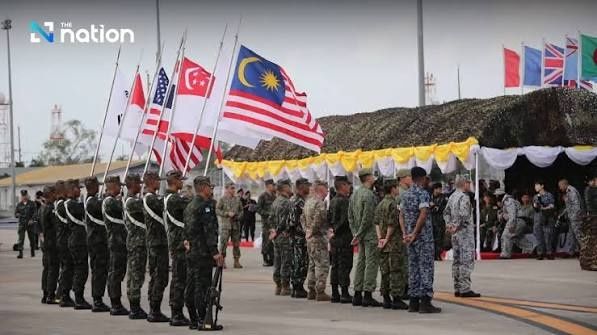
Thailand intends to signal to the Trump administration that punishing tariffs may prompt it to reconsider military cooperation arrangements, including the prominent Cobra Gold exercises that represent a cornerstone of Washington's security presence across mainland Asia. Officials in Bangkok plan to weave this warning into a counterproposal as trade talks resume later this month, with the message carefully calibrated to suggest that economic damage from steep import duties could translate into reduced participation in joint defence activities. The implicit bargain being struck is one of mutual cost: improved market access in exchange for maintaining the military-to-military relationship that has defined the bilateral partnership for generations.
The leverage Thailand seeks to deploy reflects its current trade imbalance with Washington. Having recorded a merchandise surplus of US$51.4 billion with the United States in the previous year, Thailand now faces the prospect of a 12.5 per cent tariff on a broad array of exports, imposed under Section 301 authority that the Trump administration has invoked against what it characterises as unfair trading practices. This tariff regime has already prompted dozens of countries worldwide to seek negotiated relief, and Bangkok is among those scrambling to propose compensatory concessions. To sweeten its position, Thailand has offered to dismantle its own tariff barriers and align domestic standards with American requirements for imported beef, lamb and spirits—moves intended to demonstrate flexibility and a willingness to reshape bilateral commerce on terms favourable to US exporters.
What distinguishes Thailand's negotiating posture from most other nations grappling with these tariffs is its willingness to explicitly link economic grievances to the security relationship. The kingdom is one of only two formal treaty allies of the United States in Southeast Asia, the other being the Philippines, and this status has historically accorded it privileged access to American military technology, training and strategic planning. By threading the defence partnership into trade discussions, Thai negotiators are attempting to elevate the conversation beyond simple commodity flows and into questions of regional stability and America's broader geopolitical interests in countering Chinese influence in mainland Southeast Asia. This represents a calculated gamble: raising the stakes in hopes of concentrating minds in Washington about what could be lost.
The Thai Defence Ministry has maintained official circumspection about these plans. Surasant Kongsiri, the ministry's spokesman, declined to confirm the substance of the counterproposal, instead suggesting that negotiations would more logically centre on deepening rather than diminishing cooperation between the two nations. This public stance serves a dual purpose—it allows Bangkok to maintain deniability while keeping the threat implicitly before American negotiators, and it avoids the domestic political complications that would arise from openly acknowledging that military partnerships could be weaponised in trade disputes. The Pentagon and Thai Commerce Ministry similarly refrained from immediate comment, a silence that may itself signal careful consideration of the proposal's contents.
Thailand's Commerce Minister Suphajee Suthumpun has been more explicit in framing the country's claims. She has argued publicly that Thailand merits preferential treatment precisely because of the strategic alliance between the nations, the decades-old Treaty of Amity that governs their relationship, and the substantial Thai investments in American enterprises. By portraying negotiations as a whole-of-government enterprise involving not only commerce officials but also the foreign and defence ministries, Bangkok is attempting to demonstrate to Washington that tariff relief cannot be disaggregated from broader bilateral interests. The government is reportedly seeking to cap any final tariff rate at the 19 per cent level that emerged from earlier negotiating frameworks, a threshold it evidently considers more tolerable than the current 12.5 per cent applied rate.
Beyond tariff haggling, Thailand has additionally committed to accelerating domestic legislation that would ban the importation of goods manufactured using forced labour. This concession addresses a concern long voiced by Washington and reflects Thailand's sensitivity to American pressure regarding worker protections and supply chain ethics. By moving on this front, Bangkok signals that it understands the contemporary dimensions of American trade policy extend well beyond simple protectionism to encompass labour standards and human rights considerations. The move may also serve to position Thailand as a more responsible trading partner than some of its neighbours, potentially tilting American sympathies in its favour as negotiations proceed.
The military cooperation underpinning the bilateral relationship runs deep. Thailand and the United States jointly conduct Cobra Gold, described by Pentagon officials as the largest annual multinational military exercise held on mainland Asia. The most recent iteration of these drills mobilised approximately 8,000 personnel drawn from 30 different nations, underscoring the exercise's significance as a mechanism for American force projection and alliance-building across the region. For Washington, Cobra Gold and associated defence activities serve strategic purposes far beyond bilateral concerns with Thailand itself; they demonstrate American commitment to Asian security architecture at a moment when China's military modernisation has accelerated dramatically and regional anxieties about great-power competition have intensified.
Historically, the Thai-American defence partnership has weathered political turbulence. Following the 2014 military coup in Thailand, Washington scaled back Cobra Gold participation and suspended several other defence programmes in response to international criticism of the coup. However, the Pentagon gradually restored these arrangements, signalling that the underlying strategic value of the relationship ultimately outweighed concerns about governance. This precedent is not lost on current Thai negotiators: they understand that Washington has demonstrated willingness to compartmentalise disagreements in order to preserve security cooperation it deems essential. The recent visit to Bangkok by Pentagon Undersecretary Elbridge Colby reinforced this message, with American defence officials publicly reaffirming their commitment to a "renewed strength" in the alliance.
For Malaysia and other Southeast Asian nations, Thailand's negotiating strategy carries instructive implications. It demonstrates that countries occupying strategically valuable positions in the region's security architecture possess leverage that extends beyond conventional trade metrics. As the Trump administration pursues its tariff agenda, other Asian nations allied with Washington may calculate that they too can invoke security partnerships as counterweights in commercial disputes. This could reshape the tenor of trade negotiations across the region, transforming them from purely economic exchanges into broader conversations about strategic alignment and regional order. It also raises questions about whether such linkages, if made explicit and reciprocated by American negotiators, might strengthen or ultimately complicate the web of alliances that have underpinned peace and prosperity in Asia for decades.

