Thailand's government has put its peace dialogue process on hold following a violent insurgent attack in the southern province of Narathiwat, forcing officials to abandon scheduled negotiations that were to have taken place in Malaysia next month. The decision reflects mounting tension between maintaining a long-term diplomatic approach and responding to immediate security threats in one of Southeast Asia's most volatile border regions. The postponement underscores the fragility of efforts to resolve a decades-old conflict through negotiation, even as the government insists that dialogue remains the preferred solution to the ongoing insurgency in Thailand's southernmost provinces.
Thanking Suwannanont, who directs Thailand's National Intelligence Agency and oversees the Southern Border Provinces Peace Dialogue Panel, confirmed the suspension on Tuesday, explaining that the planned September meeting would not proceed as originally arranged. He characterised the timing of the attack as particularly damaging to the negotiation process, coming at a critical juncture when both sides appeared to be making meaningful progress. Officials had invested considerable diplomatic effort in scheduling the talks and establishing conditions conducive to substantive dialogue, only to have those gains undermined by the violence. The official stated that the severity of the incident left authorities with no choice but to fundamentally reassess their approach and timeline for resuming communications.
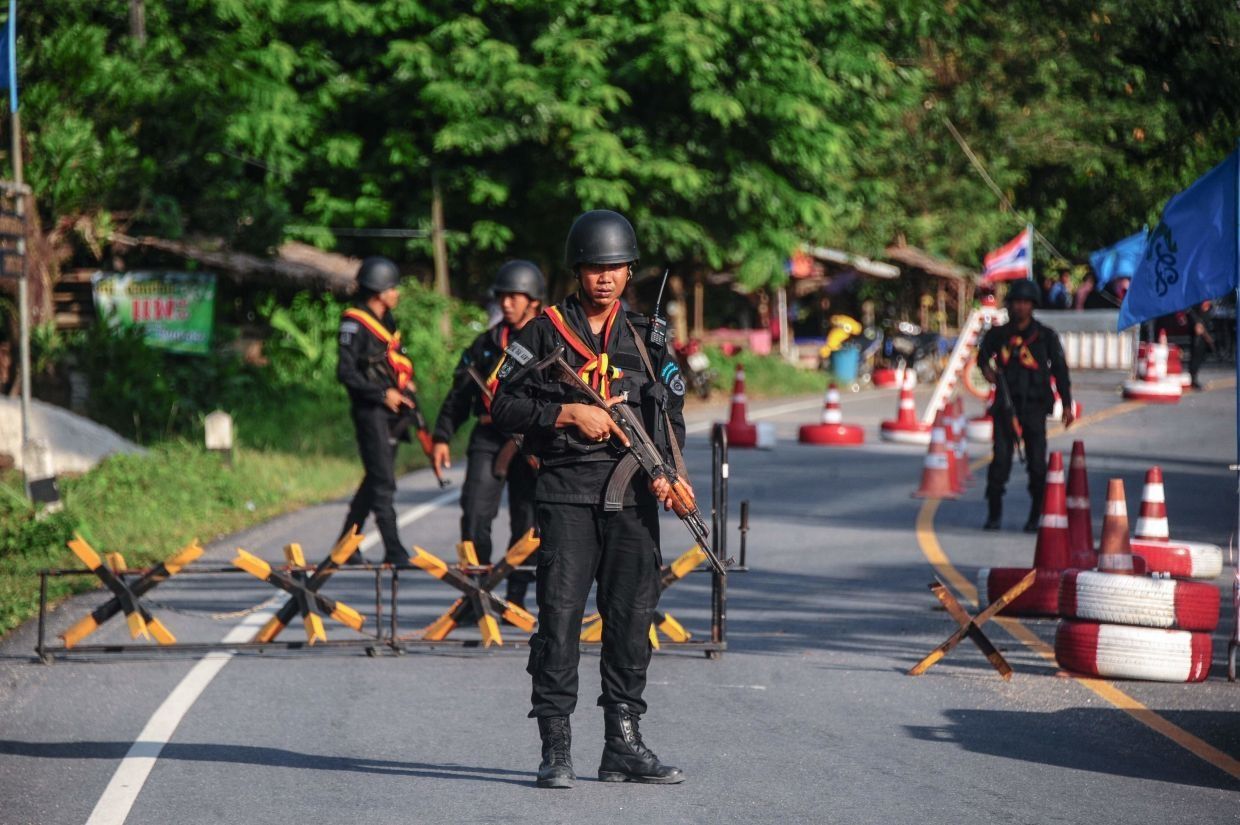
The catalyst for this policy reversal occurred last Wednesday evening when six assailants, their faces obscured and dressed entirely in dark clothing, launched a coordinated assault on a security checkpoint located in Ban Bukit Sami within Rangae district of Narathiwat province. The attack commenced at approximately 6:45 pm local time, with the gunmen unleashing sustained gunfire while simultaneously hurling pipe bombs at the heavily guarded position. The assault resulted in the deaths of five rangers who were staffing the checkpoint, whilst six civilians in the vicinity sustained injuries, including a young child only three years old. The incident represents a significant escalation in militant activity and has prompted Bangkok to take extraordinary security measures across the troubled southern border region.
Responding to the severity of the situation, Thailand's authorities activated Martial Law across 13 separate districts throughout Narathiwat province, granting security forces expanded powers to pursue suspects and implement heightened security protocols. This measure reflects the scale of official concern about potential follow-up attacks and the perceived threat level posed by the insurgent group. The martial law declaration also facilitates coordinated military operations and allows for more aggressive surveillance and checkpoint activities than would normally be permissible under civilian governance structures. The decision to implement such comprehensive emergency powers indicates that officials view the attack not as an isolated incident but as part of a broader pattern of militant organisation and capability.
Thanat explained that the peace process had demonstrated genuine momentum prior to the attack, with preliminary discussions yielding encouraging signs that substantive negotiations might yield tangible results. However, the eruption of large-scale violence effectively negated these incremental gains and forced officials to reconsider whether the insurgent group was genuinely committed to dialogue or merely using negotiations as cover for continued military operations. He acknowledged that individual fighters might have acted based on immediate tactical considerations without authorisation from senior leadership, yet the government's position remained that restarting the entire dialogue process from scratch was now necessary. This assessment suggests deep scepticism about the insurgent group's unified command structure and commitment to ceasefire conditions during peace negotiations.
The Thai government has formally requested an explanation from the insurgent organisation regarding circumstances surrounding the attack and the apparent contradiction between engaging in peace talks whilst simultaneously launching major military operations. This diplomatic note represents a test of whether insurgent leadership can credibly claim control over field operations and whether they genuinely wish to progress toward negotiated settlement. Thanat noted that Prime Minister Anutin Charnvirakul continues to view dialogue as essential to resolving the decades-long conflict, rather than treating negotiations as merely reactive responses to individual security incidents. This positioning suggests that Bangkok intends to maintain its long-term commitment to diplomatic engagement, even as immediate circumstances dictate tactical withdrawal from scheduled talks.
The investigation into the Narathiwat attack has already yielded significant leads, with authorities identifying two primary suspects aged 45 and 43 respectively. The Narathiwat Provincial Court has issued arrest warrants for these individuals, who investigators believe participated in both last week's assault and an armed incident that occurred on July 22. Formal charges against the suspects include acts of terrorism, premeditated murder of government officials, armed robbery resulting in death, and various weapons and explosives violations. These charges carry severe penalties under Thai law and reflect the government's determination to prosecute those responsible for the violence with maximum severity.
The Internal Security Operations Command, which coordinates counter-insurgency efforts across the southern provinces, has authorised the military to establish roadblocks throughout Narathiwat at any time if intelligence suggests the suspects are present in the area. This gives security forces significant operational flexibility and effectively places the entire province under heightened alert status. The manhunt represents a major military operation aimed at apprehending the perpetrators and, presumably, extracting intelligence about the broader organisational structure responsible for the attack. Success in capturing the suspects could provide crucial information about the insurgent group's capabilities, intentions, and degree of internal cohesion regarding the peace process.
For Malaysia, which was preparing to host the scheduled September peace talks, the postponement creates diplomatic complications and raises questions about the viability of Bangkok's chosen venue for sensitive negotiations. Malaysian officials, who have previously offered their territory as neutral ground for such sensitive discussions, now must recalibrate expectations about regional stability and the timeline for resolving Thailand's southern conflict. The suspension of talks also has broader implications for Southeast Asian security, as the Narathiwat insurgency influences cross-border dynamics and potentially affects broader patterns of regional violence. The incident demonstrates how localised security threats can rapidly disrupt diplomatic processes and undermine months of careful confidence-building efforts between governments and non-state actors.

