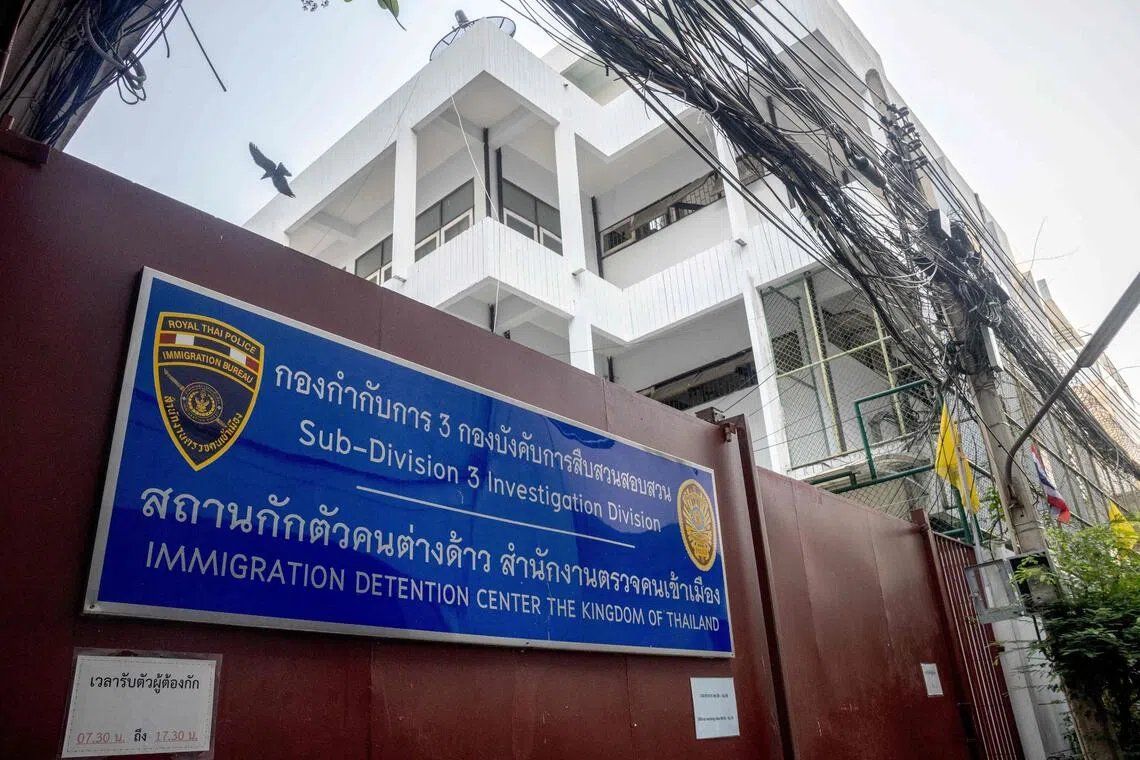
Thailand has introduced a comprehensive deportation framework designed to accelerate the expulsion of foreigners found guilty of serious violations, reflecting the government's determination to maintain social order while managing its immigrant population. Prime Minister Anutin Charnvirakul formalised the Prime Minister's Office Regulation on Deportation B.E. 2569 on August 26, with the Royal Gazette publication following on August 27 and implementation commencing on August 28. This regulatory apparatus represents a significant tightening of Thailand's approach to foreign nationals who breach Thai law or threaten public stability.
The regulation acknowledges Thailand's position as a major international destination for tourism, long-term residence, employment, and business activity. While the government explicitly welcomes lawful foreign visitors and workers who contribute positively to the economy and society, the new rules target a specific subset of the foreign population whose actions undermine public confidence or violate statutory provisions. The framework distinguishes between those who enter through legitimate channels and subsequently commit offences, and those who breach immigration law or engage in unlawful economic activities from the outset. This categorisation suggests the authorities recognise different levels of culpability and may reflect broader policy considerations regarding Thailand's international reputation and economic interests.
The deportation procedure operates through a coordinated mechanism involving the Interior Ministry's permanent secretary and designated officials. When a foreign national's behaviour is deemed prejudicial to public order, morality, or welfare—whether as a direct perpetrator, instigator, or collaborator—the responsible Interior Ministry official must escalate the matter to the Interior Minister for formal consideration. This hierarchical reporting structure ensures that deportation decisions receive ministerial oversight and incorporates checks against arbitrary action. The framework demonstrates an effort to professionalise deportation procedures, potentially addressing historical concerns about inconsistent or non-transparent expulsion practices in Thailand.
Six categories of criminal conduct trigger eligibility for deportation under the regulation. These encompass unlawful entry or residence under immigration statutes; unauthorised employment violating foreign worker regulations; illicit business operations contravening the Foreign Business Act; document forgery involving official papers; any offence prosecuted to completion with a minimum five-year custodial sentence; and participation as principal, instigator, or abettor in any of these offences. This enumeration reflects priorities aligned with Thailand's immigration enforcement and national security concerns. The inclusion of employment and business violations indicates government attention to protecting Thai labour markets and ensuring compliance with commercial law, matters particularly relevant for Southeast Asian neighbours whose nationals constitute substantial portions of Thailand's migrant workforce.
The regulation establishes procedural coordination between the Department of Corrections and the Interior Ministry to facilitate expedited processing. Prison authorities must notify the permanent secretary at least fifteen days before a foreign detainee's release, supplying identifying information and case documentation. This advance notice permits the minister adequate time to issue deportation orders before prisoners complete their sentences, preventing potential re-offending or flight. When courts suspend sentences or levy fines rather than imposing imprisonment, the Judiciary Office must immediately inform the Interior Ministry, ensuring that even suspended convictions receive ministerial scrutiny. These provisions demonstrate intent to close procedural gaps that historically allowed foreign offenders to evade removal through technical loopholes.
The repatriation process generally returns deportees to their country of nationality, a principle consistent with international norms. However, the regulation acknowledges practical complications arising when nationality cannot be definitively established or when diplomatic relations are strained. In such circumstances, authorities may redirect individuals to the country where they last resided before entering Thailand, a provision enabling return to a known jurisdiction even absent formal nationality documentation. This flexibility addresses real-world scenarios common in Southeast Asia, where some migrants possess unclear or disputed citizenship status or originate from regions with limited diplomatic representation in Bangkok.
A notable feature permits third countries and international organisations to request custody of deportees through diplomatic channels within seven days of the deportation order. This provision accommodates humanitarian considerations and international obligations, particularly regarding individuals facing torture, inhumane treatment, enforced disappearance, or other human rights violations if returned to their homeland. The requesting entity must assume all costs associated with the transfer and obtain the deportee's written consent, preventing forced transfers against an individual's wishes. The thirty-day completion window, renewable twice for up to thirty additional days each, provides reasonable timeframes while preventing indefinite delays. Should no alternative arrangement materialise within the permitted period, standard repatriation procedures proceed, ensuring the process ultimately reaches resolution.
The regulation reflects Thailand's navigation of competing imperatives between maintaining immigration control and honouring international humanitarian commitments. By incorporating human rights safeguards alongside enforcement mechanisms, the framework potentially addresses criticism from international bodies regarding Thailand's treatment of deportees, particularly asylum seekers and refugees. The requirement that any transfer must account for torture risks and other grave harms aligns with Thailand's obligations under international conventions, though implementation effectiveness will depend on the rigour with which officials evaluate such claims.
For Malaysia and other Southeast Asian nations, Thailand's enhanced deportation regime carries several implications. Thai authorities' streamlined procedures may accelerate the removal of Malaysian and regional nationals convicted of serious crimes in Thailand, affecting diplomatic relations and bilateral consular responsibilities. Additionally, the regulatory emphasis on employment and business violations could intensify scrutiny of migrant workers and foreign entrepreneurs operating in Thailand, potentially creating ripple effects across ASEAN labour mobility frameworks. Malaysian employers and workers should remain cognisant of this stricter enforcement environment.
The regulation empowers the Interior Minister with final authority over implementation disputes, concentrating decision-making discretion in a single official. While ministerial oversight can ensure consistency, this arrangement creates potential risks of politicisation or inconsistent application depending on individual office-holders' priorities. Deportation expenses remain subject to Interior Ministry rules approved by the Finance Ministry, establishing a financial framework intended to prevent arbitrary costs from becoming obstacles to enforcement. The regulation's emphasis on inter-agency coordination and documented procedures suggests Thailand's recognition that effective immigration control requires systematic processes rather than ad hoc administrative action, representing an evolution toward more transparent governance in this sensitive domain.

