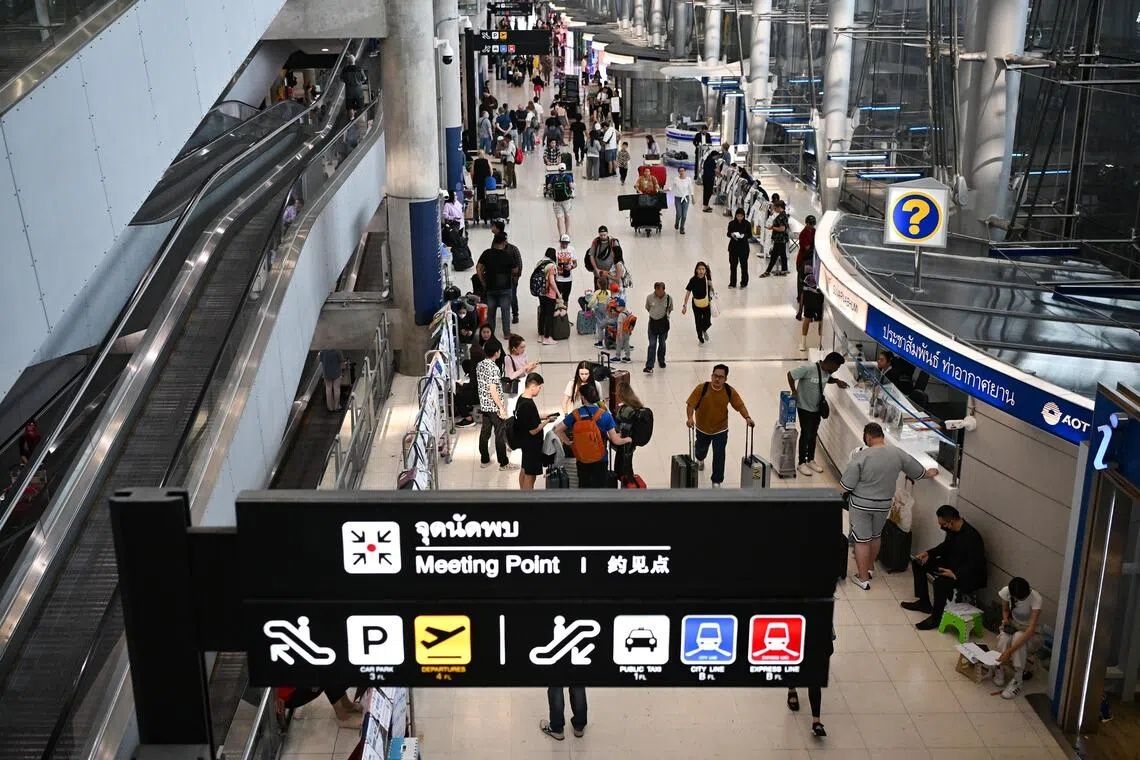
Thailand is moving to streamline border processing at its busiest international gateway by extending automated passport control technology to citizens of 31 additional nationalities, with the rollout targeted for completion by the end of August. The expansion, which has received in-principle approval from the Immigration Bureau pending final documentation, represents a significant step in addressing chronic congestion at Suvarnabhumi Airport, which processes roughly 190,000 passengers daily during peak tourism season.
According to Deputy Government Spokesperson Lalida Persvivatana, the measure will dramatically increase the pool of eligible travellers. Combined with existing users and holders of qualifying long-term visas, the automated gates are projected to accommodate approximately 6.5 million additional passengers annually, bringing the total proportion of arriving passengers able to bypass manual immigration queues to around 53 per cent. This expansion reflects recognition that Thailand's tourism recovery has created infrastructure pressures that demand technological solutions to maintain competitiveness in regional passenger processing.
The pressure on manual immigration channels has intensified considerably as Thailand's tourism sector rebounds. During peak hours between 1pm and 5pm, immigration authorities must process between 5,000 and 6,000 passengers hourly, with approximately 70,000 international arrivals flowing through the airport daily at the height of the season. Without systemic improvements, these bottlenecks risk damaging Thailand's reputation as a seamless tourist destination and potentially encouraging visitors to choose competing regional hubs with faster processing.
The initiative received high-level political backing when Deputy Prime Minister and Commerce Minister Suphajee Suthumpun, alongside Tourism and Sports Minister Surasak Phancharoenworakul and Deputy Transport Ministers Siriphong Angkasakulkiat, visited Suvarnabhumi to coordinate implementation strategies with relevant agencies. The ministerial engagement underscores the government's determination to position airport efficiency as a core pillar of its tourism development strategy, recognising that first impressions at immigration gates shape visitor satisfaction throughout their stay.
Implementation will proceed in phases contingent upon equipment availability, biometric system readiness, and security protocols. First-time users will still require biometric registration before departure, a safeguard that maintains border security while reducing processing friction for repeat visitors. This phased approach allows authorities to manage the technical rollout responsibly without compromising security standards, a critical consideration as Thailand balances facilitation with border integrity.
Lalida emphasised that the government's objective transcends mere queue reduction, articulating instead a vision where arriving tourists experience convenience, speed and safety as integrated elements of Thailand's hospitality brand. This framing acknowledges that modern travellers evaluate destinations partly on procedural friction—a reality that neighbouring Malaysia, Singapore and Vietnam have all leveraged through aggressive airport modernisation programmes. Thailand's expansion thus represents competitive positioning within Southeast Asia's tourism market.
Beyond gate automation, the ministerial visit addressed longer-term infrastructure gaps. Discussions encompassed expansion of passenger waiting areas, enhanced transit facilities and strategic infrastructure investments designed to accommodate surging passenger volumes whilst sustaining Thailand's standing as a premium regional destination. These complementary initiatives suggest recognition that technology alone cannot address systemic capacity constraints without parallel facility development.
Thailand's tourism performance in 2024 demonstrates the stakes involved in processing efficiency. From January through July 18, Thailand recorded 17.36 million foreign tourist arrivals, indicating a robust recovery trajectory. However, this volume places enormous strain on Suvarnabhumi's immigration infrastructure, which was built to specifications that anticipated substantially lower peak-season throughput. The automated gate expansion thus represents essential modernisation rather than discretionary enhancement.
The implications for regional travellers, particularly those from Southeast Asia, remain partially unclear until the full list of 31 newly eligible nationalities is published. Malaysian, Singaporean and Indonesian travellers—three of Thailand's largest source markets—may already benefit from existing automated gates, but confirmation would benefit readers planning imminent travel. The expansion potentially offers Malaysian business travellers and tourists tangible processing advantages when next transiting through Thailand's primary international gateway.
For Malaysia specifically, improved immigration efficiency at Suvarnabhumi carries reciprocal implications. As Thai tourism promotion intensifies and airport processing improves, Malaysian airlines operating Bangkok routes may anticipate increased demand, whilst competing Malaysian airports face subtle pressure to match or exceed Suvarnabhumi's passenger-handling capabilities. Thailand's infrastructure investment thus shapes regional aviation dynamics beyond its immediate borders.

