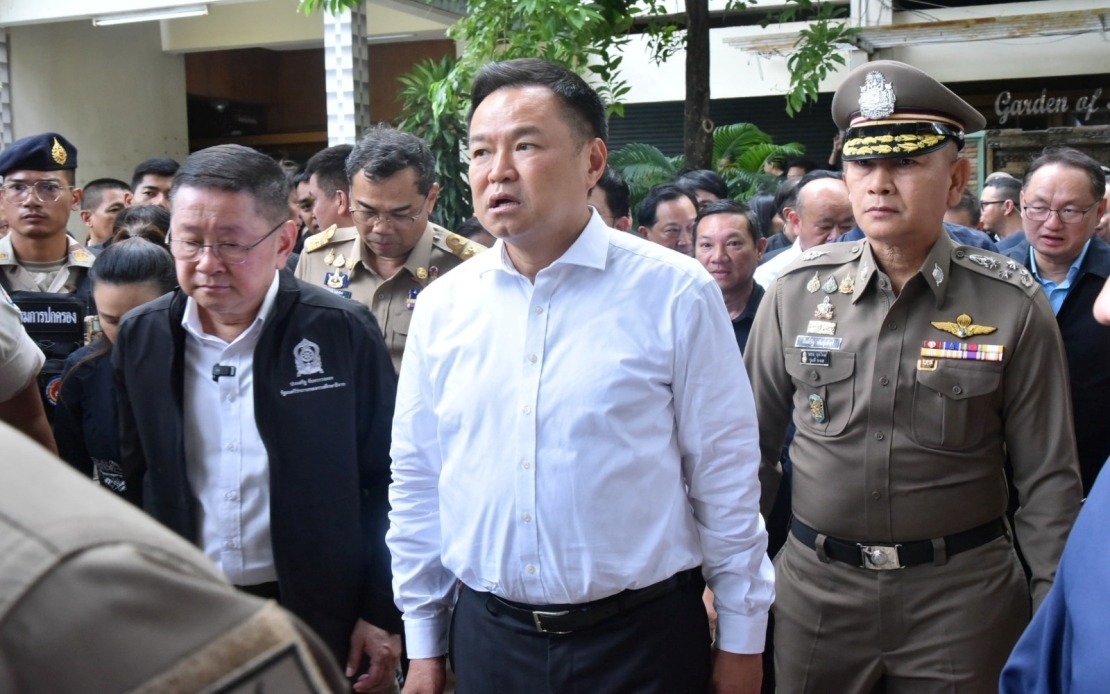
Thai Prime Minister Anutin Charnvirakul has pledged to introduce stringent firearms control legislation following a shooting at Debsirin Nonthaburi School on Friday that resulted in seven deaths. Speaking to journalists, Anutin, who also serves as interior minister, outlined a framework aimed at restricting civilian access to weapons while maintaining armed capacity for government personnel performing official functions. The announcement signals a decisive policy response to an incident that has shaken public confidence in school safety across the kingdom.
The proposed regulatory overhaul centres on preventing civilians from carrying firearms in public spaces or outside their residences unless explicitly authorised by law. Under the envisioned framework, only government officials actively engaged in their duties would retain the right to bear arms, a substantial departure from existing practices that allow licensed private citizens broader latitude. Anutin indicated these measures would require consultation with Thailand's national police leadership before formal legislative drafting commences, suggesting a phased implementation process rather than immediate emergency decrees.
Enforcement mechanisms form a crucial component of the administration's strategy. Police checkpoints throughout the country will be mandated to conduct firearms inspections as part of routine operations, with penalties applied to individuals discovered carrying weapons illegally. This expanded checkpoint protocol represents a shift toward proactive interdiction rather than reactive investigation, placing the burden on enforcement agencies to identify violations during daily patrol activities. The policy reflects international trends in which developed democracies have intensified checkpoint-based surveillance to reduce armed incidents.
The incident itself unfolded on Friday morning when a fourteen-year-old student opened fire within the school premises. The attack claimed the lives of three teachers and three fellow students, with the perpetrator subsequently found deceased at the location. Emergency services transported twenty-one additional victims to medical facilities, with eight requiring critical care interventions. The casualty toll and composition—including multiple child victims—elevated the incident's psychological impact far beyond typical crime statistics, forcing educational institutions and families to confront vulnerabilities previously regarded as theoretical risks.
Royal Thai Police investigators provided preliminary briefings to Anutin during his visit to the school campus on Friday afternoon. Although police did not release comprehensive details regarding the shooter's motivations, access to the firearm used, or psychological assessment materials, the investigation proceeded rapidly. The speed of official response—with the prime minister touring the site and announcing policy frameworks within hours—underscores the political urgency surrounding school safety across Southeast Asia, where such incidents, though rare, generate substantial public anxiety about institutional protection of minors.
Education Ministry officials have been directed to implement reassurance protocols targeting parents and guardians. However, Anutin explicitly rejected proposals for airport-style security infrastructure, specifically X-ray screening equipment at school entrances. His characterisation of such measures as abnormal and impractical reflects consideration of both operational feasibility and psychological environment maintenance; Thai policymakers evidently believe that excessive security apparatus might paradoxically undermine the sense of normalcy and trust essential to educational institutions. This represents a pragmatic balance between security enhancement and preservation of schools as welcoming learning environments.
The shooting incident arrives amid broader regional discourse concerning weapons accessibility and youth violence. Malaysia, Singapore, and Indonesia have implemented increasingly restrictive firearms frameworks over recent decades, though Thailand maintains comparatively liberal civilian licensing standards inherited from historical legislative frameworks. Thai authorities face competing pressures: public demands for enhanced safety measures clash with entrenched constituencies resistant to firearms restrictions and libertarian perspectives on individual liberty. The government's rapid policy formulation suggests awareness that extended hesitation would invite domestic political criticism and international scrutiny regarding institutional competence.
International comparisons provide instructive context. Countries such as Australia, New Zealand, and the United Kingdom substantially tightened civilian firearms access following mass shooting incidents during recent decades, subsequently documenting measurable reductions in armed homicides and mass casualty events. However, Thai cultural contexts, rural firearm traditions, and security force dynamics differ markedly from Anglo-American precedents. Agricultural communities in northeastern Thailand, for instance, maintain longstanding weapons traditions tied to subsistence hunting and wildlife management, creating constituency tensions that pure public health approaches might overlook.
For Malaysian observers, the Thai case presents relevant lessons regarding institutional vulnerability and policy response velocity. Malaysia's own relatively restrictive firearms regime has generally prevented school-based mass shooting incidents, though security at educational institutions remains variable. The Thai experience illustrates how even developed Southeast Asian nations with capable security forces encounter protection gaps when determined perpetrators possess advance preparation time and weapon access. Malaysian educators and administrators may view these developments as validation of existing stringent licensing requirements while simultaneously recognising that no policy framework eliminates all risk categories entirely.
The investigation into how a fourteen-year-old accessed the firearm used in the attack will likely generate additional policy refinements. Questions regarding storage protocols, family access parameters, and educational institution security architecture appear likely to feature prominently in subsequent legislative discussions. Anutin's comments suggest the government intends to proceed methodically rather than through knee-jerk emergency measures, consulting stakeholder constituencies while building legislative consensus. Success in this approach will depend substantially upon whether policymakers can maintain political momentum for meaningful restrictions against inevitable opposition from firearms enthusiasts and rural constituencies.

