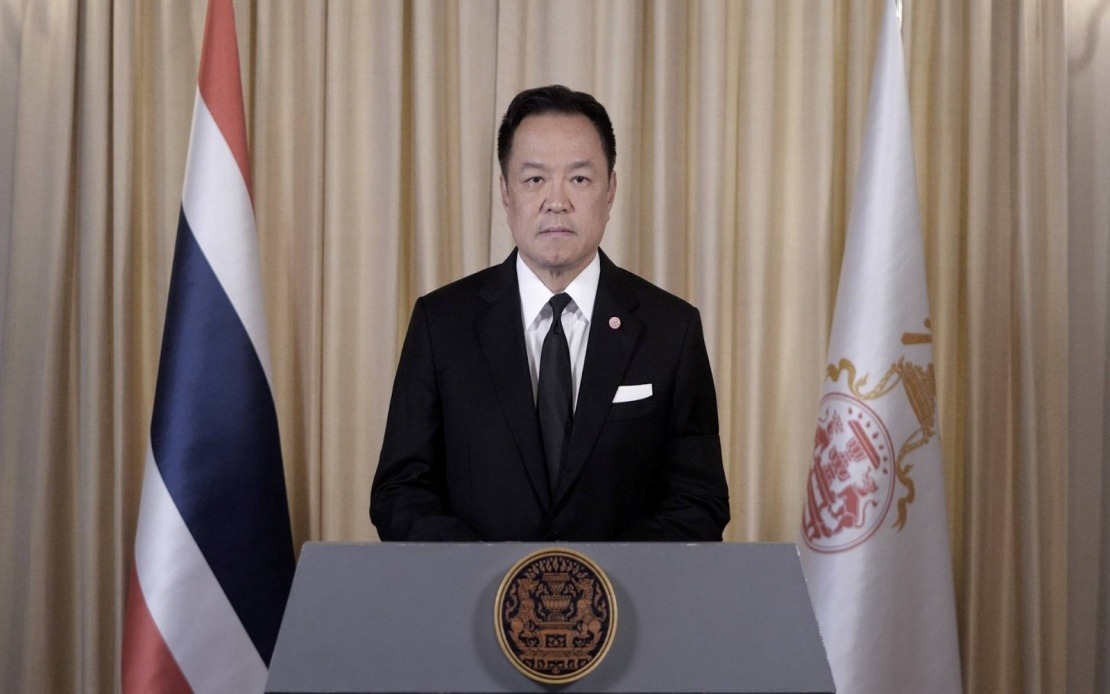
Thailand's government has signalled cautious optimism over mounting reports of a ceasefire between the United States and Iran, with senior officials arguing that any resolution to the longstanding West Asian conflict could provide meaningful relief to global energy markets and support the kingdom's economic trajectory. Prime Minister Anutin Charnvirakul addressed the development on Monday at Government House, framing a potential breakthrough as a stabilising force that might ease multiple global crises while bolstering economic conditions across the region.
The timing of such diplomatic developments holds particular significance for Southeast Asian economies deeply embedded in global supply chains and energy markets. Thailand, as a middle-income nation with substantial exposure to international trade and commodity price fluctuations, stands to benefit considerably from reduced geopolitical tensions in one of the world's most strategically important shipping corridors. The Strait of Hormuz, through which a significant portion of global oil traffic passes daily, has long represented a flashpoint where regional instability directly translates into volatile energy pricing that ripples through developing economies.
Anutin emphasised that Thailand has demonstrated considerable resilience in navigating previous supply chain disruptions and external economic shocks, suggesting the kingdom possesses institutional capacity to manage ongoing uncertainties. Rather than adopting reactive policies that respond to daily developments, he indicated the government pursues deliberate, long-term strategic planning designed to anticipate and mitigate risks before they crystallise into crises. This forward-looking approach reflects lessons learned from earlier pandemic-era disruptions and underscores a preference for structural adaptation over ad hoc responses.
US President Donald Trump announced on Sunday that a comprehensive agreement with Iran had been finalised, with the US authorising the reopening of the Strait of Hormuz and lifting its naval blockade. Such an announcement, were it to materialise into sustained implementation, would represent a seismic shift in West Asian geopolitics and could unlock considerable economic benefits for oil-importing nations throughout Asia. For Thailand, which relies substantially on imported petroleum and natural gas to fuel its manufacturing and power generation sectors, lower energy costs would directly translate into reduced production expenses and potentially more competitive export pricing.
Deputy Prime Minister and Finance Minister Ekniti Nitithanprapas articulated the economic logic undergirding the government's enthusiasm, arguing that cessation of conflict would constitute a positive signal for both the global economy and Thailand's domestic growth prospects. Energy price stability matters enormously for inflation management in developing economies where fuel and power represent significant components of consumer baskets and business operating costs. Ekniti indicated the government would maintain vigilant monitoring of inflationary pressures and their cascading effects on household spending power and small enterprise viability, suggesting confidence that improved global conditions could support economic growth rates exceeding current official projections.
The potential for stronger growth should not obscure Thailand's vulnerability to energy price shocks. The kingdom remains heavily dependent on imported hydrocarbon supplies, a structural constraint that means even modest increases in crude prices create noticeable headwinds for inflation and external accounts. Conversely, a durable resolution to West Asian tensions could provide an extended window during which Thailand's energy costs stabilise at lower levels, creating breathing room for businesses to invest and consumers to maintain purchasing power without aggressive monetary tightening by the central bank.
Particularly noteworthy is the government's commitment to proceeding with a 200-billion-baht energy transition programme despite expectations of lower oil prices in a post-ceasefire scenario. This signals a sophisticated understanding that shorter-term commodity price dynamics should not derail longer-term structural economic reforms. Energy transition initiatives—encompassing renewable capacity development, grid modernisation, and efficiency improvements—address fundamental vulnerabilities in Thailand's dependence on imported fossil fuels and generate lasting competitive advantages independent of geopolitical developments.
For Malaysia and other Southeast Asian economies similarly positioned as energy importers, the implications parallel Thailand's situation while carrying distinct national dimensions. Lower global oil and liquefied natural gas prices would support regional growth trajectories and ease fiscal pressures on governments dependent on energy subsidies or volatile hydrocarbon revenues. The region as a whole would benefit from reduced shipping and logistics costs as energy price pressures ease, benefiting the extensive intra-regional and global trade networks that undergird Southeast Asian prosperity.
The ceasefire announcement also carries implications for regional strategic stability beyond immediate economic considerations. Protracted conflicts in key global regions create spillover effects through arms proliferation, refugee movements, and ideological tensions that destabilise broader areas. Southeast Asia, with its complex tapestry of religious communities and historical relationships across the Indian Ocean, has longstanding stakes in West Asian stability. Resolution of US-Iran tensions reduces risk of broader regional escalation and creates space for more stable international relations benefiting development across Asia.
Thailand's optimism, however, should be tempered by appropriate caution regarding implementation durability. International agreements require sustained commitment from multiple parties, and geopolitical tensions that generated conflict in the first instance typically do not vanish with a single announcement. The Thai government's emphasis on long-term strategic planning rather than day-to-day reactivity suggests officials recognise this reality and are positioning the kingdom to benefit from improved conditions while maintaining contingency preparations for potential disappointment or reversal.
The integration of this ceasefire possibility into broader Thai economic policy discourse reflects sophisticated policymaking that recognises interconnections between distant geopolitical events and domestic prosperity. Rather than viewing West Asian developments as exogenous surprises to which Thailand must merely adapt, officials are identifying concrete transmission channels through which improved global stability translates into tangible benefits for energy security, inflation management, and growth prospects. This analytical framework positions Thailand to capitalise on favourable developments while preparing for alternative scenarios.