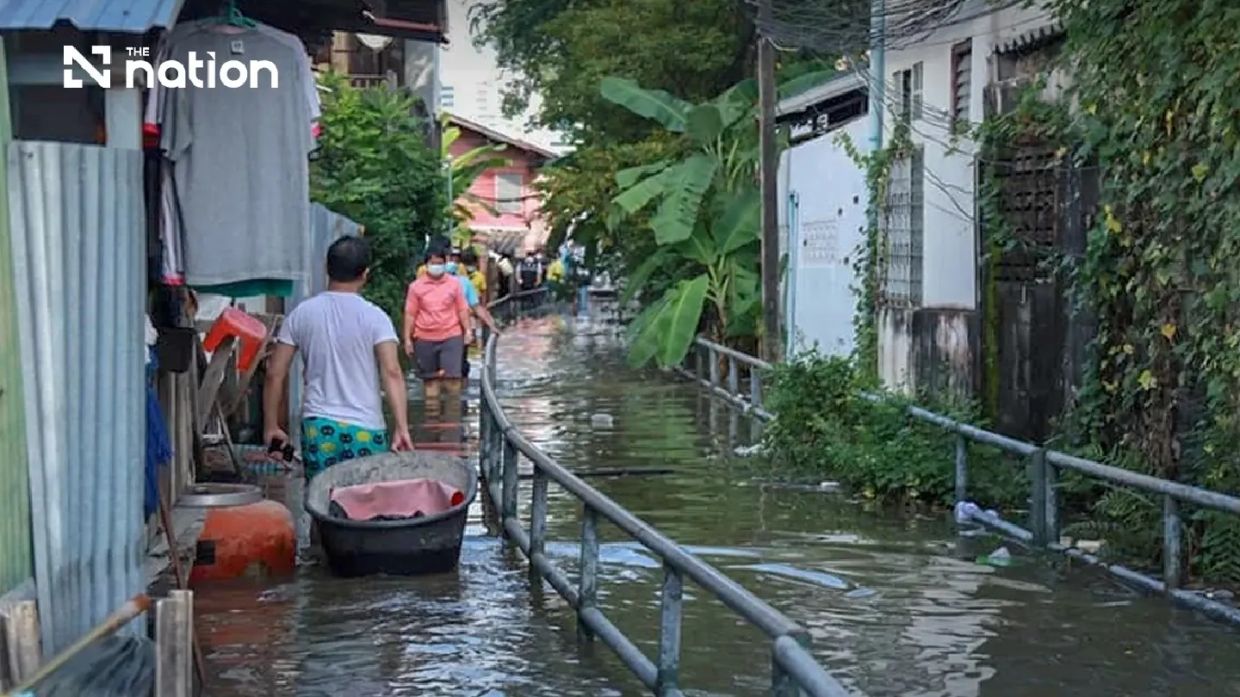
Thailand's Department of Disaster Prevention and Mitigation has declared a week-long alert across six central provinces and the capital as tidal conditions threaten to breach riverbanks and inundate low-lying communities. The warning covers Pathum Thani, Nonthaburi, Nakhon Pathom, Samut Sakhon, Samut Songkhram and Samut Prakan, plus Bangkok, from Monday July 13 through Sunday July 19, with the most critical periods occurring between 6 p.m. and 10 p.m. each day. Theerapat Kachamat, the department's director-general, announced the precautionary measures after coordinating with the Royal Thai Navy's Hydrographic Department, which monitors water-level fluctuations along Thailand's crucial river systems.
The Chao Phraya River, which runs through the heart of Bangkok and serves as a vital waterway for the entire central region, faces particular scrutiny. Monitoring stations around Phra Chulachomklao Fort and adjacent areas have detected patterns suggesting unusually elevated tidal surges during the specified week. These conditions result from a combination of seasonal factors typical of July in Southeast Asia, where monsoon influences and lunar cycles can conspire to produce abnormally high water levels. While individual incidents of elevated tides are not uncommon during this period, the convergence of multiple factors this week has prompted authorities to escalate their response and ensure comprehensive public awareness.
The threat extends beyond simple water-level rises. Authorities specifically warn of riverbank overflow, which could compromise infrastructure, disrupt commerce, and endanger residents in flood-prone zones. Communities situated outside permanent flood barriers remain especially vulnerable, as do informal settlements and older residential areas that lack adequate drainage infrastructure. The affected zones span a significant portion of the Bangkok metropolitan region, encompassing both urban and semi-rural districts where river proximity poses genuine risk. In Pathum Thani, the municipal centre and Sam Khok district face heightened exposure, while Nonthaburi's Mueang, Pak Kret and Bang Kruai areas are flagged for close monitoring.
Samut Songkhram, Thailand's smallest province by area, faces blanket coverage of the alert, reflecting its geography as a low-lying coastal region where tidal forces exert substantial influence over water management. Samut Prakan and its constituent districts—including the densely populated Mueang area, the historic Phra Samut Chedi district, and the industrial zones of Phra Pradaeng and Bang Bo—warrant particular attention given their downstream position on the Chao Phraya system and proximity to the Gulf of Thailand. Nakhon Pathom's warnings target Bang Len, Nakhon Chai Si and Sam Phran, representing a more inland expanse where tidal effects propagate through interconnected canal networks rather than direct marine exposure.
Provincial governors and local administrators have received explicit instructions to disseminate warnings through multiple channels, recognising that effective disaster prevention depends on reaching diverse constituencies. Business operators along waterways—particularly those managing floating restaurants, tour operators, and construction companies engaged in riverbank protection works—face specific advisories to secure their assets and adjust operations accordingly. The directive acknowledges that commercial interests intertwine with safety considerations; entrepreneurs must balance continuity with compliance, yet authorities emphasise that public safety supersedes commercial convenience during declared alert periods.
Residents dwelling in riverside communities and low-lying areas face the most immediate personal risk. Many such settlements exist in informal configurations or represent older developments predating modern flood-defence standards. These populations often lack the resources to relocate temporarily or implement private protective measures, making official warnings and coordinated responses critically important. The alert mechanism serves both as preventive communication and as an implicit promise that assistance will be available should conditions deteriorate into actual disaster situations.
The Central Disaster Prevention and Mitigation Command has mobilised this multi-layered response because early warning systems, when properly executed, demonstrably reduce casualty rates and property losses. Thailand's experience with successive flooding episodes over recent decades has refined institutional knowledge about cascade effects; initial tidal surges can compound with heavy rainfall or infrastructure failures to produce exponential impacts. By alerting stakeholders a full week in advance, authorities provide time for preventive action, including repositioning of emergency response teams, pre-positioning of sandbags and barriers, and adjustment of water-release schedules at upstream facilities.
The public communication apparatus includes the dedicated THAI DISASTER ALERT mobile application, which delivers location-specific notifications directly to registered users' devices. This technological layer complements traditional media announcements and local authority broadcasts, ensuring that digitally connected and digitally marginalised segments alike receive critical information. The application represents Thailand's modernisation of disaster communications, reflecting the country's broader digital transformation whilst maintaining analog backup systems.
For those experiencing actual incidents, the department established multiple reporting channels. The 1784 hotline operates continuously, staffed by trained dispatchers capable of coordinating rescue and relief responses. The LINE messaging platform's dedicated account (@1784DDPM) provides an alternative for younger demographics and users comfortable with social-media interfaces. This multi-channel approach acknowledges diverse communication preferences whilst ensuring that genuine emergencies receive professional response regardless of reporting method.
For Malaysian and broader Southeast Asian observers, the Thai alert system offers instructive lessons regarding regional vulnerability to hydrological hazards. Malaysia's own river systems, particularly in Selangor and the Klang Valley, experience similar tidal phenomena, whilst Bangkok's predicament with seasonal water management resonates with Jakarta's perennial challenges. The sophistication of Thailand's institutional response—coordinating naval hydrographic expertise with disaster-management agencies and municipal governance—demonstrates how integrating technical knowledge with administrative machinery enhances community resilience. The high-tide warning thus transcends Thailand's borders as a regional case study in proactive disaster governance.

