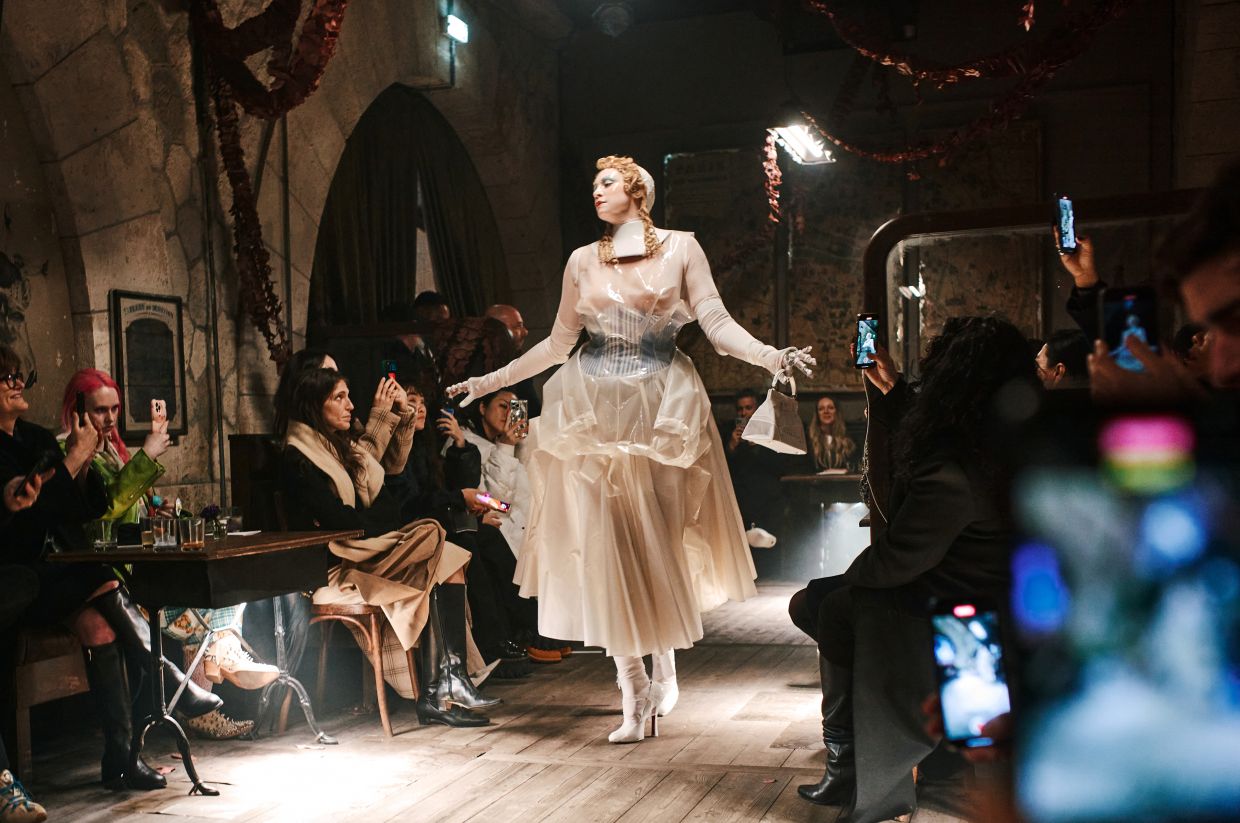
The fashion world stands at a crossroads over redemption and accountability as the Metropolitan Museum of Art prepares to honour John Galliano with a major retrospective—a decision that has prompted unprecedented dialogue between the institution, the designer, and leaders of New York's Jewish community. Galliano, widely regarded as one of contemporary fashion's most visionary figures, represents both the industry's capacity for forgiveness and its willingness to overlook past transgressions when commercial interests align. The coming exhibition, which will be unveiled through the Met's annual gala, marks only the third time the museum has devoted a solo show to a living designer, alongside Yves Saint Laurent and Rei Kawakubo—an honour that underscores his profound influence on modern fashion.
The path to this moment has been complicated by history that cannot simply be dismissed. In 2011, Galliano's career imploded when videos emerged of him making antisemitic statements in a Paris bar, including the phrase "I love Hitler." The designer swiftly lost his position at Dior, where he had served as creative director since 1996 and transformed the storied French house into a global powerhouse through his theatrical vision and technical brilliance. He was subsequently convicted of hate crimes in France, and his public humiliation appeared complete. Yet the fashion industry, ever pragmatic, eventually found room for his return. By 2014, he had secured a position as creative director at Maison Margiela, where he has spent the subsequent decade creating collections that have earned critical acclaim and been worn by celebrities including Zendaya, Amal Clooney, and Tyla on red carpets worldwide.
The timing of the retrospective has amplified anxieties within the Jewish community at a moment when antisemitism is demonstrably rising across the United States and globally. New York's Jewish residents have witnessed troubling incidents, including a recent stabbing of two men in broad daylight, with one victim departing a Jewish community centre in Manhattan. The attack has been prosecuted as a hate crime, sharpening community concerns about personal safety and institutional responsibility. Against this backdrop, the Met's decision to celebrate Galliano felt potentially tone-deaf to some, prompting museum leadership to take the unusual step of convening a series of closed-door meetings with prominent Jewish figures throughout the past year. These conversations were not perfunctory endorsements but rather substantive negotiations about whether the exhibition could proceed responsibly and what safeguards should accompany it.
Among those invited to the May meeting at the Met were Rabbi Rick Jacobs, president of the Union For Reform Judaism in North America, and Jonathan Greenblatt, CEO of the Anti-Defamation League. Their assessments of Galliano, based on direct engagement with the designer, have been cautiously supportive. Jacobs emphasized that Galliano approached the conversation with apparent sincerity rather than rehearsed talking points, making direct eye contact and speaking with clarity about his past. Greenblatt noted that Galliano's efforts to repair the damage caused by his words and to genuinely educate himself about Judaism, antisemitism, and the Holocaust deserved recognition. The Jewish principle of teshuvah—repentance combined with genuine transformation—emerged as a framework through which some community leaders viewed his rehabilitation as meaningful rather than performative.
Yet this cautious acceptance comes with significant conditions and reservations. Rabbi Joshua Davidson of Temple Emanu-El, an institution located just blocks from the Met, articulated the community's concern that the exhibition must transcend mere celebration of Galliano's aesthetic achievements. Rather than presenting his work in a vacuum, the show should serve as an opportunity to meaningfully confront antisemitism, to educate the public about its dangers and consequences, and to underscore the importance of active resistance to hate. This framing transforms the exhibition from a straightforward retrospective into a potential educational tool with moral weight—though determining how to achieve this balance remains contested terrain. The concern, as stated plainly by Jacobs, was that without careful curation, the show might provoke significant public resistance rooted not in skepticism but in a genuine sense that honouring Galliano at this moment is ethically wrong.
Met director Andrew Bolton, who has been contemplating a Galliano exhibition since 2010 but did not pursue it seriously until 2024, has committed to addressing these concerns through what he terms an "orientation gallery"—an introductory space designed to acknowledge what he calls "the rupture" that has become as defining to Galliano's career as his undeniable creative genius. Bolton insists that both he and the museum's board decided to increase their deliberation specifically because the current climate demanded it, though he explicitly denies that earlier hesitation stemmed from anxiety about Galliano's past. The distinction he draws is subtle but important: the decision to proceed now reflects not historical amnesia but a conviction that the moment allows for a more nuanced and responsible presentation. Bolton's approach prioritizes clarity and avoids euphemism; he intends to draw substantially on Galliano's own words while acknowledging that his curatorial responsibility extends beyond representing the designer's personal narrative to presenting historical accuracy.
The practical implementation of this curatorial vision remains in flux, though Bolton has indicated his team is considering an online forum to extend public discourse beyond the physical exhibition. This approach reflects the recognition that simply placing Galliano's haute couture on pedestals, however beautifully displayed, cannot satisfy the ethical dimensions that this moment demands. The exhibition must somehow grapple with the reality that genius and moral failure are not mutually exclusive, that fashion history encompasses both aesthetic innovation and the conduct of its practitioners. Galliano's contributions to fashion are objectively substantial—he is fundamentally responsible for metamorphosing Dior from a carefully mannered French heritage brand into a contemporary global entity. His mastery of bias-cut construction and his architectural approach to silhouette have influenced an entire generation of designers and continue to shape contemporary aesthetics.
The broader question animating this entire endeavor extends beyond Galliano himself to interrogate how institutions navigate historical reckoning in an era of increased social consciousness. Can someone credibly rehabilitate themselves after profound moral failure, or does the fashion world's acceptance of Galliano reflect its tendency to forgive serious transgressions among those whose creative contributions are deemed sufficiently valuable? The industry's rapid reintegration of Galliano—evident in the auction records his vintage designs now command and the consistent presence of his work on fashion's most prestigious stages—suggests a community willing to compartmentalize, to separate the artist from the actions. This raises uncomfortable questions about whether rehabilitation requires genuine transformation or merely sufficient passage of time coupled with strategic repositioning.
For Malaysian and Southeast Asian observers, this drama illuminates ongoing tensions within the global fashion industry regarding accountability and the price of admitting wrongdoing. The region's own complicated histories with nationalism, sectarianism, and communal tensions make the Galliano case particularly resonant. How societies choose to remember and reckon with the conduct of celebrated figures—whether in fashion, politics, arts, or commerce—reflects fundamental values about justice, redemption, and the possibility of transformation. The Met's cautious approach, negotiating with affected communities rather than unilaterally determining appropriate responses, offers a model, however imperfect, for institutional responsibility. Yet the exhibition's ultimate impact will depend on whether it genuinely educates and challenges audiences or simply provides moral cover for celebrating a designer whose talents have never been in dispute but whose character once came dangerously into question.

