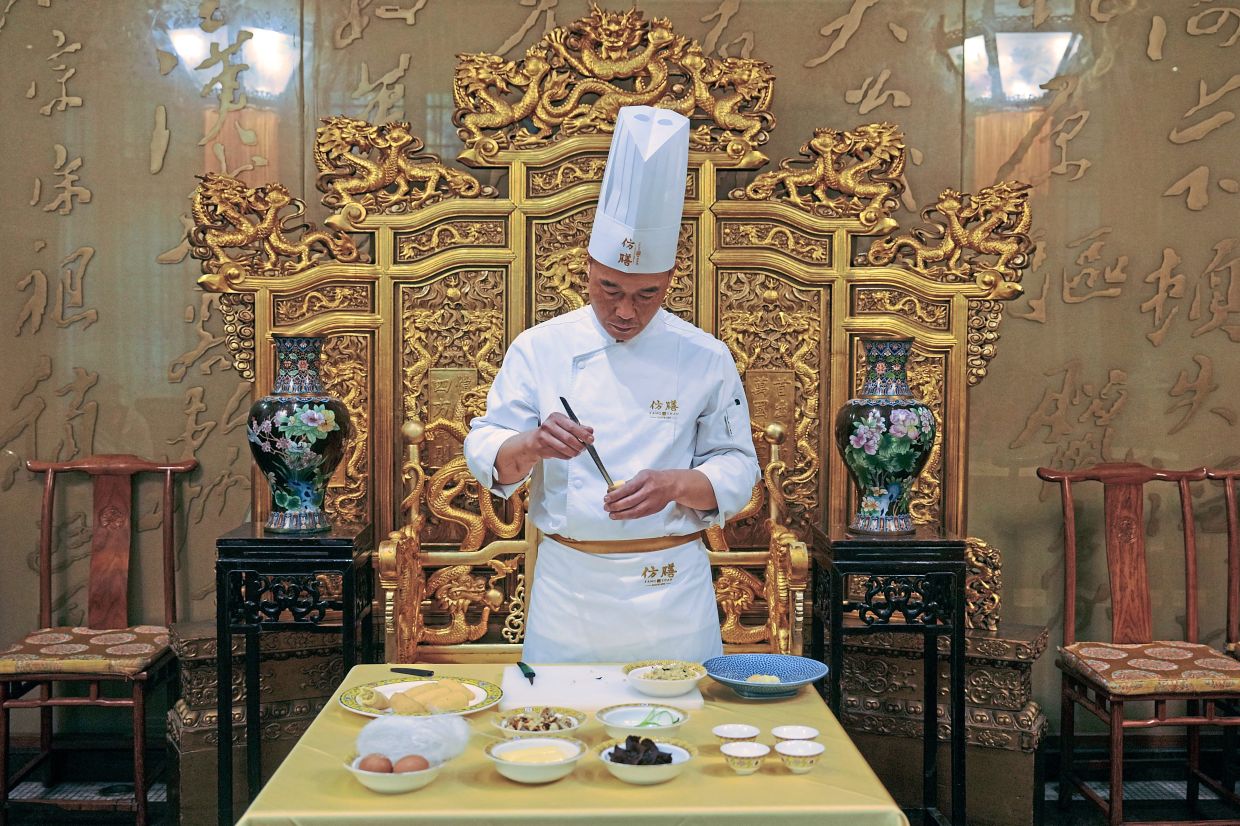
More than a century after China's imperial court dissolved, the elaborate culinary traditions that once graced the emperor's table remain remarkably alive. In Beijing, Fangshan Restaurant—established in 1925 by former Qing Dynasty chefs—continues to preserve and serve dishes that echo the grandeur and ritual significance of imperial China's most refined gastronomic heritage. The restaurant's very name encapsulates its mission: Fangshan literally translates to "imitating the imperial cuisine," positioning itself as a guardian of culinary practices that shaped Chinese food culture for dynasties.
The genesis of imperial Chinese cuisine lies far deeper than mere appetite satisfaction. When the Empress Dowager Cixi dreamed of a particular pastry during the twilight years of dynastic rule, the palace kitchen's ability to recreate it overnight transformed a simple dish into cultural legend. That same pastry—originally called minced pork pancake before its elevation to "dream pastry"—remains on Fangshan's menu today, its preparation unchanged and its story still told to diners who visit the restaurant. Such anecdotes reveal how imperial cuisine transcended function, becoming intertwined with power, reward, and the emperor's absolute authority over his realm.
Imperial cuisine encompassed two distinct yet interconnected dimensions: the daily meals the emperor consumed and the elaborate ceremonial feasts that punctuated the court calendar. Each followed precise protocols that reflected Confucian principles of hierarchy and ritual. The Qing Dynasty particularly elevated these customs, embedding philosophical meaning into every course and every gesture. Milk tea inaugurated imperial banquets, setting the ceremonial tone for what followed. As diners progressed through courses, the emperor would bestow wine and food upon princes and officials as acts of imperial favour, with recipients required to perform kowtows and express gratitude before consuming their portions. This choreographed exchange of food became a language through which power relationships were constantly reinforced and publicly acknowledged.
Sacrificial meals held equally significant spiritual and political dimensions, occupying an altogether different ceremonial framework. At the Palace of Earthly Tranquility, the ritual consumption of sacrificial pork—boiled deliberately without salt or seasoning—constituted one of the Qing court's most solemn observances. The meat's unseasoned preparation was no oversight or ascetic choice; rather, the absence of added flavouring carried profound symbolic weight. Ancient Chinese ritual texts, including the classical Book of Rites, describe similar unseasoned preparations for sacrificial ceremonies, explaining that the plainness deliberately evoked earlier, simpler cooking methods and thus honoured antiquity itself. Recipients of sacrificial meat at court received what was understood as a profound mark of imperial esteem, with the distribution of portions functioning as political acknowledgment.
Pastries occupied a particularly exalted position within imperial kitchens, prompting the establishment of dedicated institutional departments for their creation. At Fangshan, chef Zhou Tong represents the latest link in an unbroken chain of transmission spanning generations. His mastery of techniques for creating Cixi's dream pastry and steamed corn buns derives from instruction received from a master who himself learned from predecessors stretching back to the imperial era. This generational knowledge transfer proves essential because imperial pastry-making categorically rejects industrial shortcuts. All work occurs by hand; neither blenders nor food processors ever touch the dough. Beans are pulverised using traditional sieves, and particular flours must be processed in custom-made copper vessels. Chef Zhou emphasises that mechanisation, while faster, fundamentally destroys the texture that defines imperial pastries—the delicate graininess and distinctive sandy mouthfeel that separates authentic imperial preparations from modern commercial approximations.
The demand for these handcrafted delicacies confirms their enduring appeal among contemporary diners. Fangshan's bestselling items, including pea flour cakes and red bean rolls, move in quantities exceeding two hundred units daily during peak seasons. These figures suggest that modern customers value imperial pastries not merely as food but as tangible connections to historical grandeur. Executive chef Fan Liangliang underwent a profound professional transformation upon joining Fangshan's kitchen as an apprentice, discovering that culinary school education actually impeded rather than prepared him for imperial cuisine's demands. Rather than employing efficient modern techniques, he learned slower, labour-intensive processes entirely unfamiliar to contemporary culinary training. One such process, "Nizihuo," requires mincing fish, shrimp, or chicken into smooth paste before artfully reshaping the mixture into decorative forms—frogs, birds, and flowers—that transformed ordinary ingredients into visually stunning presentations worthy of imperial tables.
The philosophical framework underpinning imperial cuisine extended far beyond nutritional or aesthetic considerations. Every dish served at court had to simultaneously achieve four objectives: innovation, visual beauty, nutritional value, and suitability for imperial presentation. This multifaceted standard meant that even seemingly simple dishes carried layered meanings and historical references. The celebrated Tang Dynasty poet Du Fu composed verses about cold noodles prepared with pagoda-tree leaves that functioned not as mere culinary description but as political allegory, expressing his loyalty to the emperor while lamenting his inability to serve directly. As scholars note, Chinese cuisine has historically functioned as cultural and political expression, with dishes embodying attitudes toward power, aesthetics, and the proper ordering of society that shifted across dynasties and circumstances.
Adaptation represents a cornerstone of imperial cuisine's survival into contemporary times. Rare ingredients formerly considered essential—such as bear paws—have been entirely abandoned, reflecting modern conservation ethics and practical accessibility. Rather than compromise the integrity of traditional dishes, chefs like Fan focus on retaining the essential spirit and technique of each preparation while substituting ingredients responsibly. This approach acknowledges that culinary heritage preservation requires more than mechanical reproduction of historical menus; it demands understanding why particular dishes mattered and how to honour that significance within present-day contexts. Palace Museum researchers continue documenting Qing Dynasty dining traditions through studying preserved objects including pastry moulds and ceremonial vessels, providing contemporary chefs with scholarly foundation for their work.
The act of preserving imperial cuisine, scholars argue, necessarily involves serious engagement with its historical contexts and significance. Culinary heritage tells not only how ancient peoples ate but reveals how contemporary society chooses to remember and interpret that past. When Fangshan's servers narrate the stories behind each dish—explaining the legend of Cixi's dream pastry or the ritual significance of particular preparations—they transform dining into historical experience. Customers report enjoying these dishes more profoundly because of their historical resonance, suggesting that meaning-making constitutes an essential component of why these traditions persist. At the deepest level, Fangshan's imperial cuisine represents a deliberate fusion of Manchu and Han culinary traditions, embodying the cultural synthesis that characterised Qing Dynasty rule itself. In preserving these foods and their associated rituals, contemporary Beijing honours not merely historical eating practices but the complex cultural achievements of imperial China.

