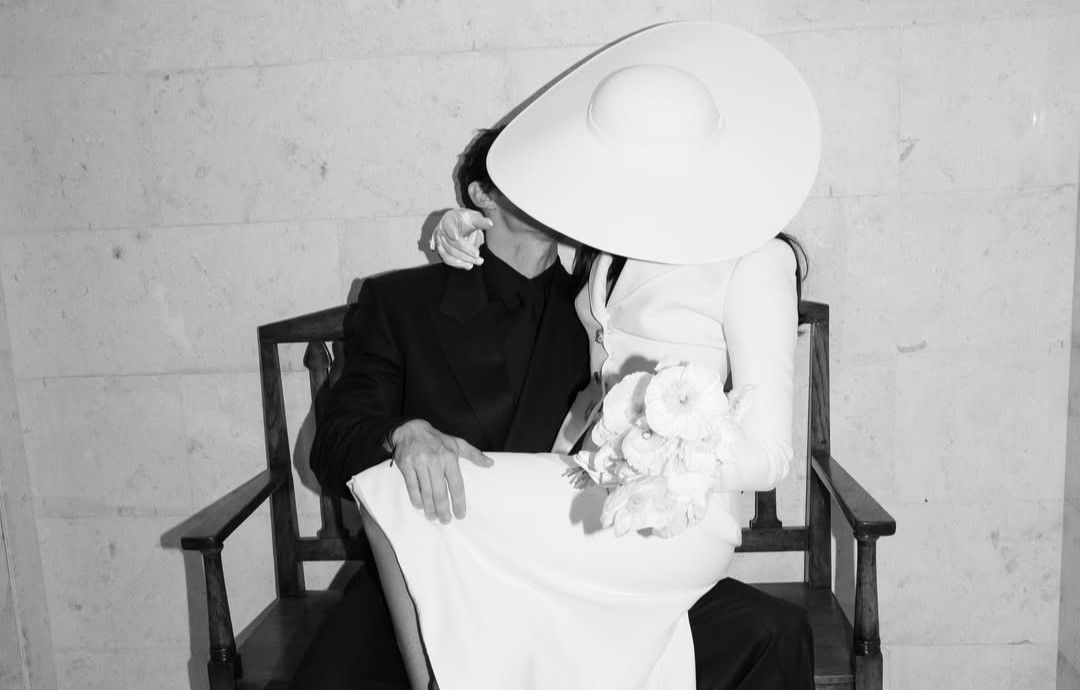
Fashion's attention swung decisively toward the skirt suit following Dua Lipa's unexpected wedding announcement, when the British singer-songwriter said "I do" in a custom ivory Schiaparelli design instead of a traditional bridal gown. The choice proved emblematic of a broader transformation unfolding across the fashion industry, where a silhouette long relegated to office dress codes and formal royal occasions has undergone a complete stylistic overhaul. Lipa's wedding ensemble deliberately echoed the minimalist elegance of Bianca Jagger's iconic 1971 bridal look, yet managed to feel entirely of the moment—a careful balance that underscores how modern designers are approaching this classic form.
The skirt suit's elevation from utilitarian workwear to fashion-forward statement piece reflects shifting attitudes toward power dressing and personal style. Designers have begun deconstructing traditional expectations, experimenting with unexpected hemlines, sculptural jacket shapes, and draping techniques that challenge the rigid silhouettes associated with 1980s corporate culture. Rather than abandoning the form entirely, contemporary fashion houses are interrogating what the skirt suit can become when freed from its functional constraints. This creative reimagining has positioned the two-piece as neither nostalgic throwback nor straightforward revival, but rather as a canvas for genuine innovation.
Proenza Schouler exemplifies this modernised approach through recent collections that pair streamlined blazers with flowing midi skirts, prioritising fluid proportions and relaxed tailoring over the starched formality of traditional suiting. The label's interpretation suggests that authority and ease need not be mutually exclusive—a departure from the power-dressing conventions that defined professional fashion for decades. By softening construction and embracing movement, Proenza Schouler has created skirt suits that feel accessible rather than intimidating, contemporary rather than retro. This philosophy resonates with audiences seeking garments that project competence without rigidity.
Vivienne Westwood has long channelled the skirt suit through a distinctive design language centred on rebellion and femininity. The British house frequently deconstructs the silhouette through asymmetrical hemlines, dramatic draping, and unexpected fabric combinations, demonstrating that tailored suiting can accommodate artistic expression and individual personality. Where corporate fashion demands uniformity, Westwood's approach celebrates idiosyncrasy, suggesting that the skirt suit's true potential lies in its capacity to be personalised and reinterpreted. This perspective has proven particularly influential among younger consumers who view fashion as a tool for self-definition rather than conformity.
The silhouette's enduring appeal stems fundamentally from its inherent versatility. Unlike unstructured dresses that may lack authority or traditional tailored suits that can feel imposing, the skirt suit occupies a productive middle ground in contemporary wardrobing. It communicates professionalism and intentionality while maintaining a distinctly feminine aesthetic—a balance increasingly valued by people navigating multiple social contexts and professional environments. The two-piece allows wearers to modulate formality through styling choices, whether pairing the jacket and skirt with pointed heels, casual loafers, or fashion trainers. This adaptability aligns with contemporary attitudes toward capsule wardrobes and pieces designed for longevity and repeated wear across diverse occasions.
Celebrity adoption has accelerated the skirt suit's cultural rehabilitation considerably. Zendaya's appearance at CinemaCon in a precisely tailored skirt suit demonstrated how the silhouette can project effortless sophistication and contemporary style when worn with confidence. Rather than appearing corporate or conservative, her interpretation felt unmistakably fashion-forward, suggesting that the skirt suit's associations need not remain tethered to traditional power dressing. The actress's presence within fashion's cultural conversation carries significant weight, particularly among younger audiences navigating their own relationship to formal and semi-formal dressing. Her styling choices essentially provide permission for the broader public to reconsider the skirt suit as legitimate fashion rather than occupational requirement.
Melania Trump's consistent embrace of luxury skirt suits throughout her time as First Lady of the United States reinforced the silhouette's continuing relevance across generational and socioeconomic boundaries. Her frequent appearances in tailored designs from established fashion houses demonstrated that the skirt suit remains potent shorthand for authority, control, and aspirational style. However, Trump's approach also crystallised certain associations with formal institutional power that contemporary designers are actively working to disrupt. Where power dressing of previous eras emphasised conformity and seriousness, current iterations seek to introduce playfulness, personality, and individual expression—a meaningful philosophical shift that opens the silhouette to audiences beyond traditional corporate hierarchies.
The resurgence of skirt suit interest arrives at a moment when fashion consumers increasingly question the practicality and sustainability of occasion-specific garments and narrowly defined dress codes. The contemporary skirt suit functions as a rare item capable of bridging professional and leisure contexts, formal and casual moments. A single well-constructed piece can transition from business presentation to evening occasion with minimal styling adjustments, reflecting practical values increasingly central to fashion discourse. This functionality, combined with the silhouette's aesthetic possibilities, positions the skirt suit as genuinely suited to contemporary life rather than as nostalgic reference or ironic commentary.
Looking beyond the immediate fashion cycle, the skirt suit's revival suggests deeper reconsideration of how authority and femininity intersect within contemporary visual culture. Rather than accepting that power dressing requires abandoning traditionally feminine aesthetic choices, contemporary designers propose that authority can manifest through elegance, sophistication, and personal style. The skirt suit becomes a vehicle for this alternative proposition—a garment capable of projecting competence while celebrating femininity, offering wearers genuine choice rather than enforced conformity to established professional codes. This philosophical reorientation carries significance beyond fashion, suggesting broader cultural shifts toward more expansive, inclusive definitions of power itself.

