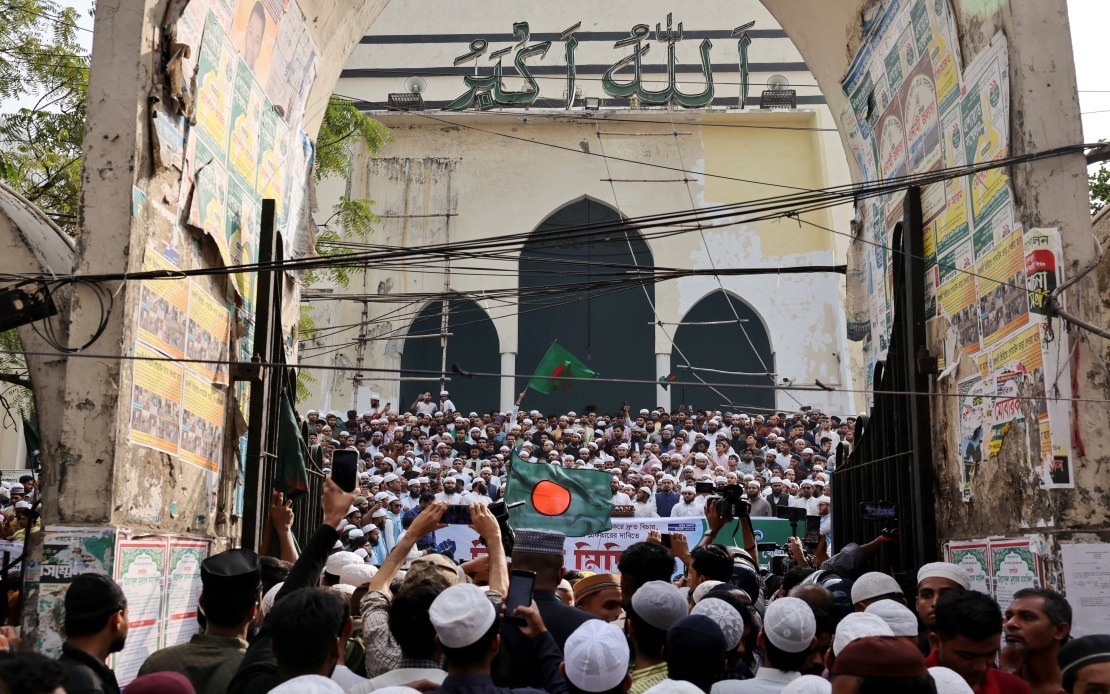
A special tribunal in Bangladesh has handed down capital punishment to three police officers, including the former commissioner of Dhaka Metropolitan Police, for their roles in killing civilians during the pivotal 2024 uprising that ultimately destabilized and collapsed the government. The International Crimes Tribunal, presided over by Justice Md Golam Mortuza Mozumder with a three-member panel, delivered verdicts on Sunday that convicted the officers of crimes against humanity stemming from the violence that erupted across the nation in July 2024.
The three sentenced to death in absentia are former Dhaka Metropolitan Police Commissioner Habibur Rahman, former DMP Additional Deputy Commissioner Md Rashedul Islam, and former Rampura Police Chief Md Mashiur Rahman. All three remain fugitives, with Habibur Rahman already facing a separate death sentence handed down previously. The tribunal also imposed life imprisonment plus an additional 20-year sentence on two other officers, including Tariqul Islam Bhuiyan, a former sub-inspector, reflecting the court's determination to hold multiple levels of the police hierarchy accountable for the violence.
The specific charges against the convicted officers centered on documented killings that gained widespread attention through social media circulation. Among the cases the tribunal examined was the shooting of a young man who had climbed onto a building in Dhaka, along with the deaths of two other individuals in the capital. These incidents, captured and shared online, provoked an emotional response that galvanized public anger and transformed localized unrest into a nationwide movement demanding systemic change. The viral nature of these deaths proved pivotal in crystallizing opposition to the government and accelerating the political upheaval.
The July 2024 uprising represented a watershed moment in Bangladeshi politics, with the violence claiming approximately 1,400 lives according to United Nations estimates, while thousands more sustained injuries. The majority of fatalities resulted from police gunfire deployed by officers serving under the administration of then-Prime Minister Sheikh Hasina. The scale of casualties and the visible participation of law enforcement in suppressing protests transformed public perception of the police force from a neutral institution into an instrument of state oppression. This shift in perception proved instrumental in eroding support for Hasina's government among the general population.
The escalating cycle of protests and police violence created a momentum that proved impossible for the government to contain through conventional means. As demonstrations spread across cities and towns, the regime's reliance on security forces to suppress dissent paradoxically strengthened the opposition by providing images and accounts of apparent state brutality. The widespread coverage and emotional impact of specific incidents—particularly the widely-publicized killings that formed the basis of this tribunal conviction—transformed individual deaths into symbols of systemic injustice that transcended regional or factional boundaries.
Prime Minister Sheikh Hasina's departure in August 2024 and subsequent refuge in exile marked the culmination of the uprising's political trajectory. The tribunal's action in November 2023 to sentence Hasina herself to death on separate crimes against humanity charges indicated the judiciary's willingness to pursue accountability at the highest levels of the former government. This judicial activism, though occurring after the regime change, represented an attempt to establish legal accountability for the violence and create a documented historical record of state actions during the period.
The conviction of serving and former police officers establishes a precedent within Bangladesh's legal system for holding security force members individually responsible for their actions during periods of civil unrest. This represents a departure from historical patterns in many South Asian democracies where security personnel have often enjoyed de facto immunity for actions taken in official capacity. The tribunal's decisions signal a commitment to the principle that following orders or acting in an official capacity does not absolve individuals of responsibility for unlawful killings.
For regional observers, including those in Malaysia and other Southeast Asian nations, the Bangladeshi tribunal proceedings offer instructive lessons regarding the fragility of political systems when security forces are deployed against civilian populations. The case demonstrates how government reliance on police and military violence to suppress legitimate dissent can accelerate rather than prevent political collapse, particularly in the contemporary information environment where incidents are rapidly documented and disseminated globally. The speed with which Hasina's government unraveled once the military withdrew support underscores the importance of institutional restraint and legitimacy.
The tribunal's work remains ongoing, with investigations and prosecutions continuing into other incidents from the 2024 uprising. The systematic approach to documenting alleged crimes against humanity suggests that Bangladesh may be attempting to construct a comprehensive legal and historical account of the violence comparable to transitional justice processes undertaken in other post-conflict societies. This approach contrasts with more common patterns in the region where such episodes pass with minimal formal accountability or investigation.
The abscondence of the convicted officers raises practical questions about enforcement and international cooperation. Several Southeast Asian nations maintain extradition treaties and law enforcement cooperation frameworks that could theoretically facilitate apprehension, though the political dimensions of such cases often complicate straightforward legal proceedings. The tribunal's in absentia convictions, while legally valid under Bangladesh law, carry primarily symbolic weight unless the accused are eventually apprehended or voluntarily surrender.
The broader implications for Bangladesh extend beyond criminal accountability to encompass institutional reform within the police and security apparatus. The conviction of senior officers, particularly a former police commissioner, reflects public demands not merely for punishment but for fundamental restructuring of an institution perceived as having been weaponized against civilians. Any successor government will face pressure to implement reforms addressing recruitment, training, command structure, and internal accountability mechanisms to prevent recurrence of such abuses.
For international observers, including human rights organizations monitoring South Asian governance, the tribunal's actions represent both progress and limitations. While the judicial process demonstrates accountability mechanisms at work, the continued flight of convicted individuals and the extended timeframe for achieving accountability highlight the challenges inherent in post-crisis transitional justice. The full historical and legal reckoning for the 2024 uprising remains incomplete, with investigations likely continuing for years despite the momentous nature of the convictions already delivered.

