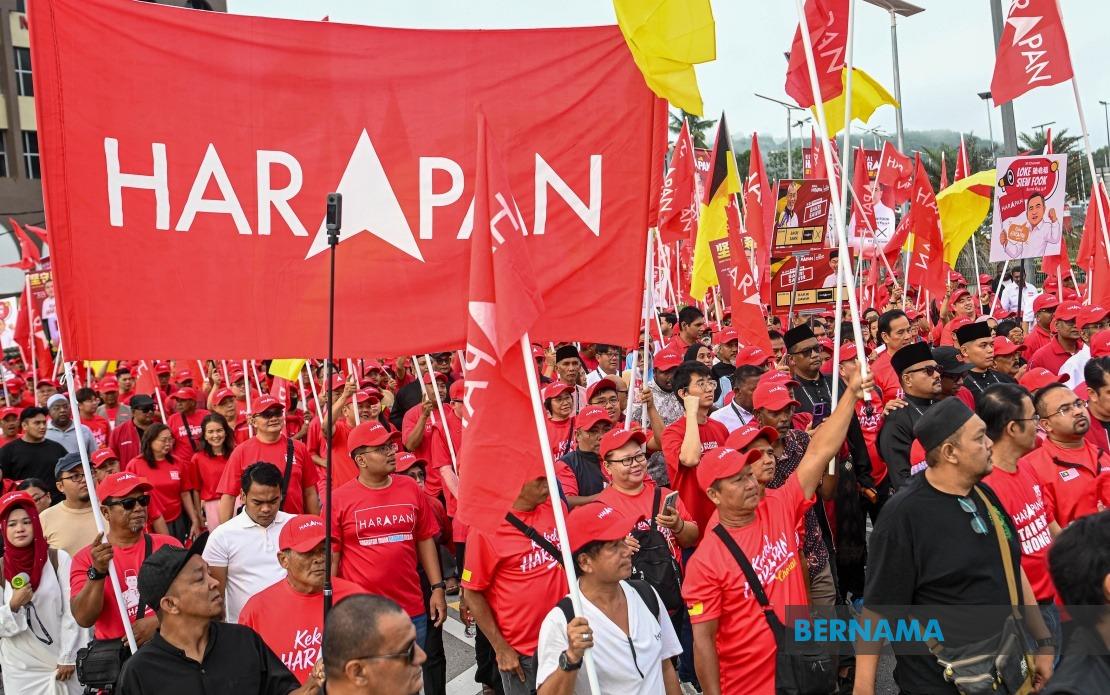
The 16th Negeri Sembilan State Election is shaping up as a fiercely competitive contest, with three constituencies set to witness three-way battles between the major political coalitions. Following the conclusion of nominations on July 18, the Jelebu Parliamentary returning officer Abdul Rahim A Aziz confirmed that Pertang, Klawang, and Sungai Lui will all see contests involving Barisan Nasional, Pakatan Harapan, and Bersatu candidates, intensifying the stakes across the state.
In Pertang, the political dynamics centre on the defence of incumbent Datuk Seri Jalaluddin Alias, whose Barisan Nasional ticket faces pressure from both Pakatan Harapan's Mohd Umry Abdul Khois and Bersatu's Mohd Faizal Fadli Mohd Idrus. Jalaluddin's previous victory margin at the last state election proved substantial: he secured 5,634 votes to defeat Perikatan Nasional's Amirudin Hasan by 2,844 votes. This cushion, however, may prove less reliable in a three-way race where opposition votes could split differently. The emergence of a Bersatu challenger adds particular significance, given that party's fractious relationship with its former Perikatan partners and its evolving positioning within the broader political landscape.
The Sungai Lui constituency presents an intriguing narrative centred on personal connections. The race features three candidates with a shared educational history, creating an unusual dimension to the campaign. Datuk Mohd Razi Mohd Ali represents Barisan Nasional's interests, while Zainal Fikri Abd Kadir carries Pakatan Harapan's hopes and Mazrulhisham Abd Mansor stands as the Bersatu candidate. This personal backstory may influence local dynamics in ways that transcend typical party-political divisions, potentially affecting how residents view the candidates beyond their political affiliations and manifestos.
Klawang, the third flashpoint, presents a different scenario where the incumbent faces genuine challenges. Incumbent Datuk Bakri Sawir of Pakatan Harapan must defend his seat against Muhammad Adib Musa representing Bersatu and Danni Rais from Perikatan Nasional. This particular constellation of challengers represents a split among the opposition to Pakatan Harapan's rule, with both Bersatu and Perikatan Nasional competing for the anti-government vote in this constituency.
The prevalence of three-cornered fights across these three constituencies reflects the fragmented state of Malaysian politics at the state level. Negeri Sembilan, like several other states, has become a proving ground for how Malaysia's complex political ecosystem functions when none of the major coalitions holds overwhelming advantage. The splintering of opposition support between Bersatu and Perikatan Nasional candidates complicates traditional two-party dynamics and introduces unpredictability into races that might otherwise follow predictable patterns.
These contests carry implications extending well beyond Negeri Sembilan's borders. State elections serve as barometers for national political sentiment, offering insights into coalition stability and voter preferences ahead of the next general election. The performance of Bersatu candidates, in particular, will be closely watched as that party continues navigating its position as a potential kingmaker or coalition partner. Similarly, how Pakatan Harapan's incumbents fare will indicate whether the coalition has consolidated its gains since the 2022 general election or whether voters are shifting their preferences.
For Malaysian voters observing this election, the Negeri Sembilan contest highlights the increasingly complex nature of electoral politics in the country. Traditional binary contests between government and opposition have given way to multi-polar competitions where individual candidates and local factors may outweigh macro-political narratives. Voters in these three constituencies will effectively decide not just who represents them locally, but also send signals about the viability and electoral appeal of each major political grouping.
The Election Commission has established a clear timeline for the electoral process. Early voting is scheduled for July 28, allowing those unable to vote on polling day to cast their ballots in advance. The main polling day is set for August 1, giving candidates and parties slightly more than two weeks to campaign and mobilise support. This compressed timeframe means campaign strategies must be sharp and targeted, particularly in constituencies where the result remains genuinely uncertain.
For Southeast Asian observers, Negeri Sembilan's election illustrates broader patterns emerging across the region's established democracies. Coalition politics, the rise of additional players challenging two-bloc dominance, and the increasing importance of state-level contests all reflect deeper structural shifts in how electoral competition functions. Malaysia's experience provides a case study in how political fragmentation can create both opportunities and challenges for democratic governance and representation at the sub-national level.

