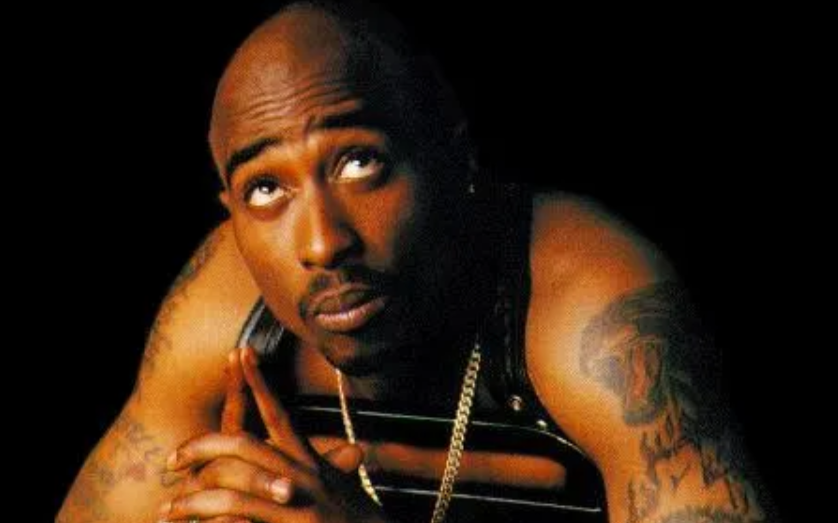
Three decades after the fatal shooting of Tupac Shakur on a Las Vegas street, the man accused of orchestrating the killing appeared in court Monday to face trial. Duane "Keffe D" Davis, aged 63, stood accused of ordering the 1996 murder of the California hip-hop icon, an allegation that has reignited intense scrutiny of one of America's most enduring cold cases. Proceedings are anticipated to consume roughly a month, beginning with jury selection that will likely extend through the week. Davis, the onetime leader of the South Side Compton Crips, confronted the prospect of life imprisonment without parole should he be convicted.
The circumstances surrounding Shakur's death have captivated public imagination for three decades. The rapper, then 25 years old, was struck by gunfire from a drive-by shooting on September 7, 1996, while in Las Vegas attending a Mike Tyson boxing match at the MGM Grand. The incident occurred during the height of a bitter East Coast-West Coast hip-hop rivalry that divided the music industry and claimed multiple victims. Shakur's death preceded that of Christopher "The Notorious B.I.G." Wallace by just six months, with the latter's March 1997 shooting further cementing the era's violent tensions. Prosecutors acknowledge that their case may not definitively establish who pulled the trigger that night, but they maintain sufficient evidence to demonstrate that Davis conceived and coordinated the attack, providing the weapon used in the killing.
The rivalry that prosecutors argue motivated the murder centered on competing record labels and their associated gang affiliations. Death Row Records, controlled by Marion "Suge" Knight, aligned itself with Mob Piru, a Los Angeles gang falling under the Bloods umbrella. In contrast, Bad Boy Records, the East Coast operation founded by Sean "Diddy" Combs, had engaged the South Side Compton Crips as security personnel. This arrangement created a direct adversarial relationship between Davis's organization and Death Row's protective gang structure. The tension between these factions intensified following an alleged assault on a Death Row employee, which set the stage for escalating violence and retribution.
The immediate trigger for the alleged murder plot occurred at the MGM Grand casino following the Tyson bout. Knight and Shakur confronted Orlando "Baby Lane" Anderson, Davis's nephew and a Crips member, beating him in retaliation for the earlier assault. This act of violence against a member of Davis's gang provided prosecution with their theory of motive—a matter of honor and revenge within gang codes that typically demands a violent response. According to the state's account, Davis, enraged by the attack on his relative, arranged the retaliatory killing that would follow hours later.
The mechanics of the murder itself remain partially clouded by the passage of time and the deaths of crucial witnesses. Prosecution contends that Davis, sitting in the front seat of a white Cadillac alongside Anderson and others, handed a pistol to occupants in the back seat before the vehicle drew alongside Shakur's car on a Las Vegas street. Gunfire erupted from the Cadillac, fatally wounding Shakur. However, the state has not identified the individual who actually discharged the weapon. This evidentiary gap represents a significant vulnerability in the prosecution's case, as it leaves open questions about the degree of Davis's direct responsibility for the actual shooting. Everyone present in the Cadillac that night has since died, precluding testimony from other potential participants.
The investigative stagnation that characterized this case for nearly thirty years broke unexpectedly in 2019 with the publication of Davis's memoirs. In this book, Davis provided an account consistent with a shooter being present in the vehicle, describing his position in the front seat and his action of passing a firearm backward. Remarkably, Davis did not identify the shooter but offered sufficient detail to enable investigators to potentially advance their inquiry. These admissions represented a critical turning point in a case that had previously yielded minimal prosecutorial progress. The memoir's revelations aligned with earlier statements Davis had made to journalists, suggesting that his account contained at least a core of consistency across multiple tellings.
Davis's cooperation with his memoir proved counterproductive to his legal interests. His September 2023 arrest flowed directly from the self-incriminating statements published in his book and derived from additional comments he had previously provided to police in 2008. What may have been intended as a commercial venture—a former gang member's life story—instead furnished prosecutors with material they would employ to build their case. Davis subsequently reversed course entirely, pleading not guilty and denying any involvement in Shakur's death. In a March 2025 interview conducted from prison via ABC News, Davis asserted his innocence categorically, claiming investigators lacked evidence placing him in Las Vegas on the murder night. He now maintains he was in Los Angeles at the time.
Davis has pursued an explanation for his incriminating memoir that attributes the problematic passages to his co-author's embellishment. He claims he merely provided biographical details, which his writing partner then expanded through independent investigation and creative composition intended to boost book sales. This defense strategy attempts to distance Davis from the memoir's most damaging claims by characterizing them as elaborations imposed without his knowledge or approval. He further asserts he has never actually read his own published book, a claim that undercuts any credibility his initial statements might have possessed. His legal team filed pretrial motions attempting to exclude both the memoir and his 2008 police interview from trial proceedings, but these efforts proved unsuccessful.
The evidentiary foundation for prosecution extends beyond Davis's own statements, though those admissions remain central to their theory. The prosecution relies upon gang dynamics, witness accounts from the period following the shooting, and circumstantial evidence connecting Davis to the crime through his organization's rivalry with Death Row Records. The defense will likely emphasize the absence of direct physical evidence connecting their client to the actual shooting, the implausibility of the prosecution's timeline, and the inconsistency between Davis's subsequent denials and his earlier admissions. The jury will confront a case built substantially upon circumstantial evidence and statements that the defendant now contests.
The trial's commencement carries implications extending well beyond establishing individual accountability for a single murder. For the hip-hop community and for observers of gang violence in American cities, the proceedings represent an opportunity to examine the machinery of organized crime that operated with relative impunity during the 1990s. The case illuminates how business rivalries in the music industry intersected with street gang structures, creating circumstances where commercial competition could translate into lethal violence. This dynamic remains relevant to contemporary understanding of how organized crime systems sustain themselves across decades, particularly when key witnesses are eliminated.
Closures remain incomplete for those most affected by Shakur's death. In May, Maurice Shakur, the rapper's stepbrother, initiated a wrongful death lawsuit in civil court that names multiple defendants allegedly involved in the murder. The complaint asserts that various individuals responsible for Shakur's killing have escaped accountability for thirty years, suggesting that the criminal trial alone may prove insufficient to address the full scope of responsibility. This civil action indicates that even if Davis receives conviction or acquittal, other parties may yet face consequences through different legal channels. The family's determination to pursue multiple avenues toward accountability reflects frustration with the criminal justice system's inability to resolve this case more expeditiously.
The trial's outcome, whatever form it takes, will likely satisfy neither those seeking comprehensive justice nor those convinced of broader conspiracies beyond Davis's alleged involvement. The case's three-decade trajectory from unsolved murder to trial has been marked by frustration, speculation, and persistent questions about who possessed knowledge of the crime and why key details remained obscured for so long. For Malaysian and Southeast Asian observers of American crime and justice, the trial offers a window into how powerful institutions—gangs, record labels, and law enforcement—interact across decades, sometimes with incomplete transparency regarding what actually occurred. The proceedings will test whether circumstantial evidence and partial admissions, later recanted, can sustain conviction in a case where direct evidence of the actual shooter may never emerge.

