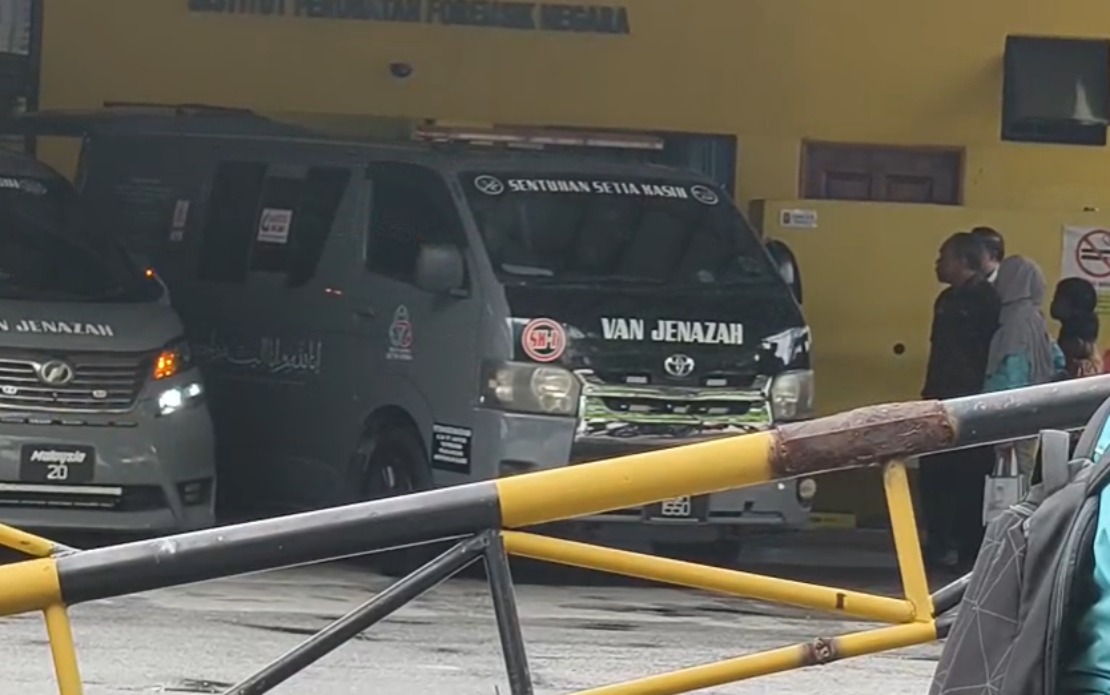
A tragic traffic collision in central Kuala Lumpur has claimed three lives, prompting questions about vehicle safety protocols during law enforcement operations. The Malaysian Immigration Department (JIM) lorry, officially known as a Black Maria, collided with civilian vehicles on Jalan Sultan Ismail in the early hours of the morning, resulting in the deaths of Shaik Mohd Firdaus Shaikh Yahya, 53, and his two daughters, Siti Nor Sazlin, 25, and Siti Darwisyah Auni, 12. The remains were formally released by the National Institute of Forensic Medicine at Kuala Lumpur Hospital after post-mortem procedures were concluded, allowing the grieving family to proceed with funeral arrangements.
According to eyewitness accounts and initial investigations, the incident unfolded around 1 am on Jalan Sultan Ismail when the immigration enforcement vehicle, travelling without detained individuals aboard, was en route to Chow Kit for a planned raid targeting undocumented migrants. The Black Maria was operating with both beacon lights and siren activated, signalling its emergency status to other road users. However, investigators allege that the lorry breached traffic regulations by entering the Maju Junction intersection against a red traffic signal, directly colliding with a Proton Saga that was proceeding through the same intersection on a green light.
The violent impact of the collision proved catastrophic. The immigration lorry lost control immediately after striking the Proton Saga and skidded across the roadway before ploughing into four pedestrians who were in the vicinity. The vehicle then struck a parked or nearby Inokom Matrix multi-purpose vehicle, compounding the scene of destruction. While three individuals perished at the scene or shortly thereafter, a fourth victim sustained serious injuries requiring hospitalisation, adding to the human toll of the accident.
The three deceased have been transported from the forensic institute to Jamiul Ehsan Mosque on Jalan Pahang for traditional Islamic funeral rites, including ritual bathing, shrouding, and funeral prayers. Following these ceremonies, the bodies will be conveyed to Kampung Air Hitam Labu Muslim Cemetery in Kampar, Perak, for final interment. The decision to conduct funeral arrangements in Perak suggests family connections to that state, with burial in a rural cemetery rather than an urban facility indicating the family's roots in the northern Selangor region.
The incident raises significant concerns about operational safety during immigration enforcement activities. While beacon lights and sirens are intended to alert other road users to the presence of emergency vehicles, their use does not automatically grant drivers immunity from traffic laws or relieve them of responsibility to operate safely. The allegation that the lorry proceeded against a red signal at a busy city intersection during night hours—when visibility is reduced and pedestrian presence may be less predictable—suggests possible lapses in driver judgment or adherence to road safety protocols.
Investigators have classified the matter under Section 41(1) of the Road Transport Act 1987, which typically addresses culpable negligence or dangerous driving causing death. This legal framework indicates that the authorities are treating the incident seriously and will examine whether the driver's conduct fell below the standard expected of a competent and careful road user. The investigation will likely scrutinise whether proper procedures were followed for emergency vehicle operation, including speed management, visibility checks, and intersection clearance protocols.
This tragedy occurs within the broader context of Malaysia's ongoing efforts to combat irregular migration and human trafficking, activities in which the Immigration Department plays a critical enforcement role. Chow Kit, the intended destination of the raid, is a well-known hotspot for undocumented migrant populations in Kuala Lumpur. However, the incident underscores the tension between operational urgency and public safety obligations that government agencies must navigate, particularly when conducting enforcement activities that require rapid deployment through congested urban areas.
For road safety advocates and traffic management professionals, the accident serves as a case study in the complexities of emergency vehicle operations in densely populated cities. Even vehicles operated by government agencies with legitimate enforcement mandates remain bound by fundamental traffic safety principles. The incident may prompt a review of protocols governing JIM lorry operations, including driver training requirements, speed restrictions in urban zones during night hours, and procedural safeguards for intersection navigation.
The loss of Shaik Mohd Firdaus Shaikh Yahya and his daughters represents a devastating blow to their extended family and community networks. The age disparity among the three victims—ranging from 12 to 53 years—suggests a multi-generational tragedy, with an elderly parent and minor child among those killed. Such incidents reverberate beyond immediate family circles, affecting workplace colleagues, school communities, and broader social networks throughout the region.
As investigations proceed, this accident will likely feature prominently in discussions about balancing law enforcement effectiveness with public safety imperatives. The manner in which authorities respond to the findings—whether through enhanced training, procedural modifications, or accountability mechanisms—will signal the government's commitment to ensuring that operational necessities do not override fundamental duties of care owed to the civilian population.

