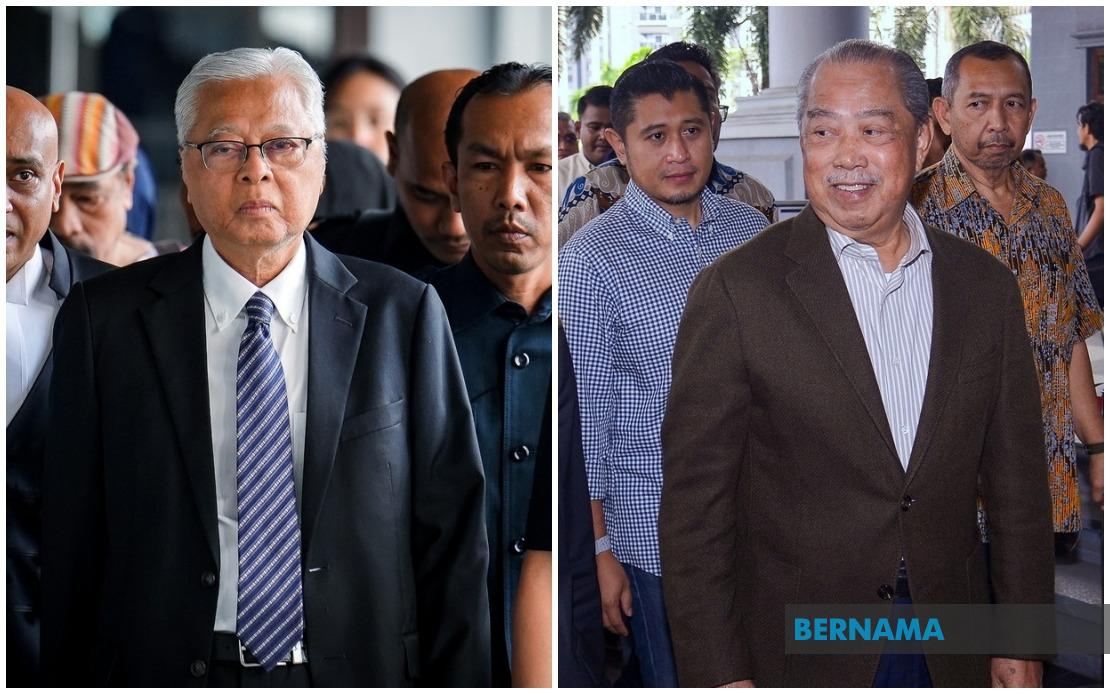
The convergence of three former prime ministers at the Kuala Lumpur Court Complex on a single day has created an extraordinary chapter in Malaysia's political and legal landscape. Datuk Seri Najib Tun Razak, Tan Sri Muhyiddin Yassin, and Datuk Seri Ismail Sabri Yaakob each attended separate court proceedings on the same morning, an occurrence that legal observers and veteran journalists characterize as entirely without precedent in the country's modern history.
The sheer administrative and logistical complexity of managing three concurrent legal matters involving former heads of government underscores the scale of Malaysia's ongoing reckoning with its recent political past. Each former premier faced distinct charges and civil actions stemming from separate controversies, yet their simultaneous presence at a single venue created an unusual convergence that demanded significant security coordination and media management. The event drew heightened attention not merely because of the individuals involved, but because it crystallized the extent to which Malaysia's recent leadership has become entangled with the judicial system.
Veteran court reporter V. Anbalagan of Free Malaysia Today characterized the morning as a watershed moment in Malaysian journalism. With more than two decades covering legal proceedings, Anbalagan emphasized that witnessing three former prime ministers at the same court complex at the same time represented something fundamentally different from his accumulated experience. He reflected that such an occurrence might prove so statistically improbable that it could constitute an unrepeatable record in the nation's annals, suggesting that the convergence of circumstance, timing, and legal proceedings was unlikely to manifest again.
The court grounds began filling with journalists, camera operators, and photographers as early as seven in the morning, transforming the normally procedural atmosphere of the Kuala Lumpur Court Complex into a focal point of national media attention. Television crews positioned themselves strategically to capture arrivals and departures, while print and digital reporters coordinated their coverage to track developments across multiple courtrooms simultaneously. Bernama TV news officer Siti Zanariah Nor Zin noted that her sixteen years in journalism had never presented such a rare scenario, and she emphasized that the staggered arrival patterns of the former leaders, along with their legal representatives, provided crucial breathing room for media teams to transmit updates to their respective newsrooms without overwhelming their operational capacity.
Security preparations proved instrumental in maintaining order amid the unprecedented convergence. Authorities deployed personnel from Sentul district police headquarters alongside court security officers and Palace of Justice police to ensure the smooth movement of former prime ministers and their entourages. A court official noted that comprehensive preparations began the previous afternoon, with multiple categories of security passes issued to different groups—ranging from members of the public and accredited journalists observing open proceedings to those accessing video-link facilities. This tiered approach allowed authorities to maintain control without restricting legitimate access to court proceedings, a delicate balance essential for upholding both security and judicial transparency.
Utusan Malaysia journalist Amirul Aiman Osman arrived at the court complex at seven o'clock in the morning to position himself for coverage, encountering conditions that were hectic and densely crowded yet remained orderly due to the stringent security protocols in place. Though the volume of journalists and onlookers created logistical challenges for individual reporters seeking optimal vantage points or direct access to the former leaders, the coordinated security response prevented any untoward incidents. The careful choreography of movements, enforced through careful monitoring of upper floors adjacent to courtrooms while maintaining stability on ground level, meant that journalists could fulfill their professional responsibilities while authorities preserved the dignity and safety of all parties involved.
Najib attended proceedings concerning a USD5.64 billion civil suit initiated by 1Malaysia Development Berhad (1MDB) and its subsidiary against him and several co-defendants, with Judicial Commissioner Mohamad Redzuan Idrus presiding. Simultaneously, Muhyiddin faced seven charges related to alleged abuse of power and money laundering connected to the Jana Wibawa programme, appearing before Judge Noor Ruwena Md Nurdin. Meanwhile, Ismail Sabri confronted asset declaration charges before Judge Suzana Hussin, encompassing allegations involving RM14.7 million in undeclared cash holdings, multiple foreign currency reserves, and gold bars. Each proceeding addressed distinct legal matters arising from different periods and contexts, yet their occurrence on the same day intensified public consciousness of the breadth and depth of legal accountability proceedings affecting Malaysia's recent political leadership.
The complexity of Malaysia's transition toward a more accountable governance framework becomes evident when examining the substantive nature of each former premier's legal entanglement. The charges and civil actions collectively span financial impropriety, abuse of executive authority, and failure to meet transparency obligations—issues that cut to the heart of institutional integrity. For Malaysian citizens observing from afar, the simultaneous courtroom appearances served as a visceral reminder that legal consequences operate irrespective of former status or rank. The proceedings underscored the judiciary's willingness to process cases involving the nation's highest former offices, a development that reflects significant changes in Malaysia's institutional approach to accountability.
For regional observers and international audiences monitoring Malaysia's institutional development, the convergence carried symbolic weight beyond the specific legal outcomes of each case. The ability of the Malaysian court system to accommodate multiple high-profile proceedings simultaneously, maintain security and order, and permit media access alongside judicial oversight demonstrated operational capacity and institutional resilience. However, the very fact that three former prime ministers required simultaneous court appearances raised complex questions about governance patterns and institutional vulnerabilities that might require deeper examination beyond the immediate judicial sphere.
Journalists covering the proceedings emphasized that the infrastructure of Malaysian media demonstrated genuine capacity to handle complex, multi-layered events of national significance. Siti Zanariah noted that everything proceeded smoothly, with the controlled environment outside courtrooms permitting media professionals to monitor developments throughout the day without disruption. This coordination between security personnel, court officials, judicial officers, and media representatives suggested that despite the extraordinary nature of the circumstances, Malaysia's institutional systems possessed sufficient maturity to process even unprecedented scenarios with professionalism and order.
Ismail Sabri departed the court complex at eleven forty-three in the morning after securing bail at RM300,000 with one surety, completing one chapter in what promises to be an extended legal narrative. The proceedings involving all three former prime ministers would continue, with subsequent hearings scheduled to address unresolved matters. The morning's convergence, while historically unique, thus represented merely a single moment within a longer arc of accountability proceedings that will shape Malaysia's institutional and political trajectory in coming years, serving as a reminder that the consequences of governance choices extend far beyond any individual's tenure in office.

