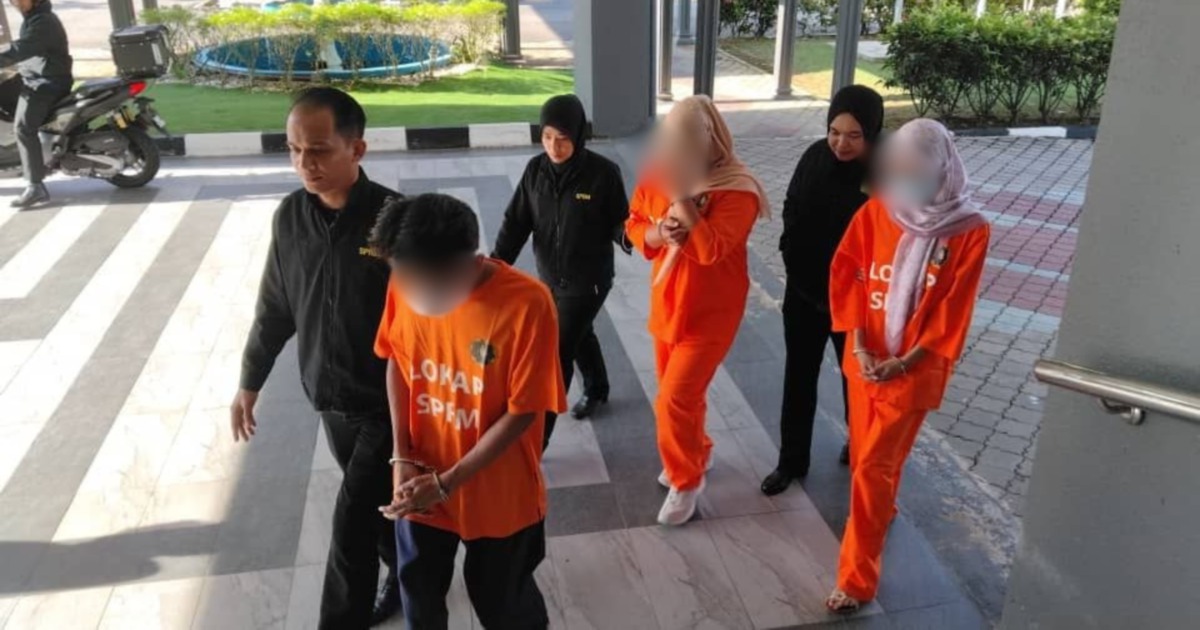
The Terengganu branch of the Malaysian Anti-Corruption Commission has placed three suspects in remand over allegations of submitting inflated and false claims related to wedding catering services, with the total value of the suspected fraud reaching RM51,000. The investigation appears to focus on systematic misrepresentation of catering-related expenses and invoices within what authorities suspect may be a coordinated scheme to secure funds through deceptive documentation.
Among those detained is a former manager employed by a frozen food production company, suggesting the scheme may have exploited legitimate business structures to process fraudulent claims. The involvement of someone with operational experience in the food industry raises concerns about potential insider knowledge of invoicing procedures and supply chain manipulation that could have facilitated the alleged fraud.
Fraud cases involving catering services have become increasingly prevalent in Malaysia, particularly those connected to event management and corporate functions. Vendors and organisers sometimes manipulate quotations, duplicate invoices, or claim services that were never rendered, exploiting the complexity of event coordination where verification of actual services can be challenging. The RM51,000 value suggests a sufficiently substantial operation to warrant MACC investigation, indicating the case extends beyond isolated individual dishonesty.
The remand order signals that investigators believe they have sufficient preliminary evidence to justify holding the suspects while they pursue the inquiry further. During the remand period, authorities typically examine financial records, bank statements, vendor agreements, and communications to establish the extent of the alleged scheme and identify whether other parties were complicit or unknowingly victimised.
Terengganu, as a state with significant commercial activity and regular corporate events, has seen various fraud cases in recent years. The MACC's proactive response in this instance reflects broader efforts to tackle white-collar crime and financial manipulation, which can be particularly difficult to detect when perpetrators possess industry knowledge and access to legitimate business infrastructure.
Wedding and event-related fraud typically targets several vulnerable points: inflated catering quotations submitted to clients, false invoicing to claim funds that were never spent on actual services, diversion of payments to personal accounts, or claims for services provided at lower costs than billed. In this case, the sophistication suggested by the involvement of someone with prior management experience may indicate multiple layers of deception designed to obscure the fraud from routine audits.
The scheme's discovery likely emerged through complaints from clients, vendors, or organisations that commissioned wedding services and discovered discrepancies between amounts paid and services actually received. Alternatively, routine audits or whistle-blowing may have alerted authorities to irregular payment patterns or suspicious documentation that eventually triggered the MACC investigation.
Such cases carry significant implications for Malaysia's commercial integrity and consumer confidence in service providers. When fraud occurs within established businesses or involves management-level personnel, it undermines public trust in vendor credibility and raises questions about internal controls and oversight mechanisms that should prevent such deception. The involvement of someone with industry experience makes the case particularly damaging to the sector's reputation.
For Malaysian businesses and consumers, these investigations underscore the importance of robust verification procedures when engaging service providers. Requesting detailed itemised quotations, site visits, references from previous clients, and transparent payment structures can help mitigate fraud risks. Corporate clients especially should implement approval processes and budget reconciliation to catch discrepancies before payments are processed.
The MACC's capacity to pursue such cases, while welcome, remains constrained by resources and the volume of complaints it receives. The Terengganu investigation demonstrates the agency's continued focus on financial crime across sectors and scales, from small-scale vendor fraud to larger schemes. The outcome of this case will likely influence how event organisers and corporate entities approach vendor verification going forward.
Investigators will need to determine whether the three suspects acted independently or as part of a larger network, whether specific clients were repeatedly targeted, and the total actual value of successful fraudulent claims across all transactions involved. Documentation analysis will be critical to establishing timelines, identifying financial beneficiaries, and determining whether any portion of the RM51,000 can be recovered.
As the investigation continues, authorities will focus on determining the complete scope of the alleged fraud and whether it extends beyond the identified RM51,000. Similar schemes often involve multiple transactions across different events and clients, suggesting the actual exposure could be substantially higher. The remand period will be crucial for building a comprehensive case that can withstand judicial scrutiny and potentially lead to criminal prosecution if evidence supports the allegations.

