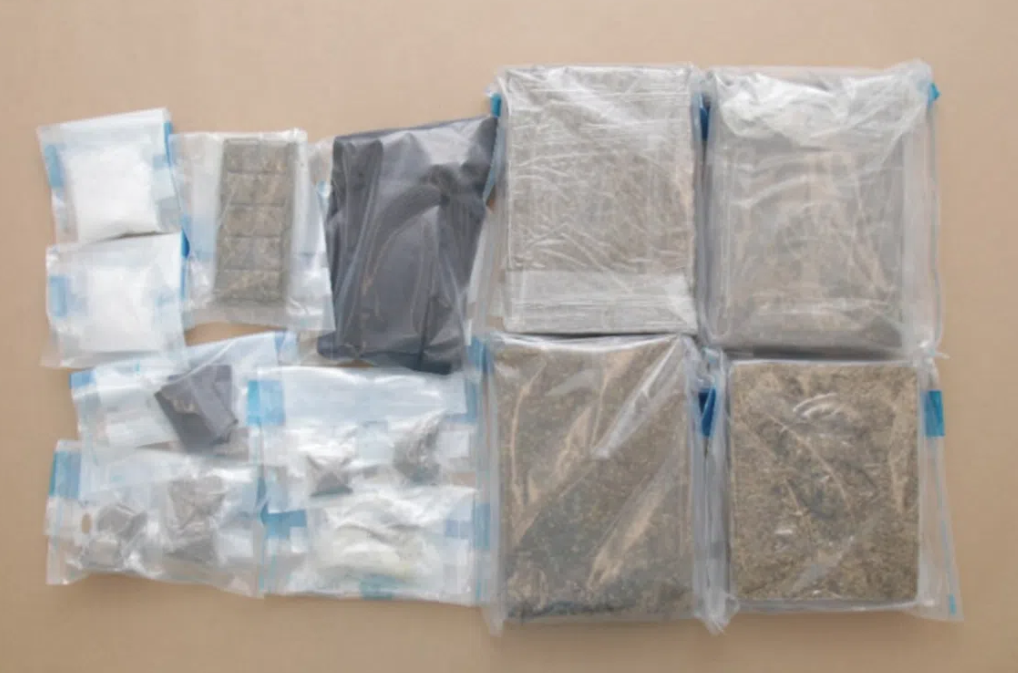
Singapore authorities have arrested three men following a series of coordinated drug enforcement operations on July 27, with the Central Narcotics Bureau seizing narcotics valued at approximately $142,000. The CNB statement, released on Wednesday July 29, detailed the seizure of 5.52kg of cannabis, 132g of Ice, 145g of ketamine, and four LSD stamps across multiple residential locations. Officials assessed that the confiscated drug quantities were sufficient to sustain the addiction habits of roughly 860 substance abusers for an entire week, underscoring the scale of the operation and its potential impact on drug distribution networks in the island nation.
The three arrested individuals are Singaporean nationals aged 27, 29, and 34 years old. Among them, two face charges related to suspected drug trafficking activities, while the third has been arrested on suspicion of drug abuse. The operation represents the CNB's continued enforcement effort against organised drug activities in Singapore, where the penalties for trafficking controlled substances remain among the world's most severe. The arrests and seizures occurred across different residential areas of Singapore, suggesting a wider network of drug-related activity that warranted coordinated law enforcement intervention.
The first arrest took place on the afternoon of July 27 when CNB officers apprehended the 34-year-old man at a void deck location near Ang Mo Kio Avenue 4. This suspect is believed to have been involved in drug trafficking operations. Following his initial arrest, officers escorted the man to a residential unit located in an adjacent block, where they conducted a thorough search of the premises. The search yielded four LSD stamps from the suspect's possession, alongside 879g of cannabis and approximately 123g of Ice discovered within the residential unit. The seizure of LSD stamps, though modest in quantity, indicates involvement in the distribution of hallucinogenic drugs beyond cannabis and stimulants.
Investigations arising from the first arrest led authorities to initiate a second coordinated operation targeting the 29-year-old suspect. CNB officers traced and arrested this individual at the lift landing of a residential block near Pasir Ris Street 11, also on the afternoon of July 27. Like his older counterpart, this man faces suspected drug trafficking charges. Upon being taken to his own residential unit in the same block, officers conducted a comprehensive search that revealed substantially larger drug quantities. The operation recovered approximately 4,641g of cannabis alongside 145g of ketamine, establishing this location as a significant drug storage and distribution point. The cannabis was recovered in multiple forms, with some packets discovered on the suspect's person, additional quantities found throughout the residential unit, and substantial blocks of the drug located outside the unit itself.
The third arrest on July 27 involved the youngest suspect, a 27-year-old man apprehended at his residential unit near Jalan Bukit Ho Swee. Officers recovered 9g of Ice from his home during the arrest. Unlike the two older men, this individual is facing charges for suspected general drug offences rather than trafficking, suggesting his role in the drug distribution network differs from those of his co-arrested counterparts. The smaller quantity of narcotics recovered from his premises aligns with the classification of his suspected involvement as personal drug abuse or low-level distribution rather than higher-level trafficking operations.
Singapore's legal framework governing drug offences remains notably stringent by international standards. Under the nation's drug laws, individuals face severe criminal penalties for trafficking in controlled substances, offering to engage in trafficking, or providing assistance to others involved in trafficking activities. The law distinguishes between different quantities and types of drugs when determining appropriate sentences. For cannabis trafficking, anyone convicted of trafficking more than 500g of the substance faces mandatory application of the death penalty, a provision that reflects Singapore's zero-tolerance approach to serious drug crimes. Given that the arrested 29-year-old man was found in possession of approximately 4.6kg of cannabis, he potentially faces the most serious criminal consequences among the three detainees.
The operation undertaken by the CNB demonstrates the ongoing sophistication of Singapore's drug enforcement mechanisms, employing coordinated raids across multiple locations to dismantle trafficking networks. The sequential nature of the arrests, with the initial apprehension of the 34-year-old leading to investigations that identified the other two suspects, suggests authorities were operating on intelligence about an interconnected drug supply chain. The geographic spread of the arrests across different residential blocks in areas such as Ang Mo Kio, Pasir Ris, and Jalan Bukit Ho Swee indicates that the drug distribution network had established multiple operational bases throughout Singapore.
For Malaysian readers and observers in Southeast Asia, the Singapore drug raids illustrate the persistent challenge of controlling narcotics trafficking throughout the region. The variety of drugs seized—cannabis, Ice (methamphetamine), ketamine, and LSD—highlights the broad spectrum of controlled substances circulating in urban Southeast Asian markets. The substantial quantities recovered, particularly the 5.52kg of cannabis, underscore the commercial scale of operations that continue despite rigorous law enforcement efforts. Singapore's consistent application of its severe drug laws, combined with sophisticated intelligence and enforcement capabilities, contrasts with the approaches taken by neighbouring countries, though the ongoing arrests suggest that trafficking networks continue adapting and operating within the jurisdiction.
The CNB statement indicated that investigations into the drug-related activities of all three arrested suspects remain ongoing. Authorities are likely examining the supply chains, customer networks, and financial transactions associated with the seized narcotics to identify additional individuals involved in the trafficking operation. The comprehensive nature of the raids and the recovery of materials at multiple locations suggest that forensic analysis of the seized drugs and examination of communications or financial records may yield further intelligence about the broader distribution infrastructure. As these investigations progress, additional charges may be filed against the suspects, and potentially additional arrests could be made of individuals higher up in the distribution hierarchy or among their customer base.

