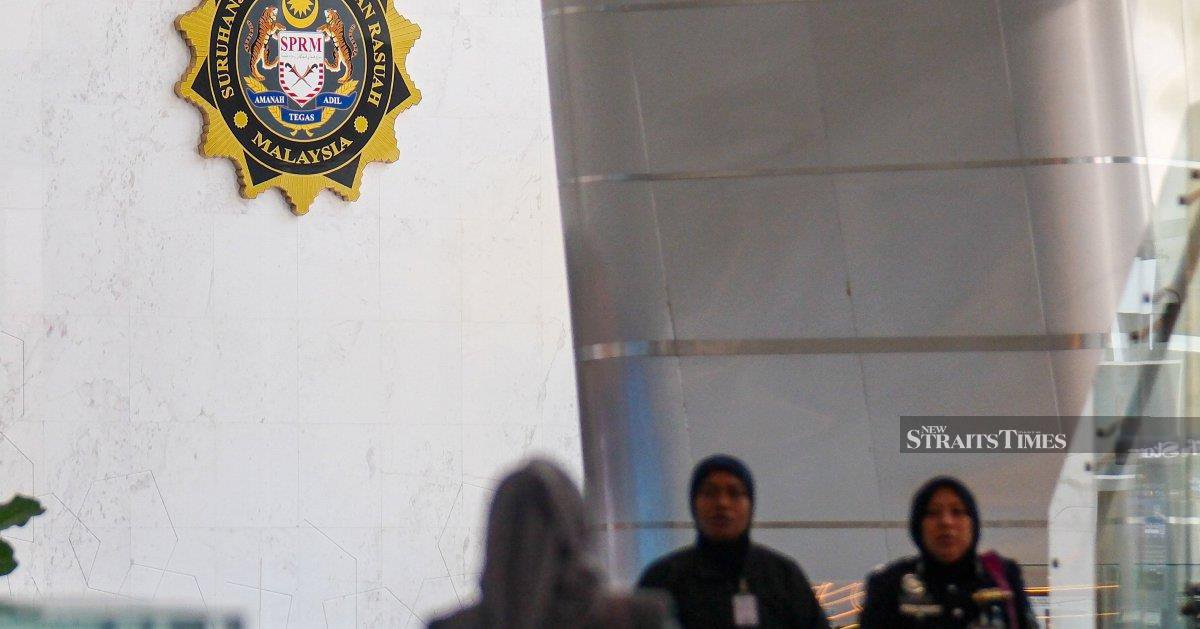
The Malaysian Anti-Corruption Commission has taken three more individuals into custody as its investigation into the Tabung Haji Royal Commission of Inquiry report intensifies, with the latest arrests centring on allegations involving roughly RM450,000 in Notice of Penalty charges and suspected misappropriation of funds.
The widening scope of MACC's probe reflects the growing complexity surrounding the pilgrimage fund's governance and financial management practices. Tabung Haji, which manages the savings and pilgrimages of Malaysian Muslims, has faced mounting scrutiny following the RCI's findings, which examined governance failures and financial irregularities at the institution. The arrest of three additional suspects signals that investigators have uncovered potential links between multiple individuals in what authorities suspect may be a coordinated pattern of financial misconduct.
The Notice of Penalty framework represents a significant enforcement tool within Malaysia's anti-corruption apparatus, allowing authorities to recover disputed funds without necessarily pursuing full criminal proceedings. However, the presence of approximately RM450,000 in contested penalties suggests substantial sums may be at stake in this particular investigation, indicating that the suspected irregularities are neither minor accounting discrepancies nor isolated incidents. The specific focus on penalty notices suggests MACC may be examining whether proper procedures were followed when these charges were levied or whether the amounts assessed were justified.
For Malaysian stakeholders with funds in Tabung Haji, these developments underscore persistent concerns about institutional oversight and accountability. The pilgrimage fund serves millions of Malaysians, many from lower and middle-income backgrounds, who contribute systematically towards their umrah and hajj journeys. Any misappropriation or governance failures directly threaten the financial security of these savings, making the anti-corruption commission's investigative efforts particularly significant for public confidence in the organisation.
The RCI's examination of Tabung Haji has already catalysed broader conversations about how statutory bodies managing public funds should be structured and supervised. The commission's recommendations likely included enhanced governance mechanisms, stricter financial controls, and more robust oversight procedures. These latest arrests suggest that implementation of such safeguards may have exposed previously undetected improprieties, as investigators have grown more thorough in their examination of past transactions and decision-making processes.
Regional observers of Malaysia's anti-corruption efforts will note that MACC's willingness to pursue multiple arrests and to thoroughly investigate institutional failures demonstrates the commission's independence and commitment to pursuing cases wherever evidence leads. This stands in contrast to perceptions in some neighbouring countries that anti-corruption agencies operate selectively or with political interference. The Tabung Haji investigation's continuation regardless of institutional status or political considerations enhances MACC's credibility internationally and domestically.
The timing of these arrests also reflects MACC's capacity to execute complex financial investigations spanning multiple suspects and substantial transaction volumes. Modern asset misappropriation schemes often involve networks of individuals operating across different departments or hierarchical levels, making investigations time-consuming and labour-intensive. The commission's ability to identify and apprehend subsequent suspects demonstrates effective coordination between investigative units and demonstrates that initial arrests have likely yielded sufficient leads to justify expansion of the probe.
For Tabung Haji's current management and board, these developments impose pressure to demonstrate comprehensive reform and remediation. Beyond cooperating fully with investigators, the institution faces expectations to implement systemic changes that prevent recurrence of the alleged misconduct. Public trust in the organisation will depend partly on visible transformations in governance practices, staff accountability mechanisms, and financial reporting transparency. Any perception that internal resistance exists to rooting out wrongdoing could further undermine stakeholder confidence.
The RM450,000 figure warrants contextualisation within Tabung Haji's overall financial scale. While seemingly substantial in absolute terms, the sum's significance depends on whether it represents isolated instances or part of a broader pattern. If investigators uncover evidence of systematic misappropriation across multiple transactions or extended timeframes, the implications would be far more serious than isolated breaches. The RCI process itself may have identified red flags suggesting such systemic issues existed, prompting MACC's intensive follow-up investigations.
Looking forward, these arrests will likely advance the investigation towards potential prosecutorial recommendations or court proceedings. Malaysian courts will ultimately determine culpability and appropriate sanctions, but MACC's role in assembling comprehensive evidence and identifying suspects positions the institution to build persuasive cases. The investigation's progression will be closely monitored by governance advocates and civil society organisations tracking institutional accountability trends across Southeast Asia.
The Tabung Haji investigation illustrates how royal commissions of inquiry can serve as important catalysts for deeper anti-corruption work. By exposing systemic weaknesses and governance failures, the RCI created the evidentiary foundation upon which MACC's subsequent investigation stands. This collaborative approach to combating institutional corruption—combining independent commissions' investigative findings with dedicated law enforcement follow-up—represents a model that other countries confronting similar challenges in public institutions might consider adopting.
Ultimately, the success of this investigation will be measured not merely by arrest numbers or penalty amounts recovered, but by the degree to which it motivates lasting institutional reform at Tabung Haji and establishes clearer expectations for governance standards across Malaysia's statutory bodies. Public sector organisations managing citizens' savings and financial assets must meet elevated accountability standards, and sustained anti-corruption action sends an unmistakable message that such standards will be enforced.

