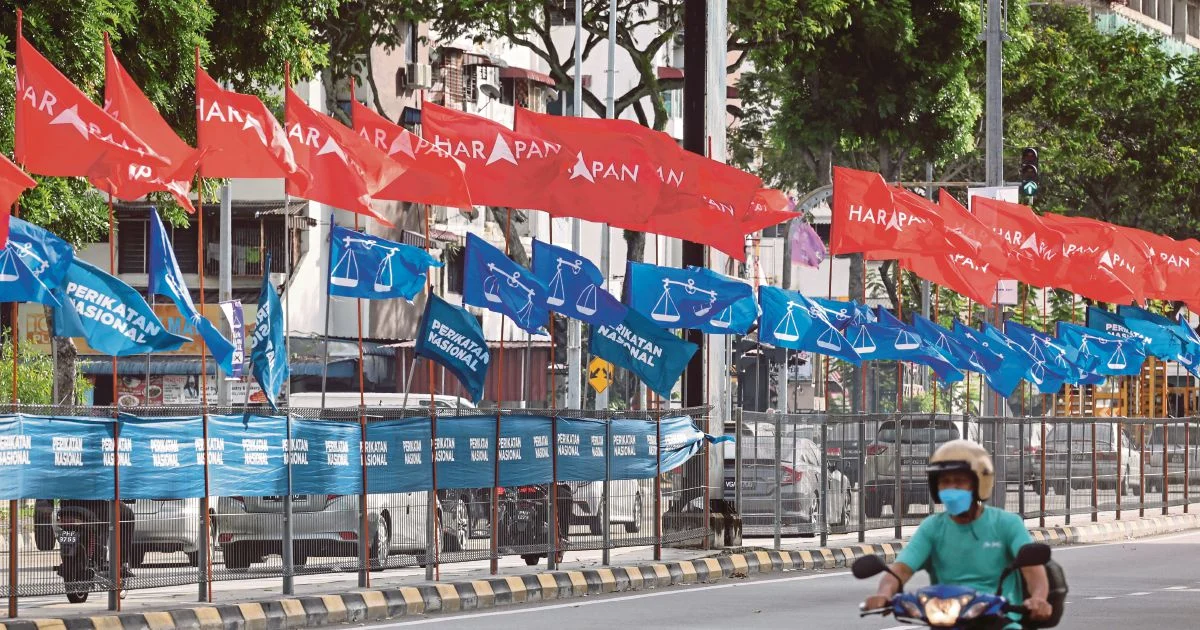
The upcoming Johor state election is shaping up as a volatile three-cornered contest, with Barisan Nasional, Pakatan Harapan and Perikatan Nasional all poised to vie for control in more than half of the state's 56 legislative seats. The anticipated triangular clashes in 33 constituencies represent a significant departure from the binary contests that have typically dominated Malaysian electoral history, signalling a fundamental fragmentation in the country's political system.
The prospect of three-way fights carries substantial implications for Johor's political trajectory. The state, traditionally viewed as a BN stronghold and the southern anchor of the ruling coalition, now faces a genuinely competitive battleground where no single bloc can assume victory. This development reflects broader shifts in Malaysian voter sentiment, where established political divisions have become increasingly fluid and constituents demonstrate greater willingness to consider alternative coalitions.
For Barisan Nasional, the three-way contests present both opportunity and vulnerability. As the incumbent and historically dominant force in Johor, BN enjoys administrative machinery and established party structures throughout the state. However, the party must navigate a fractured opposition landscape where votes can split unpredictably between rival coalitions. This dynamic could either amplify BN's advantages if the anti-government vote divides evenly between PH and PN, or severely damage its position should those opposition parties consolidate support in specific constituencies.
Pakatan Harapan's participation in these multi-cornered races reflects its consolidation as a credible alternative to BN rule. The coalition's performance in Johor carries national significance, as the state represents a crucial testing ground for whether opposition politics has matured beyond ideological fragmentation. PH's strategy will likely focus on concentrating resources in constituencies where it can establish a clear plurality, while defending seats where local organisational strength runs deepest.
Perikatan Nasional's emergence as a serious contender in 33 Johor seats underscores the rise of a third political force in Malaysian politics. The coalition's growth reflects accumulated frustrations with conventional two-coalition politics and appeals to constituencies where neither BN nor PH has successfully articulated compelling local narratives. PN's presence in multiple constituencies suggests the coalition has developed sufficient organisational capacity to mount credible campaigns beyond its traditional base areas.
The prevalence of three-way contests creates profound uncertainty about Johor's electoral outcome. Traditional swing constituencies may become even more unpredictable, as campaign dynamics shift with the addition of a third serious competitor. Voter behaviour in such multi-candidate environments typically becomes less predictable, with marginal factors like local personalities, ground-level campaigning and constituency-specific issues potentially wielding disproportionate influence over results.
For Malaysian observers, the Johor election carries ramifications extending well beyond state politics. As one of peninsular Malaysia's most significant states and a region with substantial economic and strategic importance, Johor's political complexion influences national calculations. The state's election results could provide crucial data about shifting voter preferences and the sustainability of the various political coalitions contending for national power. A strong PN showing would vindicate the coalition's gradual expansion, while decisive PH victories might suggest growing urban and middle-class disaffection with the current federal government.
The three-way split also complicates post-election coalition mathematics. In binary contests, winning a simple plurality typically suffices for assembling a legislative majority. With three competitors, however, seat distribution may fragment more dramatically. This scenario could necessitate complex post-election negotiations and cross-party arrangements to construct functional state governments, introducing additional layers of uncertainty into Johor's political future.
Campaign dynamics in constituencies featuring three-way fights will differ markedly from conventional electoral contests. Candidates must address competing visions of governance rather than simply contrasting themselves against a single opponent. Policy differentiation becomes more nuanced, and voter targeting requires more sophisticated segmentation. Ground campaigns may become more intensive as parties seek to establish decisive advantages against multiple rivals simultaneously.
For Johor's electorate, the three-way competition offers expanded political choice but also creates genuine confusion about likely governance outcomes. Voters cannot simply endorse or reject an incumbent administration; instead they must navigate more complex calculations about which coalition best represents their interests and which possesses genuine prospects of forming government. This cognitive burden may depress turnout among undecided voters or produce volatile, unpredictable outcomes.
The 33 constituencies featuring three-way contests distribute across Johor's various regions, encompassing both urban centres and rural constituencies. This geographic spread suggests that PN and PH have established organisational foundations throughout the state rather than concentrating merely in specific pockets. The breadth of three-way competition indicates that Johor's political fragmentation pervades the entire state rather than remaining confined to particular constituencies.

