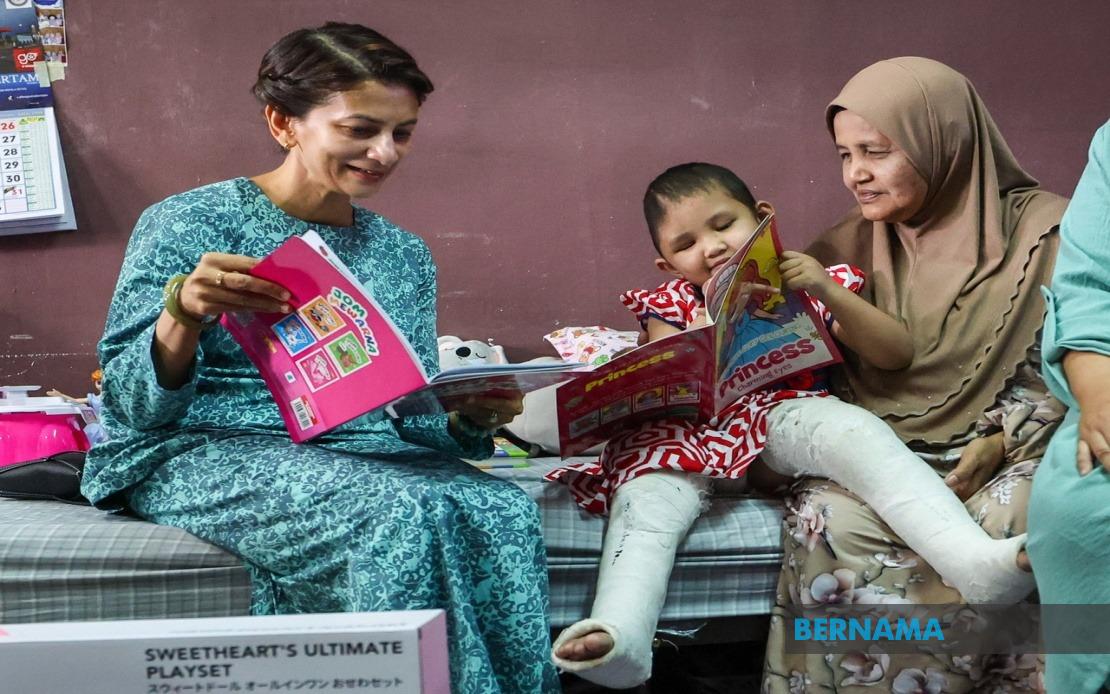
A three-year-old girl who miraculously survived a devastating road collision that claimed the lives of six relatives last month is making encouraging progress in her recovery, offering a glimmer of hope in what remains a tragedy marked by profound loss. Aulia Sofea Ahmad Shafiq, discharged from Sultanah Bahiyah Hospital in Alor Setar on July 2 following nearly four weeks of intensive medical care, now resides with her paternal aunt's family in the Bertam area of Kedah, where she continues to regain strength and mobility.
The crash, which occurred on June 7 when the family's newly purchased Proton X50 collided with a heavy vehicle while travelling from Penang towards Merbok, claimed the lives of both her parents—Ahmad Shafiq Ahmad Shukri, 27, and Jamaliah Sannusi, 29—along with her two-month-old brother Ahmad Mikail, grandmother Nora Mhd Husin, 55, uncle Ahmad Fahim Ahmad Shukri, 27, and cousin Iskandar Affan Ibrahim, seven. The sheer scale of loss within a single family unit underscores the devastating impact such accidents can have on Malaysian households, reigniting questions about vehicle safety standards and road fatality prevention across the nation.
Speaking from her home in Taman Bandar Bertam Putra, Siti Nor Atikah Ahmad Syukri, 32, who serves as Aulia Sofea's primary caregiver, described the child's recovery as nothing short of remarkable given the severity of her injuries. "To us, she is a miracle," the aunt explained, noting that medical professionals initially assessed the likelihood of survival as extremely low. The child's physical progress has been striking, with her demonstrating increasing energy and engagement with daily activities typical of her age group, a positive indicator given the traumatic circumstances of her survival.
Yet the road to full recovery remains uncertain and complex. Both of Aulia Sofea's legs sustained fractures in the impact, limiting her mobility considerably. She remains unable to walk independently and faces an orthopaedic specialist appointment scheduled for July 26 to assess ongoing treatment requirements and rehabilitation timelines. The physical constraints imposed by her injuries will necessitate extended medical intervention and potentially lengthy physiotherapy sessions as bones heal and strength gradually returns.
Perhaps most concerning among Aulia Sofea's injuries are the severe trauma sustained by her left eye, including a ruptured eyeball that required surgical intervention. While physicians successfully performed the operation to preserve the eye itself, the prognosis regarding visual function remains indeterminate. Her aunt acknowledged that doctors have indicated multiple possible outcomes—the child may eventually recover functional vision, experience significant blurring, or face permanent blindness—with definitive answers only emerging after comprehensive ophthalmological assessments are completed. This uncertainty adds an additional layer of complexity to her long-term care and developmental trajectory.
Adding to the emotional and psychological dimensions of recovery, Aulia Sofea regained consciousness approximately two weeks following the incident and has since been informed of her parents' deaths. The processing of such profound loss by a three-year-old, combined with the physical pain and limitations she experiences daily, presents significant psychological challenges that will require sensitive, sustained support from her caregiving family and potentially mental health professionals specializing in paediatric trauma.
The visit by the Raja Muda of Kedah, Tengku Sarafudin Badlishah ibni Al Aminul Karim Sultan Sallehuddin, accompanied by the Raja Puan Muda of Kedah, Che Puan Muda Zaheeda Mohamad Ariff, and their daughter, Tunku Zara Bahiyah, provided both material assistance and symbolic recognition of the family's circumstances. The royal delegation presented essential provisions to support the child's ongoing care and established a National Education Savings Scheme account in her name, ensuring that educational opportunities remain accessible despite the catastrophic disruption to her family structure. Such gestures underscore the institutional role Malaysian royalty plays in acknowledging and responding to citizen suffering.
The child's aunt also noted the profound emotional toll the accident has exacted on the broader family network. Siti Nor Atikah herself lost her youngest son, seven-year-old Iskandar Affan Ibrahim, in the same collision, meaning she grieves deeply even as she dedicates herself to Aulia Sofea's recovery and wellbeing. Her willingness to assume primary caregiving responsibilities while processing her own grief demonstrates the resilience families often must muster in facing such tragedies.
Looking forward, Aulia Sofea's uncle, Ibrahim Ghazali, 39, a lorry driver by profession, and his wife have committed to raising the girl as their own daughter. The family is currently navigating legal guardianship procedures necessary to formalize this arrangement, ensuring that Aulia Sofea's status and inheritance rights are properly established. According to Ibrahim, the transition has proceeded smoothly, with Aulia Sofea's young cousins providing constant companionship and emotional support, creating a sense of normalcy and familial belonging during her recovery.
The case highlights the persistent challenge of road safety in Malaysia, where severe accidents continue to devastate families and communities with alarming regularity. The collision that claimed six lives while sparing one three-year-old raises troubling questions about vehicle crashworthiness, road infrastructure, and enforcement of traffic regulations. As Aulia Sofea undergoes her medical rehabilitation, the broader question of how Malaysia can prevent such tragedies from recurring remains pressing and largely unresolved.
For the extended family members now caring for Aulia Sofea, the journey ahead involves not merely physical rehabilitation but comprehensive support spanning medical, psychological, educational, and social dimensions. The child's recovery, while progressing encouragingly, will require years of sustained attention, specialist consultations, and adaptive strategies to maximize her potential despite the permanent changes her injuries have imposed. In this context, the royal visit and education fund represent valuable institutional acknowledgment, though the family's day-to-day resilience and commitment will ultimately determine whether Aulia Sofea achieves the fullest possible quality of life moving forward.

