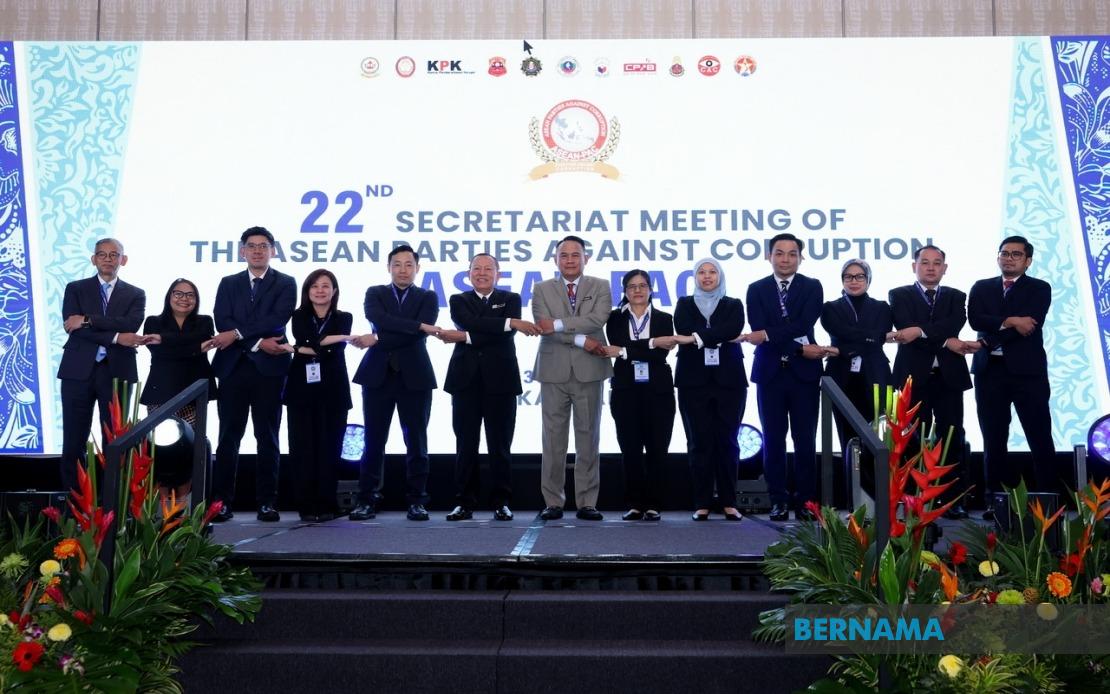
Timor-Leste's accession to the ASEAN Parties Against Corruption represents a watershed moment for anti-graft enforcement across the Southeast Asian region. The inclusion of the island nation as the newest member of ASEAN-PAC is poised to deepen the bloc's capacity to tackle one of its most persistent institutional challenges, according to Malaysian Anti-Corruption Commission chief commissioner Datuk Seri Abd Halim Aman, who underscored the development during the 22nd ASEAN-PAC Secretariat Meeting convened in Melaka on July 28.
The expansion of ASEAN-PAC's membership reflects growing recognition that corruption transcends borders and requires coordinated multi-national responses. By integrating Timor-Leste into the secretariat committee structure, the network gains access to an additional enforcement apparatus while simultaneously providing the newly independent nation with institutional scaffolding and operational best practices accumulated by its established counterparts. This reciprocal arrangement has become central to how ASEAN-PAC functions as a force multiplier in the fight against high-level corruption and illicit financial flows within the region.
Abd Halim articulated the practical dimensions of Timor-Leste's integration during his remarks at the gathering, emphasising that Malaysia would guide the newcomer through the menu of programmes developed over many years while simultaneously incorporating the country into emerging initiatives designed to sharpen investigative tools and enforcement coordination. His characterisation of Timor-Leste's anticipated receptiveness to these frameworks suggests confidence in the country's institutional readiness, though the challenges of capacity-building in a nation with limited historical experience managing complex transnational graft investigations cannot be underestimated.
The Melaka gathering itself showcased the breadth of institutional commitment to anti-corruption within Southeast Asia. Representatives from anti-corruption agencies spanning the ASEAN member states convened to architect collaborative mechanisms and synchronise implementation of region-wide integrity initiatives. This convergence of enforcement leadership reflects a maturing understanding among ASEAN governments that isolated national efforts yield diminishing returns when criminals exploit regulatory fragmentation and jurisdictional gaps to move assets and obscure beneficial ownership across borders.
The participation of international organisations in the secretariat meeting amplified its significance beyond ASEAN's immediate institutional confines. The International Association of Anti-Corruption Authorities, the United Nations Office on Drugs and Crime, and the Asian Development Bank all sent representatives, demonstrating the integration of ASEAN-PAC into globally networked anti-corruption architecture. Such engagement brings technical expertise, funding mechanisms, and comparative experience from other regions to bear on challenges specific to Southeast Asia's political economies and governance structures.
Malaysia's role as host for the 22nd Secretariat Meeting reflects the rotational leadership model that ensures equitable burden-sharing and prevents institutional entrenchment within the bloc. This year's convening follows Malaysia's stewardship of the meeting of heads of anti-corruption agencies held the previous year, illustrating how the country has positioned itself as a substantial contributor to ASEAN-PAC's operational capacity. The chairmanship will devolve to Myanmar at the October meeting, placing the burden of organising and directing the network's work on a neighbouring nation with its own distinct governance challenges.
The rhythm of ASEAN-PAC's engagement extends well beyond the annual in-person secretariat gatherings. Member states maintain operational linkages through videoconferences, written correspondence, and other telecommunications infrastructure that sustains momentum between formal meetings. This persistent institutional presence reflects hard-won maturation in recognising that corruption networks operate continuously, requiring enforcement responses calibrated to match that rhythm rather than clustering only around periodic conferences.
Abd Halim's assessment of member state commitment presented an optimistic picture of ASEAN-PAC's trajectory. The reported strength of support for the network's development suggests that despite domestic political variations and occasionally competing national interests, the region's anti-corruption leadership has identified sufficient common ground to sustain institutional collaboration. This consensus, however fragile it may sometimes appear, represents considerable diplomatic achievement given ASEAN's tradition of prioritising sovereignty and non-interference.
The expansion to include Timor-Leste carries implications for Southeast Asia's evolving governance architecture. As the bloc's youngest member struggles with institution-building across multiple domains, ASEAN-PAC's embrace provides both practical assistance and symbolic validation that governance modernisation proceeds through integration into regional mechanisms. For Malaysia and other established anti-corruption agencies, the mentoring relationship with Timor-Leste offers opportunity to project influence and shape institutional standards that will persist across coming decades.
Looking ahead, the transition of ASEAN-PAC's chairmanship to Myanmar introduces uncertainty about the network's trajectory. While Myanmar's anti-corruption agencies possess technical capacity, the country's recent political turbulence raises questions about whether continuity of commitment can be maintained. The secretariat structure and accumulated institutional practices should provide ballast against disruption, but Myanmar's leadership will test whether ASEAN-PAC's regional consensus survives stress when chairing nations face acute domestic pressures.
The substantive work programme that ASEAN-PAC pursues remains crucial to assessing whether institutional expansion translates into tangible enforcement gains. Timor-Leste's incorporation will only yield regional benefits if concrete mechanisms allow participating agencies to exchange intelligence, coordinate investigations targeting transnational graft networks, and develop harmonised standards for asset recovery and beneficial ownership disclosure. The network's ability to move beyond information-sharing toward operational integration remains a work in progress across ASEAN.

