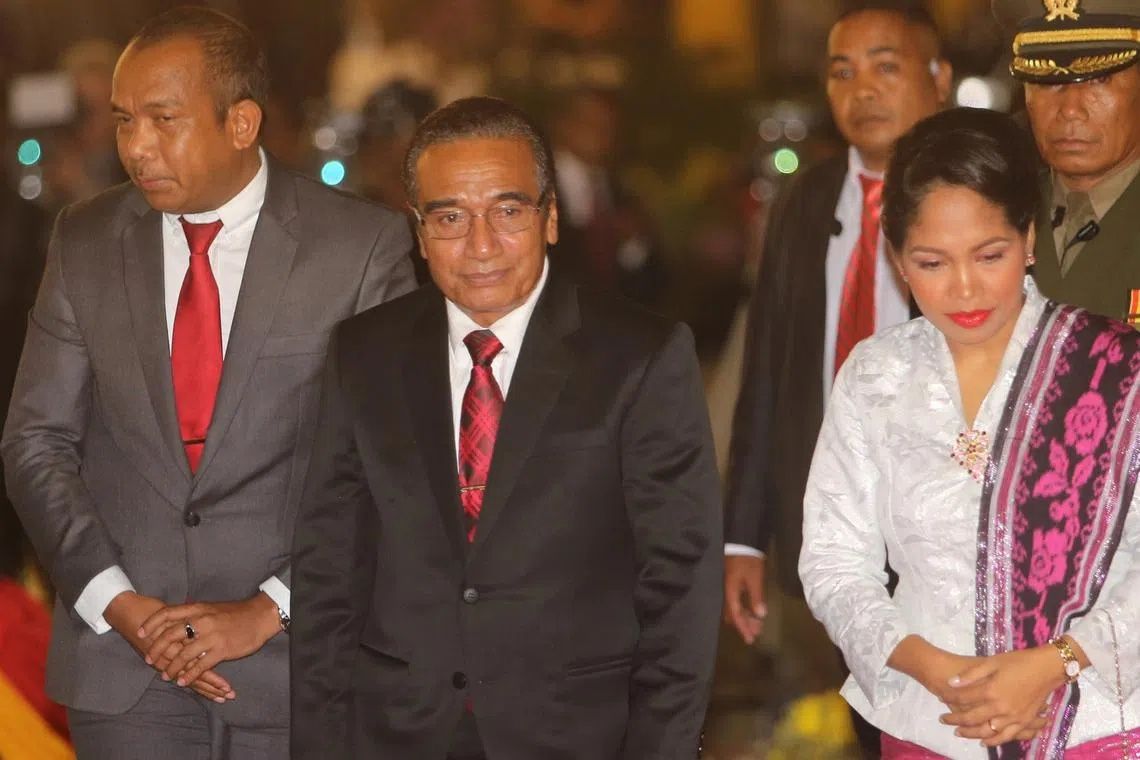
Timor-Leste's government declared a week of national mourning on June 22 following the death of former president Francisco "Lu-Olo" Guterres, a towering figure in the small Southeast Asian nation's journey to independence and self-determination. The 71-year-old passed away in a Malaysian hospital over the weekend, prompting an outpouring of tributes from across the region and beyond. His body is expected to return to the capital Dili on Tuesday, with funeral arrangements still being finalised by his family.
Guterres served as the nation's sixth president between 2017 and 2022, representing the culmination of a remarkable life dedicated to the Timorese independence movement. His presidency came after he secured more than 57 percent of the vote in the 2017 election, a decisive mandate reflecting his status as a founding father of the modern state. However, his tenure in the highest office proved relatively brief, ending in defeat when he contested for re-election in 2022 against Nobel laureate Jose Ramos-Horta, who ultimately prevailed in a run-off vote.
The government of Timor-Leste has ordered flags at all public buildings, government offices, embassies and consulates to be flown at half-mast throughout the week of mourning. This solemn gesture underscores the national significance of Guterres's passing and the symbolic weight he carried as a symbol of the nation's hard-won sovereignty. Current President Ramos-Horta, despite having defeated Guterres in their electoral contest just years earlier, acknowledged his predecessor's profound contributions to the nation. In a statement, Ramos-Horta described Guterres as a "great patriot" and characterised his death as "a great loss for the nation," emphasising the shared commitment both men held to East Timorese independence.
Guterres's political journey was intrinsically linked to the Fretilin party, officially known as the Revolutionary Front for an Independent East Timor, which he formerly led. The party itself, along with Guterres's immediate family, has received formal condolences from the government. The family has requested privacy during this period of grief, asking the public and supporters to respect their need for space as they mourn and reflect on his legacy. This request reflects the profound personal loss the family is experiencing, even as the nation grapples with the passing of one of its most consequential figures.
Guterres's life embodied the sacrifices and determination that characterised East Timor's struggle for independence. He rose from humble circumstances to become a guerrilla fighter and political leader during Indonesia's brutal 24-year occupation of the territory, which lasted until 2002. That occupation resulted in significant loss of life and suffering among the Timorese population, making those who fought through that period witnesses to and participants in a transformative chapter of Asian history. Guterres's survival through those decades of conflict and his subsequent ascent to the presidency represented a symbolic continuity between the nation's violent past and its democratic present.
The death of Guterres resonates across the broader Southeast Asian region, where independence struggles and post-colonial nation-building remain recent historical experiences. Malaysian Prime Minister Datuk Seri Anwar Ibrahim expressed his sadness at Guterres's passing and extended formal condolences to both his family and the people of East Timor. Anwar's statement reflected Malaysia's recognition of Guterres's historical importance and the respect he commanded in regional circles. "Malaysia mourns his passing alongside the Timorese people. He will be remembered here with respect and affection," Anwar said, acknowledging that Guterres's final days were spent in a Malaysian medical facility.
The timing of Guterres's death in a Malaysian hospital underscores the interconnectedness of Southeast Asian nations and their medical infrastructure, particularly for citizens requiring advanced healthcare. That a former president of a neighbouring nation spent his final days in Malaysia reflects both the practical realities of regional health services and the relationships forged through decades of regional cooperation and shared history. For Malaysian observers, Guterres's passing also represents a moment to reflect on the broader regional context of independence movements and post-colonial development across Southeast Asia.
Guterres's presidential tenure from 2017 to 2022 was marked by his efforts to consolidate the nation's democratic institutions and address the complex challenges facing a young state. His presidency followed the departure of previous leaders and represented a significant moment in Timor-Leste's political evolution. Though his re-election bid proved unsuccessful, his five years in office positioned him as a crucial bridge between the independence struggle generation and contemporary Timorese politics. The fact that he was succeeded by another major figure from the independence era, Ramos-Horta, demonstrates how heavily the nation's political leadership has drawn from those who lived through the occupation and fought for freedom.
The national mourning period will provide Timor-Leste with an opportunity to collectively reflect on Guterres's contributions and the broader historical narrative of independence and nation-building. For younger Timorese who were born after independence or have only known a sovereign state, Guterres represents a living connection to the struggles that created their nation. His passing marks the end of an era in which figures directly involved in the armed independence struggle occupied the highest offices. This generational transition has implications for how Timor-Leste moves forward, balancing reverence for its independence heroes with the practical governance challenges of the present day.

