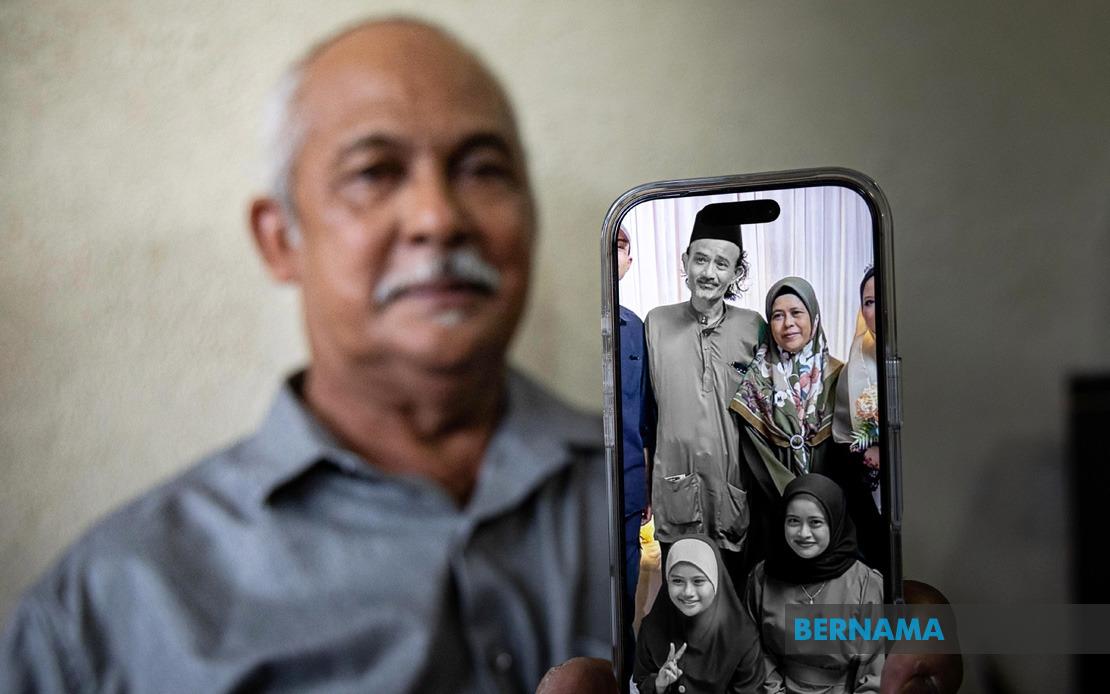
A tragic accident involving a Malaysian Immigration Department truck has left one family shattered, with the sole adult survivor still grappling with the devastating reality of losing three loved ones. Norhayati Razali, 55, remains hospitalised in Kuala Lumpur following the collision on Jalan Sultan Ismail that claimed the lives of her husband and two children on Wednesday. Though her physical condition has improved enough to warrant transfer from the Intensive Care Unit to a regular ward, her mental and cognitive recovery presents a far more troubling picture.
Her brother, Mohd Nadzri Razali, has painted a heartbreaking account of his sister's struggle to process her grief. Despite family members explaining the tragedy to her and even showing her the bodies of her deceased relatives, Norhayati appears unable to retain this critical information. The confusion manifested starkly the following day when she inquired about the whereabouts of her husband and children, suggesting her memory of the painful conversations had not taken hold. Such cognitive difficulties are not uncommon in severe trauma cases, particularly when compounded by the head injuries Norhayati sustained in the collision.
Beyond the psychological trauma, the survivor faces a lengthy physical recovery ahead. She sustained injuries across multiple body regions, including her hands, waist, knees, legs, and head. Her ability to eat and drink independently without tube assistance signals genuine progress, and medical staff have noted positive developments in her overall condition. However, the timeline for her complete recovery remains uncertain, with doctors yet to determine whether she can be transferred to a facility closer to her home in Perak, a transfer that would significantly ease the family's burden and improve their ability to provide care and emotional support.
The family's geographic distance from Kuala Lumpur underscores the practical challenges surrounding this tragedy. Mohd Nadzri, her primary family contact, has encountered difficulties even visiting his sister, lacking reliable transportation to navigate the federal capital. His plans to reach her side this weekend depend on securing a ride, highlighting how disaster can compound isolation within families already fractured by loss. For a family accustomed to the relative quiet of life in the Perak region, managing a prolonged hospitalisation in Kuala Lumpur presents logistical and financial strains alongside their emotional devastation.
The circumstances surrounding the accident underscore troubling questions about road safety and protocol adherence by government vehicles. According to investigation findings, the JIM truck was en route to Chow Kit to conduct an illegal immigrant operation when the incident occurred. The vehicle, an empty Black Maria truck with its beacon and siren activated, allegedly proceeded through a red traffic light at the intersection, a decision that proved catastrophic. The truck collided with a Proton Saga sedan that was lawfully traversing the intersection on a green light, causing the heavier vehicle to lose control, veer across the road, and strike multiple pedestrians before colliding with an Inokom Matrix car.
The sequence of events raises serious concerns about whether standard operating procedures were followed. Whilst emergency vehicles are permitted to proceed cautiously through red lights in certain circumstances, the apparent disregard for the traffic signal appears to have violated basic safety protocols. The fact that the truck was operating on what was described as an "illegal immigrant operation" adds another dimension to public scrutiny, raising questions about whether urgency priorities overrode safety considerations.
Mohd Nadzri has become an articulate voice for the family's pursuit of accountability, emphasising the need for transparent investigation. His call for justice and insistence that available evidence—including traffic camera footage—be examined openly reflects the family's determination to prevent similar tragedies. For many Malaysian families who have lost relatives in road accidents involving government vehicles, such calls for transparency represent a crucial mechanism for obtaining closure and ensuring systemic improvements.
The broader implications of this incident resonate throughout Malaysia's urban centres, where traffic safety involving emergency vehicles remains a persistent concern. The integration of immigration enforcement operations into daily police and security apparatus means that accidents involving JIM vehicles capture public attention in ways that might extend beyond a single family's tragedy. Questions about training, protocols, and accountability within government fleet operations inevitably surface when such preventable collisions occur.
As Norhayati continues her recovery, she faces not only physical rehabilitation but also the profound psychological challenge of grieving losses she may struggle to consistently remember. The family's hope rests partly on her cognitive improvement and partly on institutional accountability through investigation. The collision on Jalan Sultan Ismail has fundamentally altered one family's trajectory, whilst also prompting broader conversation about how Malaysia's government agencies operate their vehicles and the price paid when protocols are compromised. For now, a confused widow in a Kuala Lumpur hospital bed embodies both the fragility of life and the pressing need for systemic change in how emergency vehicles navigate Malaysian roads.

