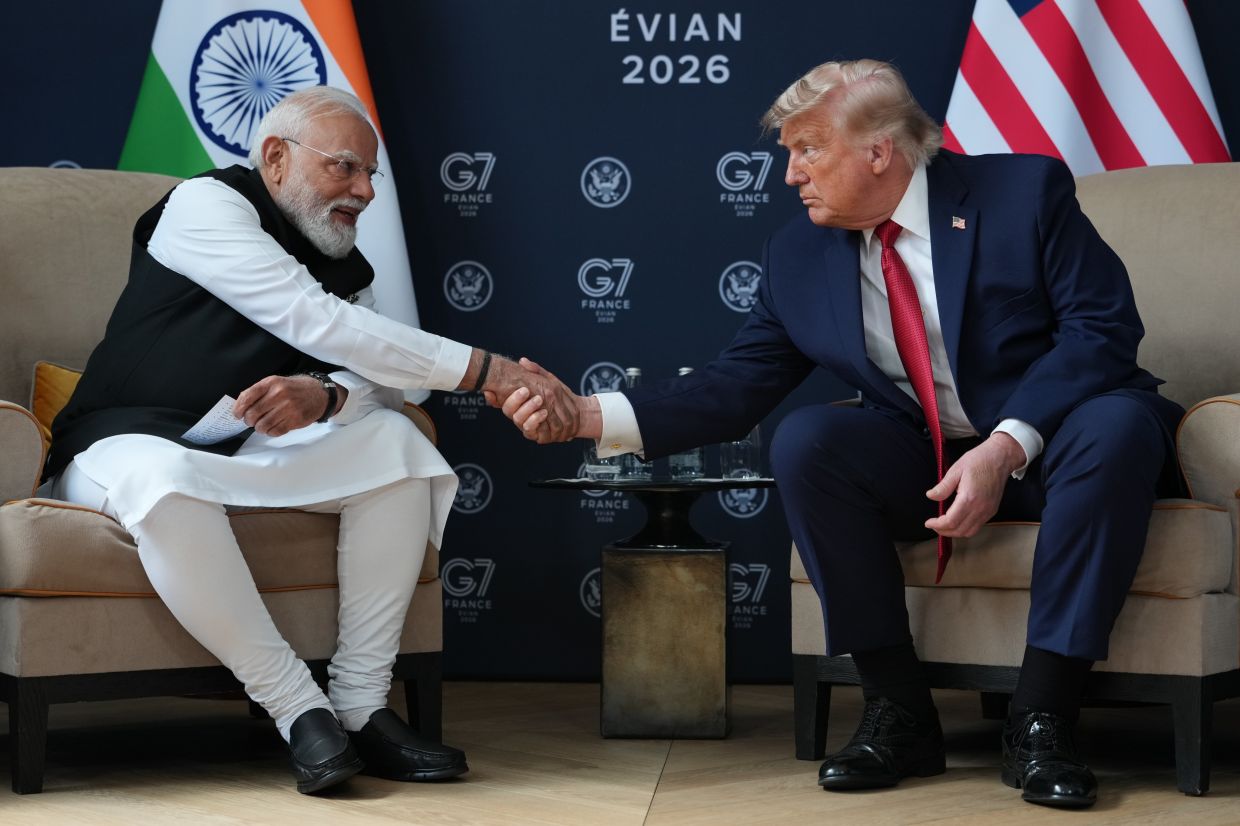
When President Trump sat down with Prime Minister Narendra Modi following their first bilateral meeting in over a year, he offered a stark response to questions about three Indian nationals killed in a controversial US military operation. Rather than extend condolences or acknowledge responsibility, Trump brushed aside the incident by noting that commercial shipping remains "a rough profession" where such tragedies occur. The dismissive framing, combined with his statement that "I heard about that," reflected a striking absence of the diplomatic sensitivity typically afforded to deaths of allied citizens, signalling Washington's willingness to prioritize security operations over diplomatic niceties even as it courts closer ties with New Delhi.
The Indian sailors perished when US Central Command forces unleashed missiles at the MT Settebello, a Palau-flagged commercial vessel, last week. The strike came as part of a broader campaign against what American military officials characterized as violations of a blockade targeting Iranian ports in the strategically vital Strait of Hormuz. Alongside the MT Settebello attack, US forces also targeted two additional merchant ships crewed by Indian nationals for allegedly participating in the illicit transport of Iranian oil. These actions represented an unusually aggressive enforcement posture, one that directly endangered the livelihoods and lives of seafarers from a nation Washington has been actively cultivating as a strategic counterweight to Chinese influence in the Indo-Pacific region.
While Trump employed soothing rhetoric about bilateral cooperation—stating that both nations "work together" on maritime issues and that Americans "love all of those people"—his words carried a hollow quality given the context. The absence of explicit regret or condolences stood in sharp contrast to the diplomatic language Modi's own Foreign Secretary Subrahmanyam Jaishankar deployed when discussing the incident. Jaishankar registered a "strong protest" during a phone call with his American counterpart, yet the State Department's readout of their conversation revealed the fundamental tension underlying the relationship: Washington's determination to enforce its blockade took precedence over concerns about civilian casualties or Indian national sovereignty.
The State Department's summary of the Jaishankar conversation pointedly emphasized that American officials had "underscored that violations of the US blockade and the illicit transport of Iranian oil will not be tolerated." This language suggested that the Trump administration viewed the Indian crew members' deaths as an acceptable cost of maintaining pressure on Iran, even as the tactic jeopardized broader strategic partnership goals. The willingness to double down on the blockade enforcement despite the fatal consequences sparked considerable backlash within India, transforming what might have been a contained diplomatic dispute into a public relations challenge for the Modi government.
Public anger in India manifested in strikingly visual forms. Viral videos captured auto rickshaw drivers in New Delhi tearing down posters bearing Trump's image, part of a broader US embassy campaign celebrating American independence with slogans like "Happy Birthday America." Such scenes, replayed across social media platforms, underscored the tension between official government-to-government relations and the sentiment of ordinary Indian citizens. For many, the incident epitomized what they viewed as an unbalanced relationship in which India bore the costs while Washington extracted strategic advantages without corresponding accountability or respect.
Opposition politicians seized upon the government's restrained response as evidence of New Delhi's subservience to American interests. Rahul Gandhi, a prominent opposition leader, posted sharply worded social media criticism characterizing Modi as "compromised" for his muted reaction to the deaths. Gandhi's statement—"A free country would never tolerate such language. But our Compromised PM? Silent. They listen like an obedient servant and comply with the orders"—reflected a broader concern among critics that the Modi administration's pursuit of closer US ties was coming at the expense of protecting Indian nationals and asserting India's independent voice in international affairs. This domestic political dimension added another layer of complexity to the bilateral relationship, forcing Modi to navigate between maintaining Washington's favor and responding to domestic constituents angered by the perceived disregard for Indian lives.
Trump's characterization of the US-India relationship, while ostensibly warm, revealed the asymmetries underlying the partnership. The President described Modi as a "tough trader" and "great guy" while emphasizing that the two leaders personally embodied the strength of bilateral ties. He pledged to visit India "sometime in the future," language that suggested continued high-level engagement. Yet these expressions of friendship rang somewhat hollow given his refusal to acknowledge the human cost of American military operations affecting Indian citizens. The relational dynamics appeared to rest heavily on personal rapport between the two leaders, a foundation that could prove fragile if either administration's priorities shifted or if public anger in India continued mounting.
The broader context of US-India bilateral negotiations added further urgency to the tensions. Trump and Modi had met in February 2025 in Washington to initiate discussions on a comprehensive bilateral trade agreement, positioning India as one of the first nations entering formal trade negotiations with the new American administration. These talks remain ongoing, with US Trade Representative involvement signalling the high-stakes nature of commercial discussions. The missile strikes on Indian-crewed vessels thus occurred against a backdrop of delicate trade negotiations, creating an implicit test of whether economic incentives could overcome nationalist sentiment and concerns about Indian nationals' safety.
Secretary of State Marco Rubio subsequently visited India, characterizing the country as among America's "most important strategic partners." His visit appeared designed to smooth over the tensions created by the maritime incidents and reaffirm Washington's commitment to the relationship despite the contentious circumstances. This diplomatic sequencing—with Rubio following the controversial military operations—suggested an attempt to compartmentalize the incidents and prevent them from derailing broader strategic objectives. The emphasis on India's importance to American interests implied that Washington viewed the relationship as sufficiently valuable to warrant repair efforts, though the repair job faced significant headwinds from domestic Indian opinion.
Trump's evasion when pressed about the Quad—the informal partnership linking the United States, Japan, India, and Australia in the Indo-Pacific—further illustrated his administration's unpredictable approach to established strategic frameworks. Rather than reaffirm American commitment to the multilateral arrangement, Trump shifted focus to bilateral relations. This pattern of prioritizing direct great-power relationships over established institutional partnerships characterized the broader Trump approach to regional strategy, one that prioritized immediate tactical gains over long-term alliance cohesion.
For regional observers, particularly in Southeast Asia, the episode illuminated both the opportunities and hazards of deepening ties with Washington. India's experience suggested that even ostensibly close strategic partnerships offered limited protection when they conflicted with American security objectives. The incident also demonstrated that individual deaths resulting from US military operations could be rationalized away through procedural language about blockade enforcement and maritime hazards, a calculus unlikely to comfort smaller nations with even less leverage than India. As Southeast Asian governments navigate their own relationships with Washington, the Modi government's muted response despite domestic anger may suggest how great-power politics ultimately privilege strategic accommodation over the protection of national constituents.

