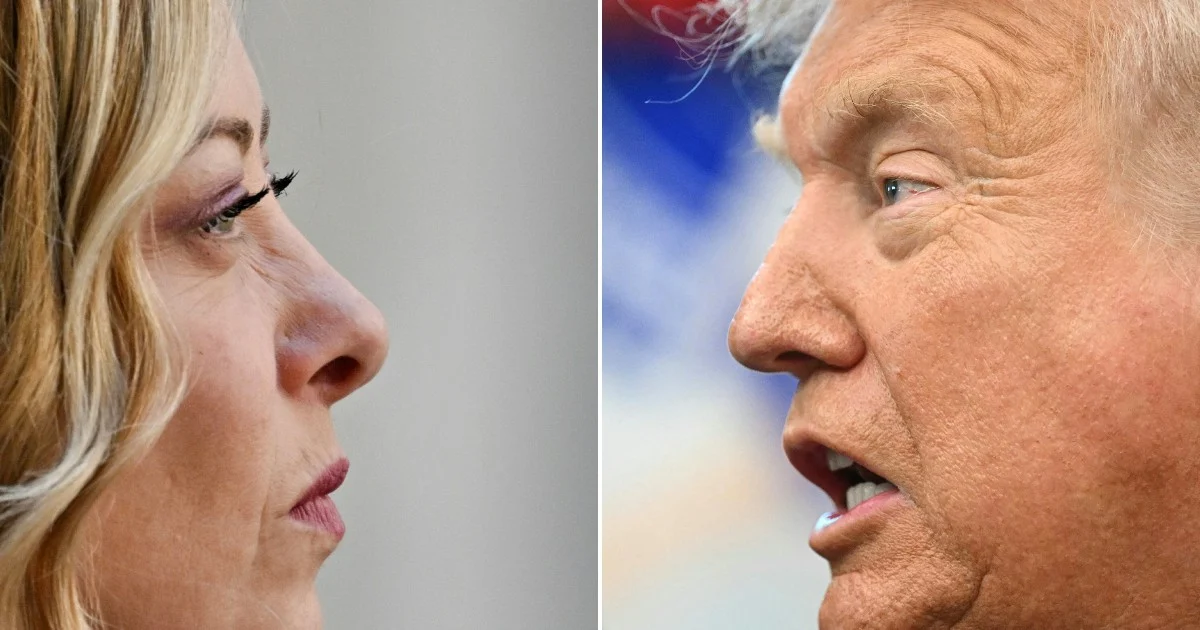
The relationship between United States President Donald Trump and Italian Prime Minister Giorgia Meloni deteriorated sharply over the weekend as Trump accused Meloni of persistently seeking photograph opportunities with him during G7 proceedings, marking a notable escalation in what had previously been a simmering bilateral tension. The American leader's renewed criticism came after days of mounting friction between the two Western allies, suggesting deeper underlying disagreements that extend well beyond the symbolic matter of a shared image.
Trump's Saturday rebukes represent a departure from the conventional diplomatic restraint typically exercised between leaders of allied nations, particularly those within the Group of Seven industrialised democracies. Rather than allowing the matter to fade from public view, the US President chose to amplify the dispute, bringing heightened international attention to what might ordinarily have remained a minor protocol disagreement. His decision to weaponise the photograph dispute reflects a pattern of behaviour that characterises his current presidency, wherein personal grievances and public messaging often intersect with substantive policy disagreements.
The escalation of this particular row reveals troubling fault lines in the transatlantic alliance at a moment when Western unity faces multiple pressures. The G7, established as an informal club of the world's largest advanced economies, has historically relied upon strong personal relationships among member states' leaders to coordinate responses to global crises. Italy's position within this grouping holds significance for European affairs, and any sustained rupture between Rome and Washington carries implications for broader Western cohesion on critical foreign policy questions.
Beyond the immediate sparring over photographic protocols, Trump explicitly linked the disagreement to substantive matters of international concern, particularly developments regarding Iran and North Atlantic Treaty Organisation affairs. These are domains where American and Italian interests do not invariably align, and where Trump's unilateral approach to alliance management has previously created friction with traditional European partners. Italy has historically attempted to maintain a more pragmatic engagement with Iran in economic matters, a position that sometimes creates tension with Washington's more confrontational stance toward Tehran.
The photograph dispute itself appears to carry symbolic weight disproportionate to its surface significance. In contemporary diplomacy, such visual documentation serves crucial communicative functions, signalling alignment and partnership to domestic audiences and the international community alike. Meloni, seeking to consolidate Italy's position within Western structures whilst maintaining her government's distinctive right-wing political identity, may view such imagery as valuable political capital domestically. Trump's refusal or resistance to such photography could be interpreted as a signal of displeasure, creating domestic political problems for the Italian leader.
The NATO dimension of Trump's criticism carries particular significance for European observers. The American President has long expressed dissatisfaction with European defence spending levels and burden-sharing arrangements, consistently demanding that allies increase military expenditure. Italy, whilst increasing defence allocations in recent years, remains below the two percent GDP target that Washington views as essential. Trump's willingness to tie the photograph matter to NATO complaints suggests he is using personal friction as a vehicle for broader strategic messaging.
For Southeast Asian observers and policymakers, this transatlantic discord offers an instructive case study in how alliance relationships, even among established democratic partners with deep institutional ties, remain vulnerable to personalised leadership dynamics and strategic disagreements. Malaysia and regional nations that maintain relationships with both the United States and European partners must navigate these deteriorating transatlantic connections carefully, as they may affect the architecture of international engagement in Asia-Pacific affairs.
The Iran dimension warrants particular attention given the region's broader context. European nations have pursued different approaches toward Iranian engagement than the American position, seeking to preserve diplomatic channels and economic relationships even as they acknowledge security concerns. Italy's European location and its Mediterranean interests give it particular stakes in Middle Eastern stability. Trump's apparent intention to weaponise the photograph dispute as pressure on Iran policy suggests he may be attempting to isolate Meloni from other European leaders who share different perspectives on Tehran.
The timing of this escalation coincides with broader uncertainties about American foreign policy direction under the Trump administration. European leaders, including Meloni, face the challenge of maintaining relations with an American President who operates according to personalised decision-making frameworks rather than institutional or alliance-based logic. This unpredictability creates diplomatic complications for partners seeking stability and clear policy direction.
Meloni's government, which came to power in 2022 with a populist-right platform, has attempted to position Italy as a bridge between traditional Western alignment and more flexible geopolitical engagement. This positioning makes her particularly vulnerable to pressure from Washington, as she lacks the institutional alliance capital that longer-serving leaders might possess. Trump's public criticism could complicate her domestic political standing whilst simultaneously constraining her room for manoeuvre on European policy questions where she might otherwise seek greater independence.
The broader implications for G7 functionality cannot be overlooked. If personal friction between leaders begins to obstruct the informal coordination and consensus-building that characterise this forum, the group's effectiveness in responding to global challenges diminishes significantly. This deterioration occurs at a moment when geopolitical competition is intensifying, climate crises demand coordinated responses, and economic disruptions create pressure for coherent policy frameworks among the world's wealthiest democracies.
Moving forward, observers should monitor whether this dispute remains largely rhetorical or whether it translates into substantive policy divergences between the United States and Italy on critical questions including Iran sanctions, NATO operations, and defence cooperation. The photograph spat may ultimately prove less significant than the underlying strategic disagreements it illuminates, suggesting deeper questions about the future character of Western alliance relationships under contemporary American leadership.

