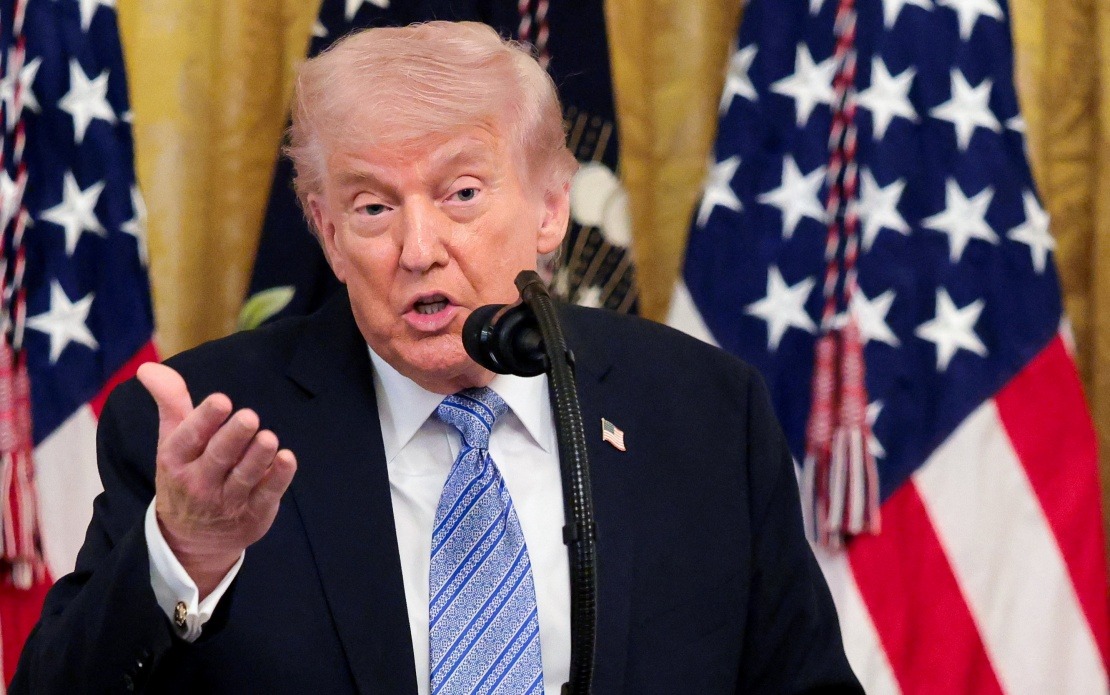
In a dramatic policy reversal, US President Donald Trump announced on Tuesday that all negotiations with Iran have been terminated, with no discussions planned for the foreseeable future. The declaration, posted on his Truth Social platform, came as Trump's administration shifts away from what officials privately characterised as an immediate confrontation approach toward a prolonged strategy designed to weaken Tehran's position over time. The timing of the announcement underscores deepening instability in Middle Eastern diplomacy at a moment when regional tensions remain acute and the calculus of American foreign policy continues to evolve rapidly.
Trump's statement explicitly addressed the strategic importance of the Strait of Hormuz, affirming that Washington's naval presence maintains complete control over this critical waterway. He asserted that all naval mines in the region have either been removed or neutralised, and that maritime traffic continues unimpeded under US military oversight. This emphasis on freedom of navigation reflects Washington's broader commitment to maintaining hegemonic control over one of the world's most strategically vital chokepoints, through which approximately one-third of globally traded oil passes daily.
The pivot represents a significant departure from recent diplomatic overtures. Just days earlier, Trump's envoy Jared Kushner had told Fox News that communications between Washington and Tehran had become "more robust" than at any previous point, suggesting that backdoor channels remained active and potentially productive. Kushner had been in Israel meeting with Prime Minister Benjamin Netanyahu to discuss regional architecture, including approaches to the Gaza conflict, before his comments on US-Iran dialogue emerged.
According to reporting from US officials, Trump personally instructed his key negotiating team—comprising Vice President JD Vance and special envoys Steve Witkoff and Jared Kushner—to immediately cease all engagement with Iranian counterparts. The order came despite what administration sources characterised as some "positive discussions" having recently occurred between the parties. This contradiction hints at internal disagreements within the Trump administration regarding optimal strategy, with certain officials apparently advocating for continued dialogue while the president himself moved decisively in the opposite direction.
The underlying strategic shift reflects a philosophical reorientation within Trump's policy apparatus. White House officials have privately communicated to political allies that the administration is transitioning from a doctrine of rapid military escalation—summarised colloquially as "hammer Iran ASAP"—toward a protracted containment and economic pressure strategy explicitly designed to "strangle" Iran gradually over an extended period. This approach suggests confidence in America's ability to sustain military and economic pressure indefinitely, whilst avoiding the political costs and unpredictability of direct military action.
This recalibration must be understood against the backdrop of recent escalatory cycles between Washington and Tehran. In April, the two nations had reached a ceasefire agreement, followed by a formal memorandum of understanding in June that aimed to resolve their military conflict and establish a sustainable peace framework. However, the arrangement proved fragile. Last month, the accord collapsed spectacularly, precipitating nearly two weeks of tit-for-tat military strikes between the adversaries. Trump eventually halted the American bombardment, creating space for potential agreement-building, yet this window appears to have now closed from Washington's perspective.
For regional powers and Southeast Asian observers, Trump's shift carries significant implications. Malaysia and other ASEAN nations have substantial economic interests in Middle Eastern stability, particularly regarding energy security and trade passage through critical waterways. Extended US-Iran confrontation, even if designed to avoid direct warfare, risks prolonging regional instability and potentially disrupting energy markets upon which the region depends. The announcement suggests that near-term resolution of American-Iranian tensions remains unlikely, implying that Middle Eastern volatility will persist as a structural feature of the international environment.
The strategic calculation underlying Trump's new approach warrants closer examination. By abandoning near-term military options in favour of sustained pressure, the administration appears to be betting that economic isolation, technological restrictions, and military containment will eventually compel Iranian capitulation without requiring direct conflict. This gambit assumes that Tehran's economy cannot withstand indefinite sanctions regimes and that domestic political pressures will eventually force Iranian leadership toward American preferences. However, Iran's historical resilience under sanctions and its demonstrated willingness to absorb economic pain for strategic objectives suggest this assumption may prove optimistic.
The role of domestic American politics in this reversal should not be overlooked. Trump's previous tenure included the withdrawal from the Joint Comprehensive Plan of Action, the signature nuclear agreement with Iran. Returning to engagement would represent a reversal of that position and potentially invite criticism from his political base. The shift toward confrontation, even if pursued through economic rather than military means, allows Trump to maintain a posture of strength while avoiding the diplomatic concessions that formal negotiations typically require. This domestic political dimension adds another layer of complexity to what might otherwise appear as purely strategic calculation.
Looking forward, the implications for regional peace architecture appear sobering. With formal diplomatic channels closed and American policy oriented toward prolonged pressure rather than resolution, the incentive structure for Iranian moderation diminishes considerably. Tehran may respond by expanding its own military capabilities, deepening relationships with rival powers, or pursuing destabilising activities in proxy theatres across the Middle East. Each of these responses carries potential consequences for regional stability and, by extension, for the security and economic interests of Southeast Asian states dependent on Middle Eastern equilibrium.
The international community, including ASEAN nations, now faces a period of extended US-Iran confrontation without clear diplomatic off-ramps. Trump's public pronouncement removes any ambiguity about American intentions and forecloses space for quiet diplomacy. For Malaysian policymakers and regional observers, this development reinforces the necessity of strengthening ASEAN unity and developing independent foreign policy approaches less dependent on American-led regional arrangements. The Middle East's drift toward prolonged confrontation serves as a reminder of the region's strategic importance and the risks associated with great power competition in vital global corridors.

