Donald Trump rang in his 80th year with an unconventional spectacle on the South Lawn of the White House, hosting a night of Ultimate Fighting Championship bouts that blended entertainment with political messaging. The event arrived just before Trump's departure to France for discussions with world leaders, marking a striking contrast between the raw brutality of cage fighting and the diplomatic niceties awaiting him abroad.
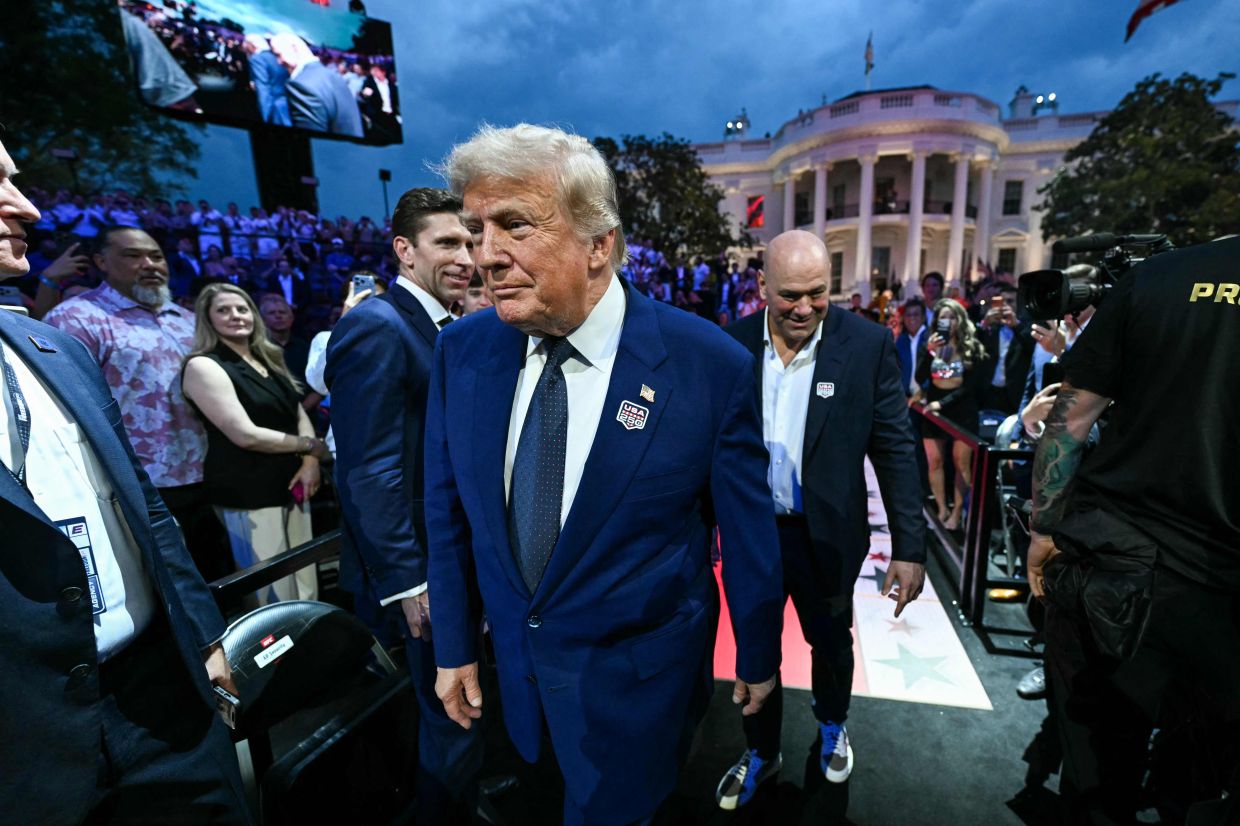
The championship matches, presented by TKO Group Holdings Inc., commenced shortly before 8:30 pm, with Trump and UFC President Dana White making their entrance through the White House corridors to a towering structure dubbed the "Claw." Standing nearly 100 feet tall, this makeshift arena dominated the South Lawn and dwarfed previous temporary installations, underscoring the ambition behind the undertaking. Weather posed an initial obstacle, with lightning and thunder necessitating a brief delay, yet the spectacle proceeded as planned.
The guest list reflected Trump's political and business alignment, featuring Meta Platforms Inc. CEO Mark Zuckerberg, Paramount Skydance Corp. CEO David Ellison, and Treasury Secretary Scott Bessent alongside family members. Joe Rogan, the podcast commentator whose audience skews toward young male voters crucial to Trump's 2024 electoral success, provided live commentary throughout the proceedings. The inclusion of military servicemembers and Medal of Honor recipients underscored the nationalist framing of the occasion, with watch parties simultaneously broadcast to military installations as far afield as Okinawa, Japan.
The event functioned as both celebration and campaign statement, capitalising on the UFC's young, predominantly male fan base that proved instrumental to Trump's recent political victory. This demographic alignment proved consequential enough that his administration has deepened ties with the organisation through partnership agreements signed by the State Department and Federal Bureau of Investigation. The spectacle represented Trump's personal conception, according to White, whose longstanding association with the president and the sport facilitated the arrangement.
The production scale proved extraordinary, with the UFC investing in excess of US$60 million to stage the matches, whilst more than seven federal agencies committed substantial resources according to court filings. The structure accommodated 4,300 seated spectators within the "Claw," yet planners anticipated an additional 120,000 visitors on the adjacent Ellipse, where lottery-allocated free tickets generated public access. This inclusive approach contrasted with the high-profile nature of the primary venue, creating a tiered attendance structure.
Commercial partnerships underscored the entrepreneurial dimensions of the celebration. Crypto.com and Dodge's Ram truck brand appeared among sponsors, whilst the Trump-family venture World Liberty Financial contributed an additional US$250,000 in bonus purses for the top-performing fighters. This convergence of the Trump family's business interests with the entertainment spectacle illustrated the intermingling of personal celebration and commercial enterprise.
The planning stretched beyond the South Lawn into Washington's most historically significant locations. White and participating fighters held their pre-event news conference at the Lincoln Memorial, where combatants traded insults and predictions befitting the theatrical nature of professional fighting. Participants such as fighter Michael Chandler elevated the occasion's significance by framing their performances as expressions of national pride, suggesting that victory on the White House lawn carried patriotic weight beyond typical sporting competition.
Logistical arrangements extended into the White House itself, with the Indian Treaty Room—ordinarily reserved for formal governmental functions—converted into locker room facilities for fighters. This repurposing of ceremonial spaces marked a departure from traditional South Lawn programming, which typically accommodates the Easter Egg Roll and Congressional Picnic rather than caged combat sports. The structural imposition of the "Claw" overshadowed previous temporary installations, including the ice rink erected during the Biden administration.
Public reaction proved decidedly mixed. A YouGov survey released on June 5 indicated that 51 percent of Americans disapproved of the White House event, whilst only 27 percent expressed approval, suggesting substantial public discomfort with the arrangement. The Public Integrity Project filed legal action characterising the event as a "volcano of corruption," though the court ultimately declined to block the proceedings. These objections reflected broader concerns regarding the appropriateness of hosting combat sports on the nation's most iconic residence.
Trump's comments regarding the "Claw's" permanence fuelled speculation about its ultimate disposition. In a TikTok video from June 2, he suggested the structure possessed sufficient aesthetic appeal to warrant permanent installation, drawing a comparison to the Eiffel Tower. Though he subsequently characterised the remark as humorous, court filings indicated the administration planned disassembly beginning at 10 am Monday, as Trump prepared for his transatlantic journey to the Group of Seven gathering.
The event crystallised broader questions about presidential conduct, commercial influence, and the use of national symbols for partisan purposes. By hosting an entertainment spectacle in a venue traditionally reserved for ceremonial occasions, Trump leveraged the White House's symbolic authority to amplify the profile of a sport whose fan base substantially overlapped with his electoral coalition. The convergence of business interests, entertainment, military participation, and nationalist framing created a complex tableau that supporters viewed as innovative celebration and critics perceived as inappropriate commercialisation of executive power.
As Trump departed for France bearing the UFC championship belt, the South Lawn returned to its customary state, yet the event's significance extended beyond its immediate aftermath. The spectacle demonstrated how contemporary political figures employ entertainment infrastructure and commercial partnerships to reinforce support among specific demographic cohorts, blending traditional symbols of national authority with popular culture in ways that earlier presidents largely avoided.