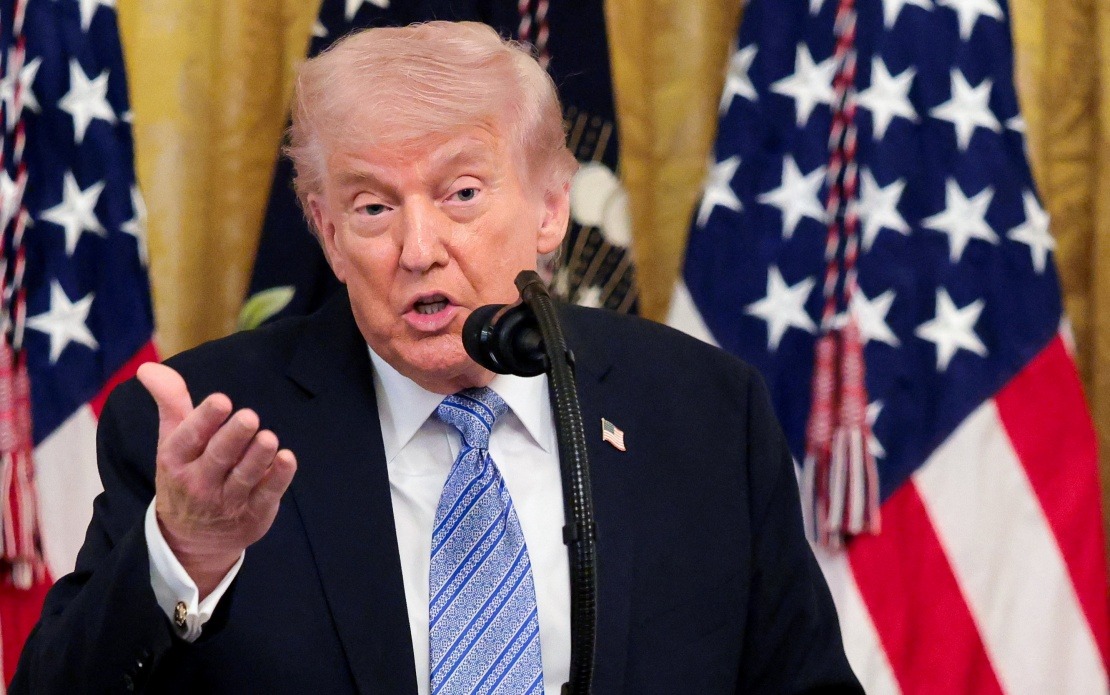
President Donald Trump has publicly rejected Israeli Prime Minister Benjamin Netanyahu's opposition to a potential sale of advanced F-35 fighter jets to Türkiye, signalling a significant shift in Washington's approach to the long-stalled defence procurement issue. Speaking to reporters aboard Air Force One on Monday, Trump made clear that the United States operates independently on its defence export decisions, declaring that he alone determines what American weapons systems should be sold and to whom.
The US president's comments represent a direct rebuff to Netanyahu's behind-the-scenes efforts to block the arms deal. According to earlier media reports, Trump expressed frustration with the Israeli premier's public criticism of the proposed sale, reflecting deeper tensions between the two allied governments over regional strategy and priorities. This pushback signals that the Trump administration is prepared to move ahead with restoring Türkiye's access to the F-35 programme, despite long-standing Israeli security concerns about arming a regional power with divided loyalties.
Trump characterised his relationship with Turkish President Recep Tayyip Erdogan in glowing terms, describing him as a "friend" who has performed admirably on regional security matters, particularly regarding Syria. The American president acknowledged the well-documented tension between Ankara and Jerusalem, noting that Türkiye is "not a big fan" of Israel or Netanyahu, yet insisted this does not diminish the strategic value of the Turkish-American partnership. His comments suggest a pragmatic approach that compartmentalises different regional relationships rather than allowing Israeli concerns to drive US policy across the board.
Trump's rhetorical emphasis on Türkiye's military capabilities underscores why the administration views the F-35 deal as strategically important. He described the Turkish armed forces as "tremendous" and characterised Türkiye as a "very powerful country," positioning the potential sale as strengthening a critical NATO ally rather than threatening regional stability. This framing contrasts sharply with Israeli security arguments, which have traditionally centred on concerns about advanced technology proliferation in a volatile region.
The timing of Trump's endorsement carries weight given his previous involvement in the F-35 suspension. During his first presidency in 2019, the Trump administration removed Türkiye from the fighter jet programme in response to Ankara's acquisition of Russia's S-400 missile defence system. The decision was framed around NATO standardisation concerns and Western technology security, creating a five-year impasse that has frustrated Turkish officials and strained Turkish-American relations. Trump's current willingness to revisit this decision represents a significant reversal that could reshape defence cooperation in the Eastern Mediterranean and Black Sea regions.
At the NATO summit held in Türkiye in July, Trump previously indicated he would "certainly consider" restoring Ankara's participation in the F-35 programme, further describing the country as "much more loyal than other countries." This phrasing suggests a transactional view of alliance relationships, where loyalty is measured and reciprocated through concrete defence benefits. According to Turkish President Erdogan, Trump has adopted a decidedly "positive approach" to the question of F-35 delivery, indicating that behind-the-scenes discussions have progressed beyond preliminary exploration.
Türkiye's government has mounted a sustained diplomatic campaign to overturn the suspension, arguing that the S-400 and F-35 systems are technically compatible and pose no genuine interoperability threat to NATO. Ankara has repeatedly proposed establishing a joint technical commission to study potential concerns, framing this as a reasonable compromise that addresses Western security preoccupations while restoring Turkish access to cutting-edge military technology. Turkish officials have also emphasised that their country fulfilled all original contractual obligations related to the F-35 programme before the suspension was imposed, viewing the decision as a breach of agreement terms.
The potential reinstatement of Türkiye in the F-35 programme would carry significant implications for regional power dynamics and NATO cohesion. Beyond the immediate Turkish-Israeli tension, the sale would likely affect broader Middle Eastern geopolitical calculations, particularly concerning energy security, maritime disputes in the Eastern Mediterranean, and the balance of power between Turkey and regional rivals. For Malaysia and other Southeast Asian nations monitoring great power competition, the episode illustrates how defence procurement decisions increasingly reflect broader strategic realignments within traditional alliance structures.
Israeli security officials have historically expressed concern that F-35 technology in Turkish hands could compromise operational security and intelligence-sharing protocols within NATO. Jerusalem's opposition reflects deeper anxieties about regional power balances, Turkish relations with Iran, and access to Eastern Mediterranean resources. However, Trump's dismissal of these concerns suggests that Washington under his leadership may prioritise maintaining Turkish alignment within NATO over accommodating specific Israeli security preferences.
The broader context of this dispute reveals ongoing tensions within the Western alliance system. The 2019 suspension reflected a consensus-building approach that attempted to balance NATO cohesion against technology security concerns and alliance standardisation. The potential reversal under Trump indicates a shift toward bilateral relationship management, where the strength of individual partnerships outweighs coordinated alliance decision-making. This approach could have implications for how other contested defence technology transfers are evaluated within allied structures.
For Türkiye, successful restoration to the F-35 programme would represent a significant diplomatic victory after years of exclusion and negotiations. The advanced fighter jets would modernise the Turkish air force and enhance its capabilities in regional contingencies, while also symbolising restored confidence in Turkish-American ties. However, the path forward likely remains complex, as Congress may require reassurance regarding technology security protocols and NATO interoperability safeguards before approving any formal sale.
The administration's position also reflects evolving thinking about NATO burden-sharing and regional security architecture. By emphasising Türkiye's military strength and strategic importance, Trump's remarks position the F-35 sale as a transaction strengthening NATO's eastern flank rather than a concession to Turkish demands. This framing may help navigate domestic political challenges while advancing the broader objective of deepening Turkish-American defence cooperation in an increasingly multipolar strategic environment.

