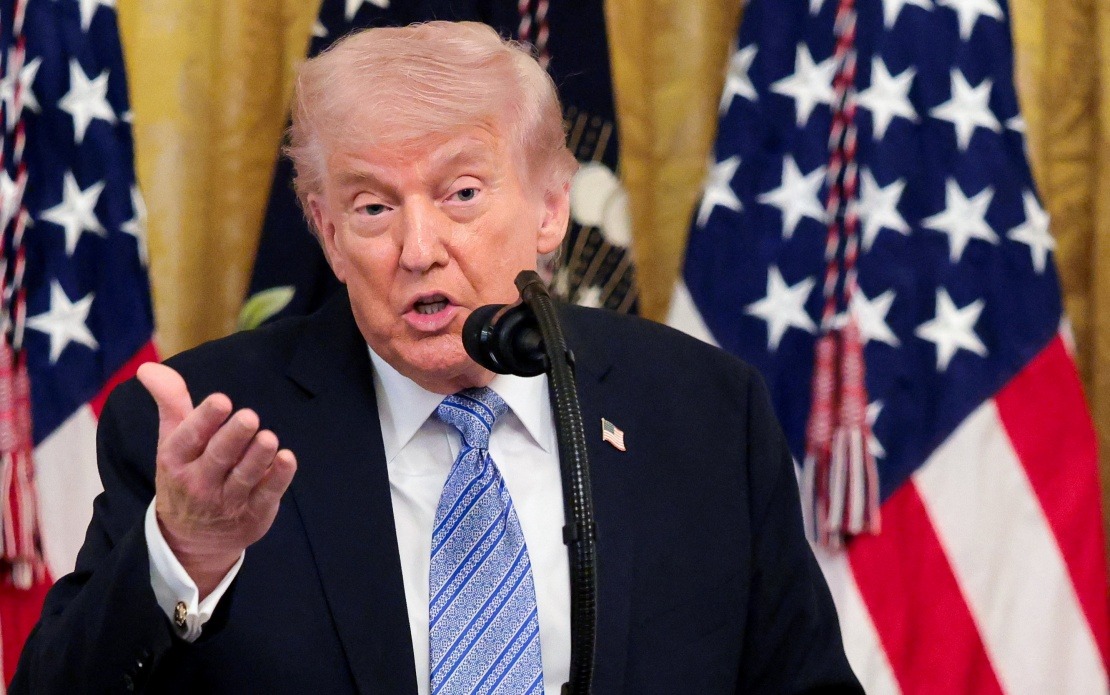
In a move that would reshape international diplomacy, US President Donald Trump has reportedly endorsed FIFA President Gianni Infantino as the successor to current UN chief António Guterres, according to the New York Post. The proposal, revealed this week, marks an unconventional approach to filling one of the world's most influential positions and reflects Trump's broader scepticism of traditional UN institutions.
Trump's backing of the 56-year-old Swiss-born sports executive hinges on what the president perceives as Infantino's exceptional ability to forge consensus across ideological and national divides. According to individuals familiar with Trump's thinking, the FIFA leader brings a rare combination of global recognition and a proven track record of navigating competing interests—qualities Trump believes are essential for leading an increasingly fractious world body.
The relationship between Trump and Infantino has deepened substantially over the past year, particularly during this year's World Cup tournament. Infantino has made deliberate overtures to cultivate Trump's support, a strategy that culminated in December when the FIFA president presented Trump with FIFA's inaugural Peace Prize. This calculated diplomatic outreach underscores how international organisations now view direct engagement with the US administration as critical to their institutional survival.
The path to the top UN position remains formidable, however. The successor to Guterres will take office on January 1, 2027, for a five-year mandate. Under Article 97 of the UN Charter, the Secretary-General is formally appointed by the General Assembly following a recommendation from the Security Council. This dual requirement means Infantino would first need to secure support from all 15 Security Council members, with particular attention to the five permanent members—the United States, China, Russia, France, and the United Kingdom—each of which possesses veto power. Only after clearing this significant hurdle could he advance to a General Assembly vote.
Trump's proposal must be understood within the context of his fundamental frustration with UN effectiveness. The president has long contended that the organisation has failed to meaningfully intervene in major global conflicts, from the Middle East to Ukraine. This criticism has translated into concrete policy measures that have significantly undermined US commitment to the institution.
Last year, the Trump administration established a separate US-led Board of Peace, an initiative that sparked considerable debate about whether Washington was attempting to construct a parallel international mechanism to circumvent traditional UN structures. Though Trump publicly denied these allegations, the board's creation signalled a willingness to develop alternative channels for diplomatic engagement outside conventional multilateral frameworks.
Beyond establishing competing institutions, the Trump administration has implemented sweeping budgetary and institutional measures that have weakened the UN system. The United States has substantially curtailed its financial contributions to the organisation while simultaneously withdrawing from multiple UN-affiliated bodies. Most prominently, the administration severed America's relationship with the World Health Organization (WHO), a move that had significant ripple effects across global health coordination, particularly for emerging economies dependent on international disease surveillance and vaccine distribution networks.
For Malaysia and the broader Southeast Asian region, Infantino's potential appointment carries important implications. The FIFA president's ascent to the UN would reshape how the organisation addresses issues critical to the region, including climate change, maritime disputes, and economic development. Infantino's background in sports administration, rather than traditional diplomacy or development policy, represents a substantial departure from previous Secretary-Generals and could either energise the institution with fresh perspectives or expose it to criticisms of lacking technical expertise in complex global governance questions.
Moreover, the Trump proposal illuminates deeper tensions within the international system regarding the balance between American interests and multilateral consensus. If the US pushes aggressively for Infantino's appointment while other Security Council members prefer alternative candidates, the resulting gridlock could further diminish the UN's already-strained credibility. Such institutional paralysis would disproportionately harm developing nations that rely on UN mechanisms for dispute resolution and development assistance.
The timing of this proposal also merits careful consideration. With global tensions elevated across multiple flashpoints and international cooperation increasingly fragmented, installing a UN leader aligned with the Trump administration's unconventional approach to global governance carries significant consequences. Infantino would inherit an organisation facing legitimacy questions, resource constraints, and fundamental disagreement among major powers about its core functions.
Security Council dynamics will ultimately determine whether Infantino advances to a General Assembly vote. China and Russia have historically used their veto authority to block Secretary-General candidates they view as insufficiently aligned with their interests. Similarly, European powers may harbour reservations about Trump's preferred candidate, viewing the selection process as excessively politicised.
As the international community contemplates who should lead the UN through 2027 and beyond, Trump's endorsement of Infantino signals that traditional diplomatic norms governing such appointments are being fundamentally reconsidered. Whether this represents pragmatic adaptation or dangerous politicisation of global institutions remains a central question for Malaysian policymakers and regional observers closely monitoring shifts in international governance structures.

