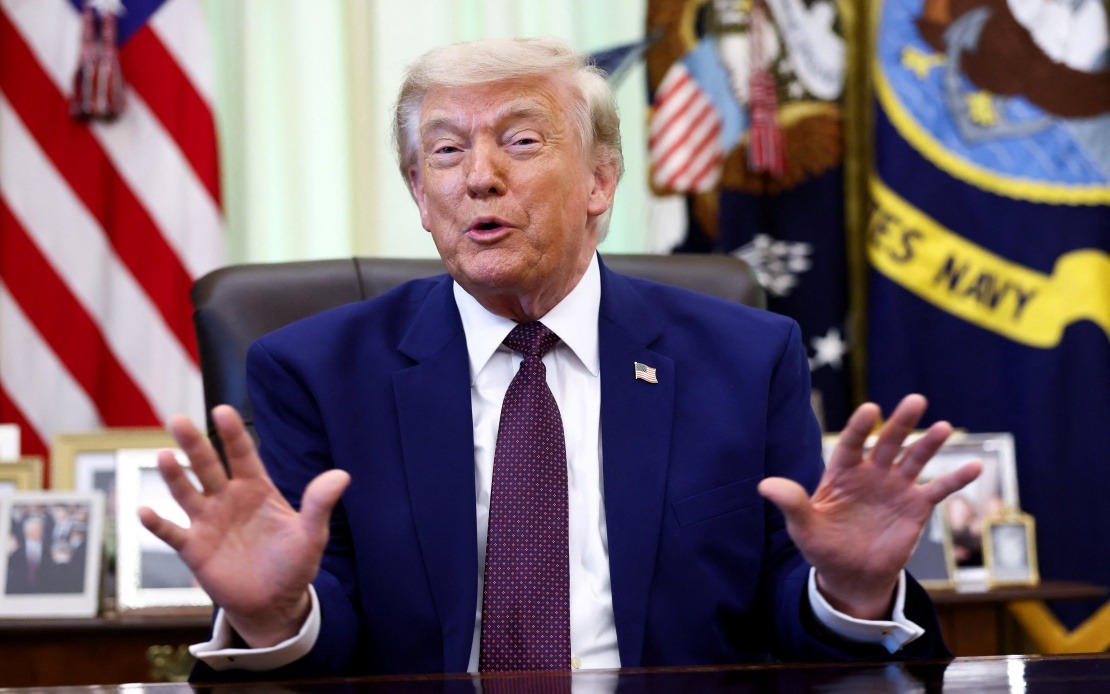
Donald Trump has intensified pressure on Republican senators to prioritise the passage of the SAVE America Act before Congress breaks for its August recess, signalling his determination to push through contentious voting reforms that form a cornerstone of his legislative agenda. The president's frustration with the pace of proceedings has become increasingly evident, with White House Press Secretary Karoline Leavitt recently indicating that Trump's confidence in Senate Majority Leader John Thune is waning. The urgency Trump is displaying reflects the political stakes involved and the window of opportunity he perceives before the congressional calendar becomes crowded with other pressing matters.
The SAVE Act, formally known as the Safeguard American Voter Eligibility Act, stands as a Republican-led initiative designed to establish stricter identification requirements for voters in federal elections. Under the proposed legislation, US residents would be mandated to present either a passport or birth certificate when registering to vote. Supporters of the measure frame it as a necessary safeguard against electoral fraud, though critics argue the evidence for widespread voter fraud using fake identities remains disputed among election officials and researchers. The bill represents a significant shift in voting administration and would alter registration procedures that currently operate differently across America's decentralised electoral system.
The legislation explicitly targets what Republicans characterise as a vulnerability in the current system: the ability of foreign nationals and undocumented immigrants to register as voters in numerous states without documentation. The Republican argument centres on the principle that voting privileges should be restricted to US citizens, a position that enjoys broad support among conservative voters but remains controversial among voting rights advocates who contend that such cases are exceedingly rare. The distinction between addressing genuine administrative concerns and erecting barriers to legitimate voting participation remains contested terrain in American electoral politics.
Trump's immediate strategy reveals his willingness to challenge established Senate procedures that have long governed legislative passage. In a post on Truth Social, the president called for Republicans to eliminate the filibuster, a procedural mechanism requiring 60 votes to advance most legislation. His explicit instruction to "Terminate the Filibuster" and pass the SAVE America Act, the federal budget, and upcoming debt ceiling legislation reflects his preference for majority-rule governance. Trump's reasoning rests on his assertion that Democrats would themselves abolish the filibuster if they regained Senate control, a prediction grounded in earlier Democratic discussions about filibuster reform during periods of party frustration.
The filibuster represents perhaps the most significant institutional obstacle Trump faces in his legislative programme. The 60-vote threshold means that even with Republican control of the Senate, passage of controversial bills requires Democratic cooperation or extraordinary party unity. By advocating filibuster elimination, Trump is proposing to fundamentally alter the mechanics of the world's most powerful legislative body. This represents a dramatic escalation from his first presidency and signals his determination to bypass traditional constraints on executive-aligned majorities.
The timing of Trump's push carries distinct strategic importance. The August recess marks a natural pause in legislative business, and Trump appears intent on achieving a significant legislative victory before that break. Such victories serve multiple purposes: they energise the Republican base, demonstrate command over party members, and create momentum heading into the autumn legislative calendar. Moreover, passing the SAVE Act before summer adjournment would allow Republicans to campaign on a tangible achievement in voting security, a theme that resonates powerfully with Trump's political coalition.
For Malaysian readers and Southeast Asian observers, this legislative battle offers instructive parallels regarding democratic governance and the tension between majority efficiency and minority protections. Institutional mechanisms like the filibuster exist precisely to force coalition-building and compromise, even when a single party controls chambers of parliament. Their weakening or elimination can consolidate power but potentially undermine the checks that protect institutional legitimacy and political minorities. Malaysia's own parliamentary system reflects different institutional arrangements, yet the underlying questions about balancing decisive governance with protection against majoritarian overreach remain universally relevant.
The controversy surrounding voting identification requirements also resonates beyond American borders. Democracies worldwide grapple with questions of voter verification, administrative integrity, and accessibility. Different nations have adopted varying approaches, from mandatory identification in some European countries to systems permitting multiple forms of verification in others. The American debate often assumes facts about fraud prevalence that remain empirically contested, a dynamic that appears across multiple democracies where electoral security concerns sometimes outpace documented problems.
Senate Republican unity on this matter remains uncertain despite Trump's public pressure. Some moderate Republicans have historically expressed reservations about filibuster elimination, fearing that removing this protection could backfire when Democrats regain majority control. The dynamics within the Republican caucus thus present a complication to Trump's strategy. Thune and other leadership figures must balance the president's demands against concerns about institutional consequences and the political sustainability of radical procedural change. This internal Republican tension will likely determine whether Trump achieves his pre-recess legislative objective or encounters delays that test his patience further.
The broader legislative context encompasses not merely voting administration but also budget passage and debt ceiling negotiations, issues where Republican divisions have historically created complications. Trump's bundling of these items suggests he views them as interconnected legislative challenges requiring simultaneous resolution. This approach carries risks, as it compounds the negotiating complexity and increases opportunities for legislative failure. Alternatively, it reflects Trump's conviction that demonstrating unified Republican strength across multiple fronts strengthens his position heading into the final year before general elections.

