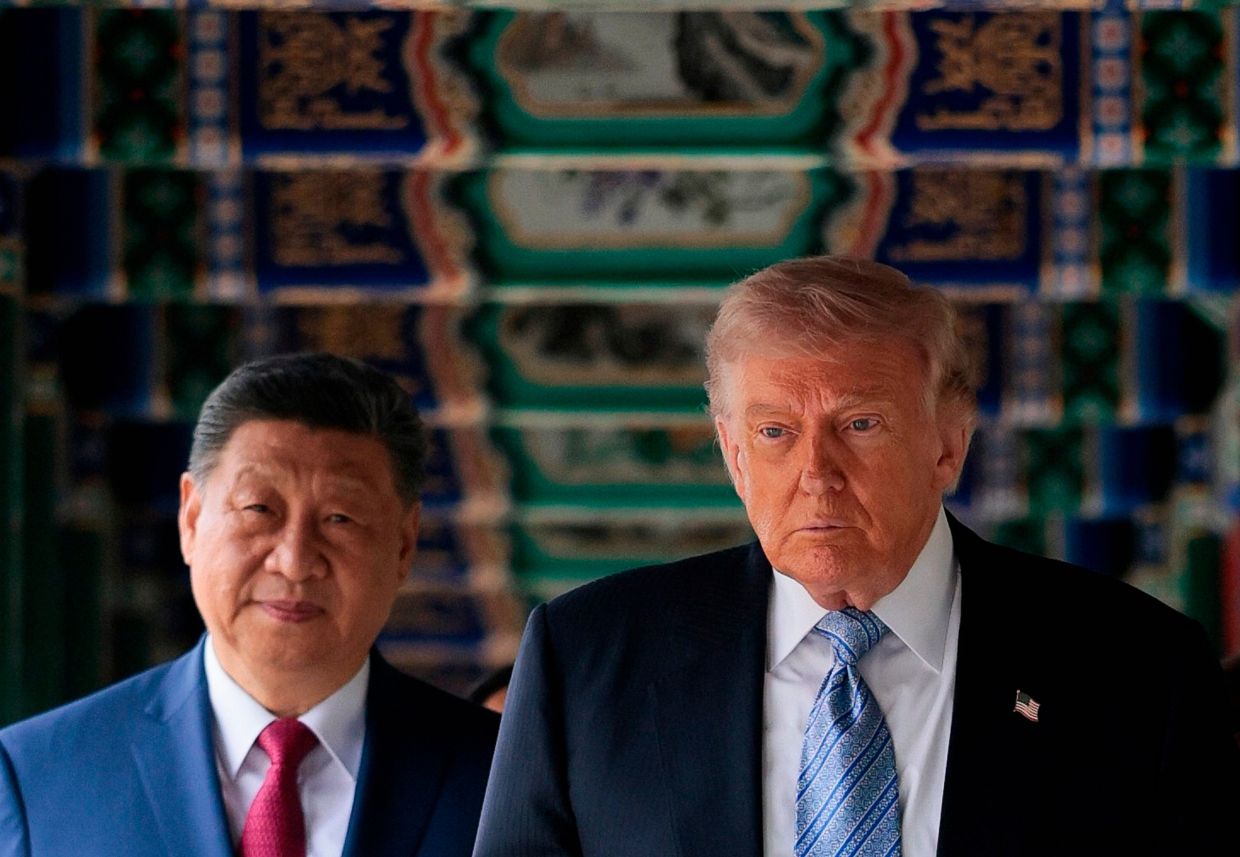
US President Trump has painted a deeply contradictory picture of his administration's relationship with China, oscillating between sharp public recriminations and a commitment to preserve diplomatic engagement. This tension came into sharp focus as preparations advanced for Chinese leader Xi Jinping's scheduled visit to the United States on September 24, revealing the fragmented nature of Washington's approach to Beijing under Trump's leadership.
The inconsistency surfaced around allegations that China has been supplying weapons to Iran through Pakistani channels. According to reports citing unnamed intelligence sources, the weapons shipment was valued between US$60 million and US$70 million, allegedly routed from western China via Pakistan. China's foreign ministry swiftly rejected these accusations as "untrue and not factual at all", reiterating Beijing's stated commitment to de-escalation and resolving the Iranian conflict through diplomatic means. This follows an earlier Chinese denial of similar weapons-supply claims prior to Trump's May visit to Beijing.
When pressed on the matter, Trump adopted a posture of cautious optimism tempered by implicit threat. He said he would find such conduct "surprising", adding that Xi had assured him during their Beijing meeting that China would not assist Iran "under any circumstances". In a telling phrase that blended diplomacy with veiled warning, Trump stated: "he knows I'd be quite disappointed." He then pivoted to reference Xi's impending September visit, signalling that the trip remained on track despite the weapons allegations.
This measured response contrasted sharply with Trump's blistering attack on Dr. Anthony Fauci, the long-time US health official, launched through his social media platform just hours earlier. Trump reiterated his long-standing theory that COVID-19 originated from a laboratory in Wuhan, China, accusing Fauci of consistently attempting to "protect China" by disagreeing with the laboratory-leak hypothesis. While Trump has repeatedly championed this theory, the broader scientific consensus has gravitated toward a natural spillover from animals as the more probable origin, though investigations remain incomplete and contested.
For Malaysian and Southeast Asian observers, these contradictions underscore a fundamental fragmentation in US China policy. The pattern is unmistakable: Trump launches severe public accusations against Beijing—whether over election data theft, weapons proliferation, or pandemic origins—yet refrains from translating rhetoric into concrete consequences. Following his prime-time address alleging that China had stolen 220 million US voter records in "the largest compromise of election data in history", Trump declassified supporting documents and warned of an "unprecedented election security nightmare". Yet the administration has announced no new sanctions, trade penalties, or diplomatic repercussions. Instead, planning for Xi's visit has proceeded without disruption.
This pattern reflects a deliberate strategy, albeit one that leaves analysts and allies uncertain about American reliability. Trump appears intent on maintaining a working relationship with Xi while simultaneously leveraging public accusations for domestic political purposes. Just one week before his explosive claims about election interference, Trump had stated that in his "opinion" China and Russia were not "participating" in the Iran conflict, citing Xi's personal assurances from their May Beijing meeting. The president added he was taking the Chinese leader "at his word", suggesting a foundation of personal trust.
Yet Trump tempered even this expression of confidence with a warning. He cautioned that if China did assist Iran, "it would be very bad for them – certainly not in their best interests". Such formulations—part compliment to Chinese leadership, part threat of unspecified consequences—have become characteristic of Trump's diplomatic vocabulary toward Beijing. They allow him to project strength domestically while preserving space for engagement internationally.
For regional powers including Malaysia, this ambiguity creates both opportunity and risk. A US-China relationship that oscillates between confrontation and engagement provides small and medium-sized nations more room to manoeuvre, potentially allowing them to strengthen ties with both powers without being forced into rigid alignments. However, the unpredictability also raises concerns about the stability of the regional order, particularly given China's expanding influence in Southeast Asia through initiatives like the Belt and Road Initiative and its military presence in the South China Sea.
The September 24 visit will serve as a critical test of whether Trump's rhetorical attacks on China translate into substantive policy shifts or remain political theatre designed for domestic consumption. The fact that planning continues without meaningful escalation suggests that Trump views the relationship as too important to allow public disputes to derail high-level diplomacy. Yet each accusation—whether about weapons, elections, or pandemics—further erodes the trust and predictability that underpin stable great-power relations.
For Southeast Asian governments navigating between American and Chinese interests, Trump's mixed signals demand careful calibration. While the unpredictability might seem chaotic, it also suggests that neither power is prepared for all-out confrontation in the near term. This creates a window, however narrow and uncertain, for regional actors to advance their own interests while the two superpowers remain in a state of ambiguous engagement rather than open conflict.

