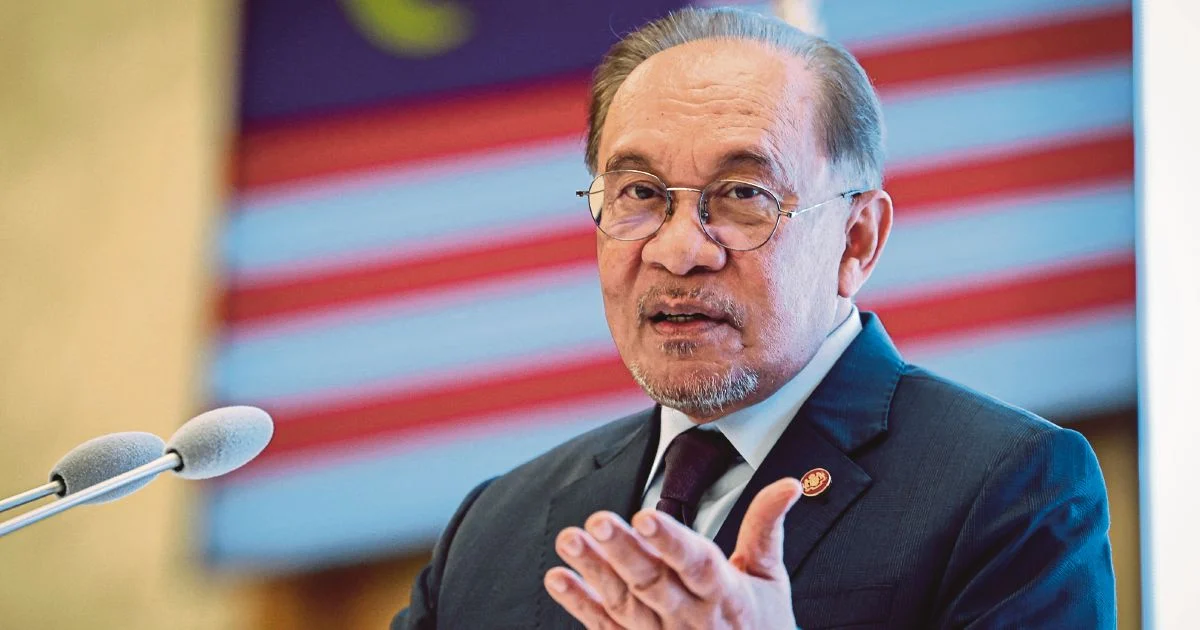
Malaysia has secured a significant stake in one of the world's largest gas reserves through Petronas' involvement in a major Turkmenistan project, a win that Prime Minister Datuk Seri Anwar Ibrahim characterizes as validation of the nation's international standing. The award, announced at Batu Kawan, underscores how major energy producers continue to select Malaysian firms despite intense competition from other regional and global players vying for access to Central Asian hydrocarbon resources.
Anwar's framing of the Turkmenistan deal carries particular weight given Malaysia's ongoing efforts to position itself as a reliable partner in the global energy transition. Over the past two years, the country has worked to rebuild investor confidence following periods of political uncertainty and economic slowdown. The Petronas appointment signals that international energy majors and state-owned enterprises view Malaysia not merely as a reliable technical operator, but as a stable jurisdiction where long-term commitments can be safely made without concern over sudden policy reversals or administrative disruption.
Turkmenistan sits atop some of the world's most substantial untapped natural gas reserves, making projects there essential to global energy security discussions. The Central Asian nation has historically directed energy partnerships toward countries demonstrating both technical competence and political predictability. That Petronas has secured involvement reflects the company's technical credentials accumulated over decades of deepwater and liquefied natural gas operations across Southeast Asia, the Indian Ocean, and the Middle East.
The timing of this award is strategically significant for Malaysia's energy sector reputation. As Southeast Asia grapples with transitioning away from fossil fuels, major hydrocarbon projects remain central to national revenue streams and geopolitical positioning. Malaysia's energy exports, particularly liquefied natural gas, contribute substantially to government coffers and foreign exchange earnings. Securing new production sources ensures Petronas can maintain output levels and meet long-term contracts with international buyers, particularly in Northeast Asia where demand remains robust.
Anwar's emphasis on Malaysia's unity and stability touches on deeper concerns among international investors. Political fragmentation and social division have historically deterred major capital commitments in developing economies. By linking the Turkmenistan award to perceptions of Malaysian cohesion, the Prime Minister signals that domestic political management has sufficiently stabilized the investment environment. This messaging matters for attracting future partnerships not only in energy but across infrastructure, manufacturing, and technology sectors where foreign direct investment drives economic growth.
The deal also reflects Petronas' strategic positioning within global energy markets during a period of substantial transformation. While renewable energy adoption accelerates worldwide, natural gas remains essential as a transitional fuel for many economies. Petronas' ability to develop new supply sources ensures the company can participate in this managed energy transition while maintaining profitability and shareholder returns. The Turkmenistan project positions Malaysia as a bridge between Central Asian supplies and Asian demand centers.
For Malaysia's broader economic narrative, the Turkmenistan arrangement demonstrates continued relevance in energy markets despite mounting pressure to pivot toward sustainability. Major petrochemical economies cannot simply abandon hydrocarbon production overnight; doing so would devastate employment and government revenues. Instead, countries like Malaysia are pursuing dual strategies: developing natural gas as a cleaner fossil fuel alternative while gradually expanding renewable energy capacity. The Turkmenistan stake supports this balanced approach.
Regionally, the award carries implications for Malaysia's relationship with other ASEAN members pursuing energy partnerships. Indonesia and Vietnam also seek Petronas' technical expertise and partnership models for their own hydrocarbon projects. Success in Turkmenistan enhances Petronas' international profile and creates demonstration effects that encourage other regional governments to engage Malaysian energy expertise. This multiplier effect can generate additional opportunities across the region.
The confidence expressed by Turkmenistan's decision-making authorities extends beyond Petronas to the Malaysian government itself. State-owned enterprises do not typically operate independently from national interests; Petronas' involvement in major foreign projects implicitly carries government backing and diplomatic support. Turkmenistan's selection of Petronas therefore represents confidence in Malaysia's willingness to maintain stable diplomatic relations and honor long-term commitments regardless of domestic political changes.
Investor sentiment toward Malaysia had faced headwinds from perceptions of governance challenges and policy inconsistency in previous years. The Turkmenistan award suggests these concerns have substantially diminished among sophisticated international players. When sovereign wealth funds and state energy companies commit to multi-year projects worth billions of dollars, they conduct exhaustive due diligence on political risk, regulatory reliability, and administrative competence. Turkmenistan's approval indicates Petronas and Malaysia passed these rigorous assessments.
The project's execution phase will test whether this confidence proves warranted. International energy partnerships involving Central Asian supplies demand complex coordination across multiple governments, stringent technical standards, and sustained commitment through commodity price fluctuations and geopolitical shifts. Successful delivery of the Turkmenistan project could establish a template for additional Malaysian involvement in Central Asian energy development, creating opportunities for related service industries and professional expertise.
Anwar's public statement emphasizing Malaysia's stability and economic capability serves dual purposes: affirming international partners' trust while reinforcing domestic confidence in national leadership. By linking a major commercial achievement to broader themes of national resilience and unity, the Prime Minister constructs a narrative suggesting that Malaysia has emerged from recent periods of uncertainty ready to compete effectively in high-stakes global markets. This messaging matters both for investor sentiment and for popular confidence in economic direction.

