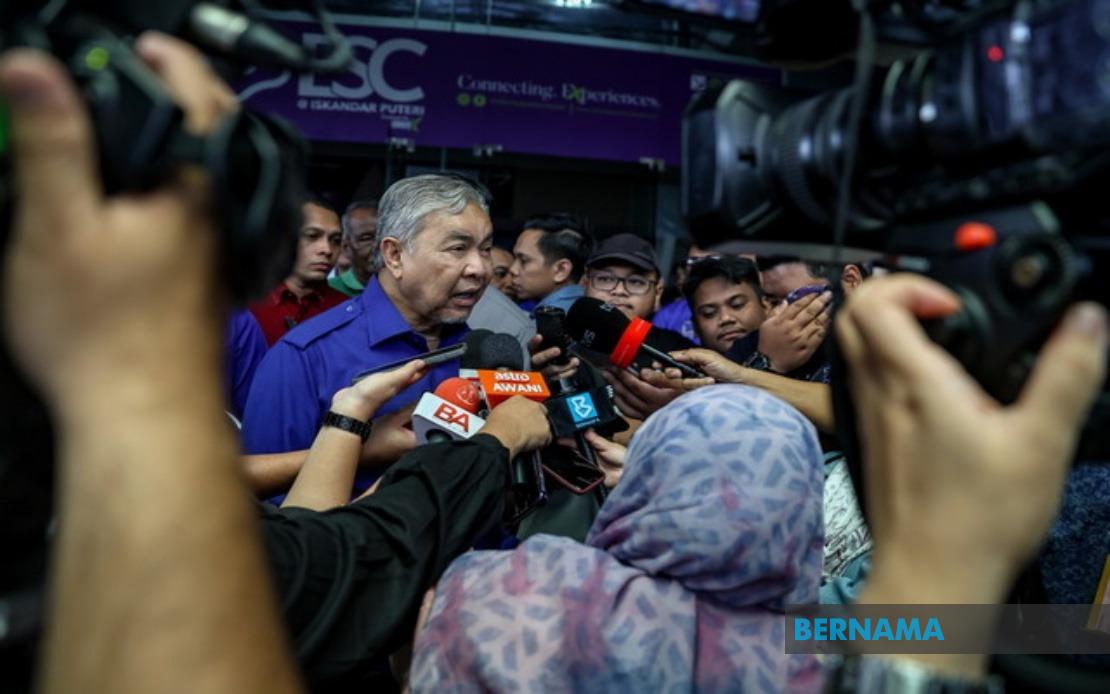
Deputy Prime Minister Datuk Seri Dr Ahmad Zahid Hamidi has confirmed that the Technical and Vocational Education and Training Commission will be officially established and presented to Parliament before the year concludes, marking a significant institutional reform in Malaysia's skills development framework. The announcement came during the Johor Darul Ta'zim TVET MARA Roadshow at the Educity Sports Complex in Iskandar Puteri, where Ahmad Zahid, who also serves as Rural and Regional Development Minister, outlined the government's strategy to modernise vocational training governance.
The proposed commission will serve as a successor body to the National TVET Council, representing a structural enhancement intended to fortify the country's technical and vocational education landscape. According to Ahmad Zahid, this transformation aligns with international best practices observed in developed economies that maintain dedicated institutional bodies overseeing skills and workforce development. The shift from a council to a commission signals an elevation in the governing structure's authority and operational scope within the vocational training sector.
Currently, extensive stakeholder consultations remain underway to gather input from industry representatives, educational institutions, and training providers before advancing to the next phase of implementation. Ahmad Zahid explained that following the completion of these engagement sessions, the government intends to present a Cabinet paper seeking formal approval to proceed. While the underlying policy framework has already received Cabinet endorsement, additional authorisation is required before the proposed legislation can be tabled in both the Dewan Rakyat and Dewan Negara, a process that demands careful consideration of constitutional and legal requirements.
The commission's mandate will extend beyond conventional policy-making functions to encompass active implementation and enforcement responsibilities. This broader remit distinguishes it from advisory bodies and positions the commission as an operational authority capable of directly monitoring compliance and driving outcomes across Malaysia's TVET ecosystem. The structural redesign reflects recognition that vocational training development requires active institutional engagement rather than passive policy guidance, a principle increasingly adopted by leading economies seeking to enhance workforce competitiveness.
For Malaysian policymakers and industry stakeholders, this institutional reform carries substantial implications for how vocational training programmes are coordinated, funded, and evaluated. The commission's enforcement capacity could facilitate more consistent standards across training providers and stronger alignment between curriculum offerings and labour market requirements. In a region where technical skills shortages frequently constrain economic growth and manufacturing competitiveness, Malaysia's move to strengthen governance of vocational development may serve as a model for neighbouring Southeast Asian nations grappling with similar workforce challenges.
Ahmad Zahid's position as both Rural and Regional Development Minister and chairman of the existing National TVET Council places him centrally within this reform initiative. His continued leadership involvement suggests continuity in strategic direction, though the transition from council chair to commission oversight will require clarification regarding governance structures and decision-making hierarchies. The phased approach adopted by the government demonstrates caution in institutional design, prioritising comprehensive stakeholder input over expedited implementation.
During the same event, Ahmad Zahid addressed demographic shifts affecting electoral dynamics in Johor, noting that voters aged 40 and below now constitute approximately 52 per cent of the state's registered electorate. This demographic composition, influenced by the expansion of voting rights to 18-year-olds through the Undi18 policy, fundamentally alters political engagement patterns and policy priorities. Youth representation in the electorate creates both opportunities and obligations for political parties to address concerns particularly resonant with younger populations, including employment prospects, housing affordability, and skills development.
The Deputy Prime Minister's remarks regarding young voters' alignment with Johor Menteri Besar Datuk Onn Hafiz Ghazi appear designed to mobilise youth support within Barisan Nasional's electoral coalition. By emphasising that younger demographics comprise a majority of Johor's voters and positioning the Menteri Besar as a youthful leader, Ahmad Zahid seeks to establish continuity between generational renewal and existing leadership structures. This messaging strategy reflects recognition that demographic shifts require deliberate political positioning to maintain coalition cohesion across age groups.
The Johor TVET roadshow itself represents coordinated effort by MARA, the government's primary vehicle for indigenous community development, to promote vocational training pathways among young Malaysians. With MARA chairman Datuk Dr Asyraf Wajdi Dusuki participating alongside senior government figures, the event signaled institutional commitment to expanding technical skills availability and accessibility. Such roadshows serve dual purposes: they publicise available training programmes while simultaneously gathering intelligence regarding youth engagement with vocational pathways and barriers to participation.
Vocational training reform occurs within Malaysia's broader economic restructuring context. As the country seeks to transition toward higher-value manufacturing and technology-enabled services, demand for skilled technicians, engineers, and specialised tradespeople continues expanding. The proposed TVET Commission positions the government to respond more dynamically to labour market evolution by enabling faster curriculum adjustment and stronger employer-training provider coordination. Enhanced institutional capacity for implementation oversight may also improve quality assurance across diverse training providers, addressing longstanding concerns regarding consistency in vocational education standards.
The timeline to finalise the commission and secure parliamentary approval by year-end reflects government commitment to accelerating institutional reform, though the complexity of legal considerations and stakeholder coordination suggests compressed timelines carry implementation risks. The government's sequential approach—completing consultations, obtaining Cabinet approval, then securing parliamentary tabling approval—acknowledges constitutional requirements but may encounter unexpected delays requiring timeline extension. Regional observers monitoring Malaysia's vocational training development may view successful commission establishment as an indicator of the government's capacity to execute structural reforms in other policy domains.

