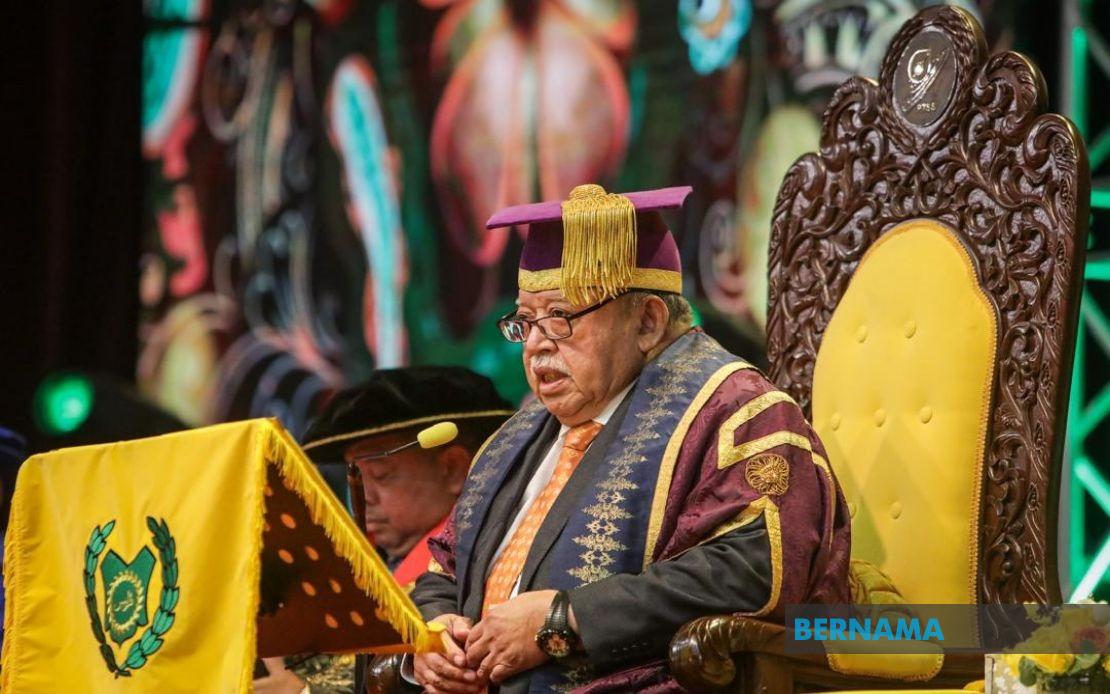
Malaysia's technical and vocational education system stands as a cornerstone in cultivating the skilled workforce required to navigate an increasingly complex global economy. At the 2026 Northern Zone Polytechnic and Community College Convocation Ceremony held at Politeknik Tuanku Syed Sirajuddin in Arau, Tuanku Syed Sirajuddin Jamalullail, the Raja of Perlis, delivered a powerful message about the indispensable role of TVET in forging human capital equipped with both technical prowess and creative capacity. The occasion brought together over 6,100 graduates from polytechnic and community college institutions across Perlis, Kedah and Penang, underlining the substantial scale of vocational training's reach across the northern corridor.
The Raja articulated a fundamental shift in how innovation must be perceived within Malaysian society and industry. Rather than treating innovation as a supplementary advantage, His Royal Highness characterized it as foundational to national progress and international competitiveness in an era of rapid technological change. This reframing reflects a strategic recognition that Malaysia cannot afford to lag behind in adopting emerging technologies and methodologies. The emphasis carries particular resonance given regional competition from neighbouring economies that have aggressively invested in digital infrastructure and skilled workforces.
Central to the Raja's address were the transformative forces reshaping employment landscapes across Asia and globally. Artificial intelligence, automation, robotics and digitalisation represent more than isolated technological innovations; they constitute a wholesale restructuring of how work is performed and how organisations operate. These technologies are already filtering through Malaysian industries, from manufacturing and finance to healthcare and telecommunications. Polytechnic graduates entering the workforce must therefore understand not merely how to operate within existing systems, but how to adapt, innovate and potentially lead transformation in their respective sectors.
The Raja's call for cultivating an innovation culture among polytechnic staff and graduates addresses a critical gap in Malaysian vocational education. Innovation, as His Royal Highness articulated, transcends the generation of abstract ideas; it demands the practical capacity to convert concepts into tangible solutions that address real societal challenges. This distinction matters significantly for Malaysia's development trajectory. The nation possesses adequate technical capacity in many sectors, yet struggles to translate that capability into products, services and processes that create competitive advantage. Strengthening this translation mechanism among TVET graduates could substantially enhance Malaysia's value-addition capabilities across industries.
Simultaneously, the Raja emphasised a dimension often overlooked in skills-focused discourse: the moral and ethical foundations underpinning professional excellence. The insistence that knowledge and technical skills must be guided by integrity, trustworthiness and patriotic commitment reflects a traditional Malaysian approach to human development that encompasses character alongside competence. This perspective acknowledges that technological capability divorced from ethical moorings can generate negative societal outcomes. Graduates trained to possess both technical mastery and moral grounding become assets not merely to their employers, but to the broader social fabric.
The convocation ceremony itself served as a platform for recognising exemplary achievement within the TVET system. Teerti Ganapathi Rao, a 22-year-old diploma holder in Digital Technology from PTSS's Department of Information and Communication Technology, received the Director-General of Polytechnic and Community College Education Award. This recognition of excellence in digital technology fields signals institutional priorities and reinforces the importance of technological competency in current labour market demands. Highlighting such achievements publicly sends powerful signals to current and prospective students about valued career pathways.
For Malaysia, the timing of such emphasis on TVET excellence coincides with broader economic imperatives. The nation's transformation agenda requires substantial upgrading of technical and professional capabilities across multiple sectors. Industries competing in global value chains increasingly demand workers who combine technical knowledge with problem-solving ability and adaptability. TVET institutions positioned along the northern economic corridor—spanning from Perlis through Kedah to Penang—serve populations in regions with distinct industrial profiles and economic challenges. Tailoring curricula to address regional needs while maintaining national competitiveness standards presents ongoing institutional challenges.
The three-state convocation format, spanning from August 3 to August 9, reflects the interconnected nature of labour markets and skills development across the northern region. Employers in Penang's manufacturing and electronics sectors, Kedah's agricultural and light industrial base, and Perlis's emerging economic initiatives all require access to graduates possessing current technical competencies. Coordinating polytechnic and community college outputs across state boundaries allows for more rational allocation of educational resources and better alignment between supply and employer demand.
Looking forward, the Raja's message carries implications extending beyond the immediate cohort of graduates receiving convocation honours. As Malaysia grapples with demographic shifts, including an aging population and changing workforce participation patterns, TVET systems must expand access while maintaining quality standards. The sector must also navigate the challenge of preparing workers for jobs that may not yet exist, requiring curriculum flexibility and lifelong learning orientations. This demands ongoing investment in staff development, infrastructure modernisation and industry partnerships.
The convocation ceremony represents more than ceremonial recognition; it underscores governmental commitment to positioning TVET as central to national economic development strategy. By elevating TVET discourse to the level of royal emphasis and connecting it explicitly to national competitiveness and innovation imperatives, Malaysia signals to employers, educators and potential students that technical pathways offer legitimate and valued routes to meaningful careers. This messaging battles persistent perceptions, particularly among middle-class families, that academic streams represent superior alternatives to vocational training.

