Southern Thailand experienced a surge in militant violence on June 19 as two separate bomb attacks targeted police units in quick succession, wounding a total of 11 officers across Yala and Pattani provinces. The dual strikes highlight the continuing instability gripping Thailand's troubled south, where insurgent groups have waged a low-intensity campaign against government forces for nearly two decades.
The first explosion detonated at 8:10am along the Ban Pulo Saniyae–Ban Sakai road in Thanto district, Yala province, striking a mobile unit of border patrol police officers attached to a teacher protection detail. The blast injured six officers, creating an immediate medical emergency that overwhelmed local hospital capacity. Among the wounded, Corporal Kittisak Saksang sustained significant facial lacerations from shrapnel, while Corporal Poraphat Wongruaydee suffered more critical injuries to his chest and torso, causing respiratory distress and temporary paralysis despite remaining conscious throughout the ordeal.
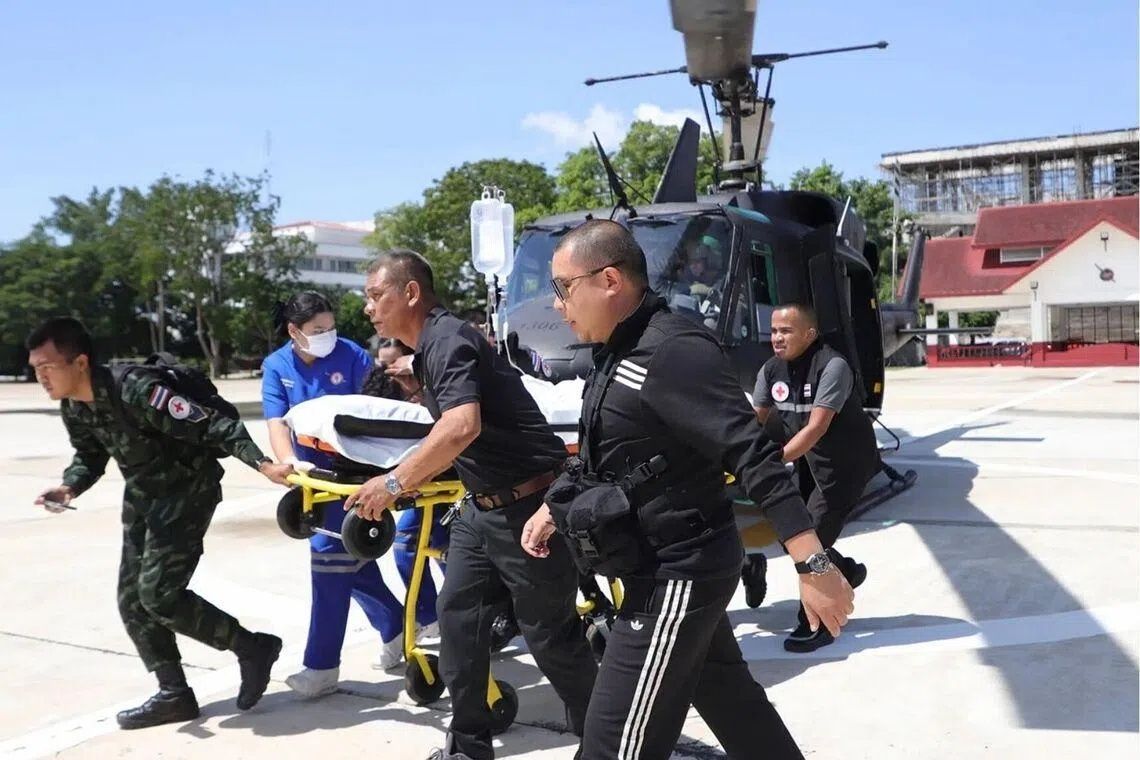
The severity of Wongruaydee's condition necessitated emergency evacuation by helicopter from Thanto Hospital to the regional trauma centre at Yala Hospital, where physicians determined he required immediate surgical intervention. Medical staff identified accumulating blood in his pleural cavity—the space surrounding the lungs—and discovered structural damage to lung tissue that demanded urgent repair. The gravity of his injuries prompted hospital authorities to issue an emergency appeal for blood donors of all types, an indicator of the extensive transfusion requirements expected during his recovery.
Barely three hours after the Yala incident, a second device detonated at 11:30am near Ban Khuan Yi in Mayo district, Pattani province, this time targeting officers from the Police Special Operations unit. The timing of the second attack suggests possible coordination between insurgent cells, a tactic that has become increasingly common in the region's asymmetric conflict. The explosion struck as officers were concluding the establishment of a security checkpoint, catching them in a vulnerable moment as they prepared to depart the location.
This second bombing wounded five special operations officers—Sergeants Anuchit, Bunyawat, Wisitphon, Aphisit and Sumit—all of whom reported chest injuries and respiratory complications consistent with blast trauma. The injuries, while serious enough to require hospitalisation at Mayo Hospital, appeared less severe than those sustained by their colleagues in Yala, though medical assessment remained ongoing. The pattern of targeting two separate police units within such a compressed timeframe raises questions about the attackers' level of operational coordination and intelligence regarding police movements.
The geographic distribution of the attacks across two provinces separated by considerable distance complicates response efforts and suggests either remarkably precise synchronisation or, more likely, independent but temporally coordinated cells operating within an established militant network. Thai authorities, accustomed to managing insurgent violence in the region but consistently surprised by the frequency and precision of attacks, immediately cordoned the blast sites and deployed forensic teams to collect evidence. Explosive ordnance disposal specialists scoured both locations for unexploded devices and bomb-making materials that might provide intelligence leads.
These bombings represent the latest chapter in a protracted conflict that has claimed thousands of lives since 2004, when the Patani United Liberation Organisation and related factions renewed armed struggle against Thai rule. The southern border region has proven remarkably resistant to counterinsurgency efforts despite sustained military deployment and security expenditure. Teacher protection units like the one targeted in Yala have become standard practice in the region, yet insurgents continue finding opportunities to strike at security personnel, undercutting the government's narrative of improving security conditions.
For Malaysian readers and regional observers, the persistence of violence in Thailand's south carries significant implications. The instability creates a porous security environment that can enable cross-border activity, particularly weapons trafficking and militant movement through Kelantan and Terengganu. Thailand's security challenges inform Malaysia's own approach to border management and counterterrorism operations in comparable Muslim-majority regions. The recurring attacks also complicate regional development initiatives and tourist flows that depend upon perceived stability throughout the Andaman coastal corridor.
The injuries to 11 police officers in a single day underscores the toll exacted by the conflict on frontline security personnel and their families. These are not abstract casualty figures but individuals facing permanent disability, psychological trauma, and extended rehabilitation. The emergency blood appeal illustrates how provincial healthcare systems in conflict zones become strained by mass casualty incidents, a concern that extends across Southeast Asian nations managing similar internal security challenges.

