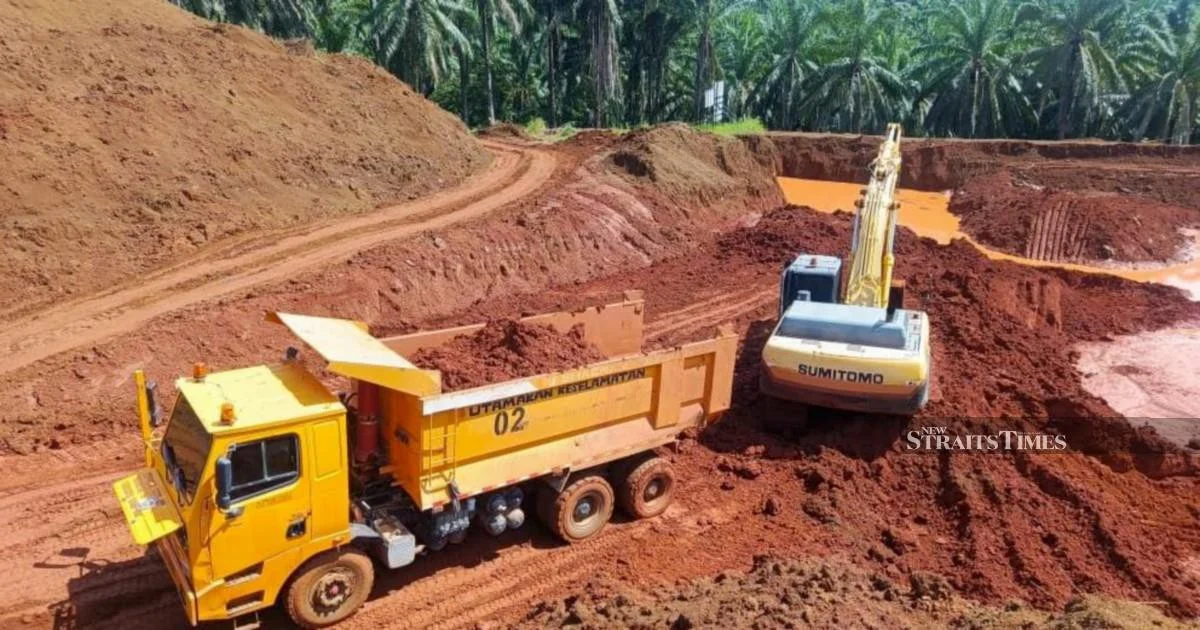
Enforcement authorities have moved against an illegal silica sand operation in Marang, apprehending two men suspected of orchestrating the unauthorized movement and transfer of the mineral resource. The operation, launched yesterday, resulted in the confiscation of heavy machinery and equipment valued at RM1.8 million, marking a significant blow to what appears to be an organized extraction and trafficking network.
The arrests represent a continuing crackdown on unauthorised sand mining activities in Terengganu, a state that has long grappled with illicit extraction of sand and other minerals from riverine and coastal areas. Silica sand, prized for its use in glass manufacturing, construction materials, and industrial applications, has become an increasingly targeted commodity for illegal operators seeking to exploit lax enforcement and high market demand.
The seizure of substantial machinery indicates this was no small-scale operation but rather an organized venture equipped with industrial-grade extraction and processing equipment. Such significant capital investment in illegal extraction typically signals involvement of criminal syndicates with access to financing and distribution networks capable of moving large volumes of material to buyers across the region.
For Malaysian readers, particularly those in resource-rich states like Terengganu, Kelantan, and Pahang, the proliferation of illegal mining poses escalating environmental and economic challenges. Uncontrolled sand extraction degrades riverbanks, disrupts aquatic ecosystems, increases flooding risks in surrounding communities, and deprives legitimate operators and the state of valuable mining revenue through proper concessions and royalties.
The incident underscores the ongoing tension between resource scarcity and resource theft in Southeast Asia. Silica sand demand remains robust across the region's booming construction and manufacturing sectors, creating market incentives that make enforcement efforts constantly reactive rather than preventive. The RM1.8 million equipment seizure, while substantial, likely represents just one operation within a larger network of illegal activity.
Authorities have intensified operations targeting illegal sand mining following increased complaints from riverine communities about environmental degradation and flooding exacerbated by unchecked extraction. The Marang arrest fits a pattern of enforcement activity that has expanded across multiple districts in recent years, though criminality typically outpaces regulatory capacity in remote mining areas.
The broader challenge facing enforcement agencies stems from the fragmented nature of the illegal mining sector. While major operators like those captured yesterday may face significant seizures and prosecution, numerous small-scale illegal miners continue operations with minimal equipment and lower detection risks. This two-tier system means that even successful high-profile arrests do not substantially reduce overall illegal extraction volumes.
Regional considerations compound Malaysia's enforcement difficulties. The proximity of Terengganu to other mineral-rich areas in Thailand and the relative ease of cross-border material movement create opportunities for syndicates to exploit regulatory gaps and jurisdictional boundaries. Sand and silica extracted illegally in Malaysia may find markets in Thailand or Singapore, while foreign operators may target Malaysian deposits precisely because enforcement capacity, relative to operation scale, remains stretched.
The detained individuals now face prosecution under mining and environmental protection statutes. Depending on the specifics of charges laid, they could encounter substantial penalties including fines reaching hundreds of thousands of ringgit and imprisonment, particularly if evidence demonstrates organized syndicate involvement or repeat offences.
Government agencies responsible for natural resource management have emphasized commitments to tighter oversight, but implementation remains challenged by limited field personnel, inadequate surveillance technology for remote areas, and the high mobility of extraction operations. By the time authorities locate and descend upon an illegal site, operators frequently relocate equipment and resume activity elsewhere.
For legitimate sand mining operators holding proper licenses, enforcement successes provide competitive advantage through reduced unfair competition from unregulated rivals. However, sustained advantage requires consistently robust enforcement rather than episodic crackdowns, a standard difficult to maintain with existing resource constraints.
The seizure sends a message about enforcement intent, but addressing the systematic nature of illegal sand mining will ultimately require integrated solutions combining stricter licensing protocols, increased patrols in known extraction zones, community reporting mechanisms, and downstream interdiction targeting buyers and distributors of illicitly sourced material. Without tackling demand-side factors and the economic incentives driving supply, enforcement operations alone will continue yielding individual victories within an expanding problem.

